Split-Level Homes Are Making a Comeback | #SplitLevel #TalkToYourAgent #SiliconValleyAgent #YajneshRai #01924991 #YourAgentMatters #TeamYaj #SangeetaRai #02026129

Facebooktwitterpinterestlinkedin

Split-Level Homes Are Making a Comeback | Realtor Magazine

The split-level home—with its rooms on multiple floors—was all the rage in the 1970s, but you don’t see the style as much in contemporary homes. However, that may soon change. Google searches are revealing the split-level home is more in demand.

Search interest in split-level homes has been climbing since 2004 and reached an all-time high in January 2017, according to Google data. The largest increases over the past year came during May and July.

“I’ve always seen split-levels as the minivans of the architectural world,” Orly Halpern of John L. Scott Realty in Portland, Ore., told Apartment Therapy. “If you can get past the often awkward curb appeal, they offer practical living options for most every type of household.”

While the open floor plan is hot, more homeowners have been showing some desire to separate spaces more lately. The split-level blueprint allows for more separation between downstairs and upstairs than other home designs, and also allow for more separated noise and activity between family rooms and bedrooms. It’s also gaining popularity among multigenerational households.

“Having a somewhat separate living area for a family member that is on another floor can give some added privacy or boundaries,” Tekela Fisher from Cascade Sotheby’s International Realty in Portland, Ore., told Apartment Therapy.

The split-level home saw a building boom of the style in the 1970s. With more coming onto the market, more buyers—particularly young buyers looking for something unique—may be drawn to them.

“Millennials still love ranch-style homes, and a split-level is basically a variation on that theme: Double the benefits of the ranch’s fluid and linear living spaces by planting one level atop another,” Apartment Therapy reports in an article on the trend. “Whereas a ranch’s one-story construction was sprawling, the split-level had the same amount of space but better utilized the horizontal square footage through condensed stories.”

Facebooktwitterpinterestlinkedin

4 Ways to Cozy Up Your Kitchen for Fall | #FallDecor #TalkToYourAgent #SiliconValleyAgent #YajneshRai #01924991 #YourAgentMatters #TeamYaj #SangeetaRai #02026129

Facebooktwitterpinterestlinkedin

4 Ways to Cozy Up Your Kitchen for Fall

Grab your hearty soup recipes, decorative pie plates and favorite cookbooks. Fall is here, and with just a little effort you can get your kitchen ready to make the most of it.

The season has changed, and so follows your home decor. Decorating for the chillier fall months means incorporating warm and inviting colors and textures into your home’s interior design, specifically in the kitchen.

Try these four tips to create a cozier kitchen for fall.

Weave in dark textiles

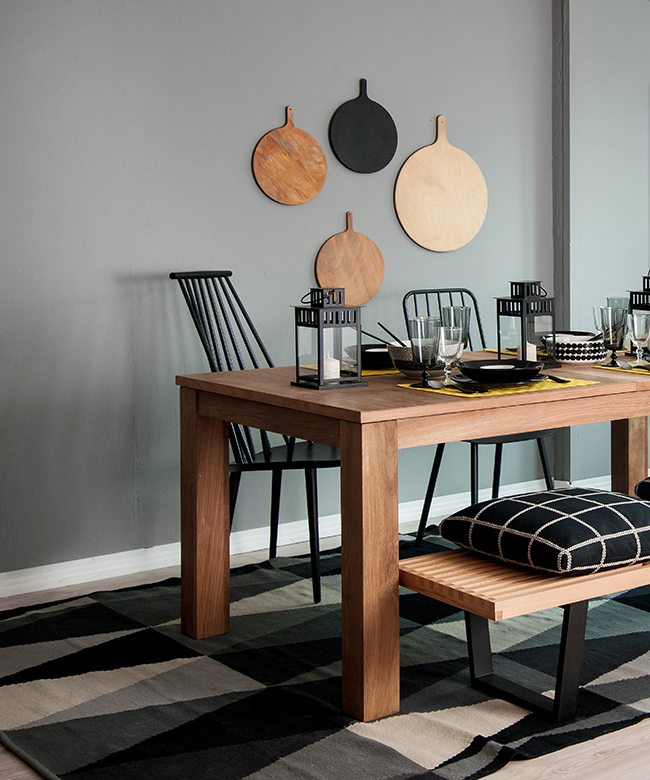
Fall means decorating with gorgeously textured throws, pillows and table linens. Introduce your kitchen to an autumnal palette using dark, natural window coverings and similar table linens for a cozy effect. This look juxtaposes raw texture with soft details like fresh fruit, warm place mats and smooth surfaces.

Bank on butcher block

Found most often in farmhouse-style or rustic homes, butcher block is great for countertops and tables because it’s durable and looks better the longer you have it.

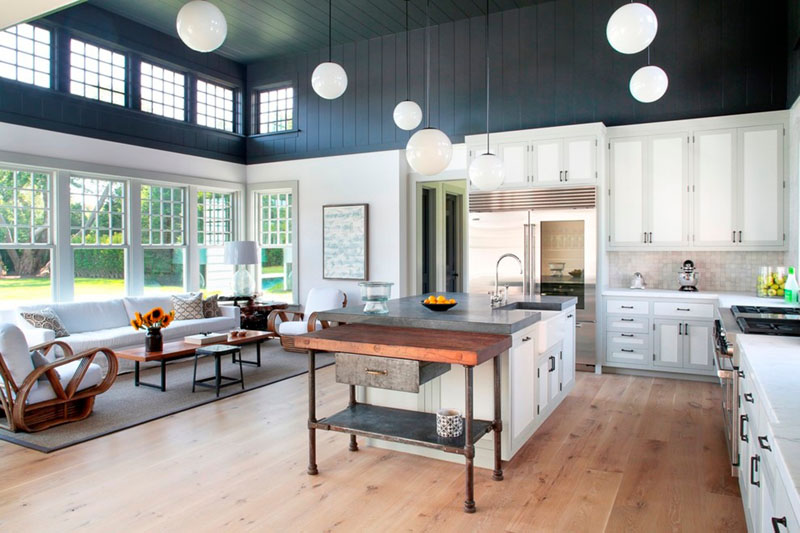
If you’re thinking about switching out your countertop, consider butcher block for a warm, inviting feel. If you don’t want to commit to a full countertop, try a large cutting board or table to add earthiness to your kitchen.

ISt4nlxhnohhfk0000000000
Photo from Zillow listing.

Add pops of color

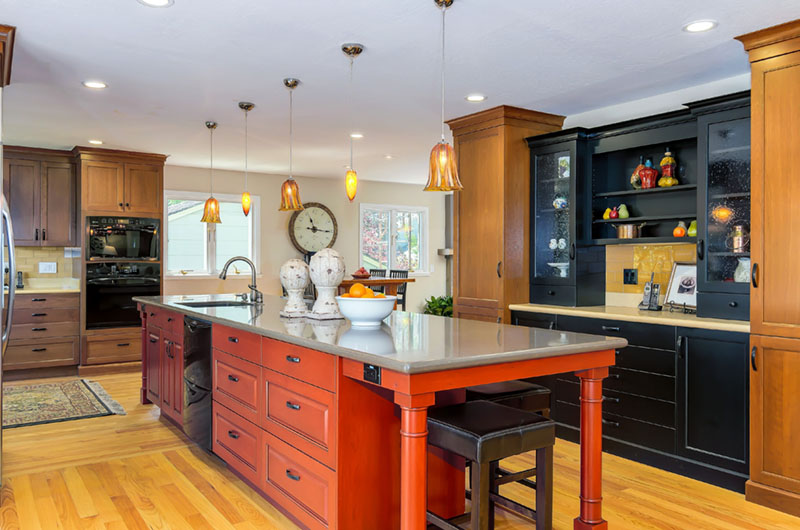
If your kitchen has a blank space or accent wall, consider painting it for an inviting scene. For the fall season, you can choose to use warmer, darker colors like a deep red, warm orange, or olive or brown tone.

Don’t want to paint an entire wall? Select a piece of art or two featuring deep and rich colors to create a cozy ambiance. You could even paint your cabinets or counters.

ISdwlmdyf4ueyk1000000000
Photo from Zillow listing.

Nurture indoor plants

Houseplants are always good go-to decorations because they require little upkeep and add a touch of freshness to any space. They are particularly useful in the fall because they can double as herb gardens or unique decor.

Install a small indoor garden on your window sill or on a shelf near a window to have easy access to fresh rosemary, sage, and basil, even when the weather might not call for gardening.

shutterstock_256003411

While these suggestions may seem small, they are great touch-ups to boost your festive theme this fall season. Add one or two, or mix all of the design tips for a home-sweet-home feel.

Facebooktwitterpinterestlinkedin

Mortgage Rates Leap, But Buyers Shouldn’t Worry | #RatesRise #TalkToYourAgent #SiliconValleyAgent #YajneshRai #01924991 #YourAgentMatters #TeamYaj #SangeetaRai #02026129

Facebooktwitterpinterestlinkedin

Mortgage Rates Leap, But Buyers Shouldn’t Worry | Realtor Magazine

Mortgage rates for 30, 15, ARM. Full information at http://www.freddiemac.com/pmms/

© REALTOR® MAGAZINE

Mortgage Rates Leap, But Buyers Shouldn’t Worry

The 30-year fixed-rate mortgage jumped 12 basis points from last week, averaging 3.69%, Freddie Mac reports. That’s no reason for home shoppers to get nervous: Economists largely predict mortgage rates will dip in the weeks ahead. Also, rates are still more than a percentage point lower than a year ago.

“Despite this week’s uptick in mortgage rates, the housing market remains on the upswing, with improvement in construction and home sales,” says Sam Khater, Freddie Mac’s chief economist. “While there has been a material weakness in manufacturing and consistent trade uncertainty, other economic trends like employment and homebuilder sentiment are encouraging.”

Freddie Mac reports the following national averages with mortgage rates for the week ending Oct. 17:

  • 30-year fixed-rate mortgages: averaged 3.69%, with an average 0.6 point, rising from last week’s 3.57% average. Last year at this time, 30-year rates averaged 4.85%.
  • 15-year fixed-rate mortgages: averaged 3.15%, with an average 0.5 point, rising from a 3.05% average last week. A year ago, 15-year rates averaged 4.26%.
  • 5-year hybrid adjustable-rate mortgages: averaged 3.35%, with an average 0.4 point, unchanged from last week. A year ago, 5-year ARMs averaged 4.10%.
Facebooktwitterpinterestlinkedin

Why Builders Are Upbeat About Dip in Housing Starts | #BuildersSentiments #TalkToYourAgent #SiliconValleyAgent #YajneshRai #01924991 #YourAgentMatters #TeamYaj #SangeetaRai #02026129

Facebooktwitterpinterestlinkedin

Why Builders Are Upbeat About Dip in Housing Starts | Realtor Magazine

Total housing starts dropped 9.4% month over month in September to a seasonally adjusted annual rate of 1.26 million units, the U.S. Commerce Department reported Thursday. The multifamily sector, which includes apartments and condos, plummeted 28.2% in September to a pace of 338,000. However, single-family housing starts fared much better, rising 0.3% to 918,000 units.

Overall, builders are happy with the numbers. “Multifamily housing starts fell from an unsustainably high level in August and are running at a solid pace despite the sharp monthly decline,” explains Robert Dietz, chief economist at the National Association of Home Builders. “Meanwhile, the rebound for single-family construction continues. Single-family permits have increased since April, and single-family starts have posted gains since May. In another positive development, September marked the first monthly increase for the number of single-family homes currently under construction since January.”

Regionally, combined single-family and multifamily homebuilding rose 6% in the South in September, but declined by 12.2% in the West, by 6.2% in the Midwest, and by 0.6% in the Northeast.

Housing permits, a gauge of future construction, dropped 2.7% in September to a 1.39 million annual pace. Single-family permits rose 0.8% while multifamily permits dove 8.2%, the Commerce Department reports. “Single-family builders continue to see positive conditions for housing, and this is reflected in NAHB’s Housing Market Index, which measures builder sentiment,” says Greg Ugalde, NAHB chairman. “However, builders are still being somewhat cautious as they continue to deal with supply-side challenges which impact housing affordability.”

Housing shortages remain problematic for the real estate market, says Lawrence Yun, chief economist at the National Association of REALTORS®. “Apartment vacancy rates are low, and the number of homes listed for sale are just not enough,” Yun says. “Naturally, developers should be boosting home construction to relieve the tight supply. To a degree, it is moving in the right direction: Single-family housing starts rose a notch in September and are higher by 4% from a year ago. But multifamily starts, which have been predominantly apartments and not condominiums, sharply declined.”

Facebooktwitterpinterestlinkedin

Fed Calls Housing the Bright Spot in Economy | #HousingBrightSpot #TalkToYourAgent #SiliconValleyAgent #YajneshRai #01924991 #YourAgentMatters #TeamYaj #SangeetaRai #02026129

Facebooktwitterpinterestlinkedin

Fed Calls Housing the Bright Spot in Economy | Realtor Magazine

The economy shows signs of sluggishness, but not the housing market, according to a new report released this week from the Federal Reserve Bank of New York. Consumer spending is softening and wage growth is “moderate,” but the housing market has rebounded, the Fed says.

“Housing activity indicators displayed further gradual improvement in August,” according to the report. Over the last three months, single-family housing starts and permits have rebounded. New home sales gained 7.1% in August month over month and are 18% higher than a year earlier. Existing-home sales saw a 1.2% increase in August. Homebuilding has also seen some increases, surging 12.3% in August to reach the highest level since June 2007, according to the U.S. Commerce Department. A good portion of that has been in the multifamily sector, which includes apartments.

“A still-strong labor market and low mortgage rates could continue to provide support to housing,” the report notes.

The report did note the shortage of homes for sale as one major hurdle facing the housing market that could limit its continued growth.

“Favorable labor market conditions and a substantial decline in mortgage interest rates continue to act as positive forces,” the report notes. “Inadequate inventories in affordable price ranges continue to be a drag on sales and fuel home-price increases.”

Facebooktwitterpinterestlinkedin

Designers Sound Off on the Worst Bathroom Colors | #BathColors #TalkToYourAgent #SiliconValleyAgent #YajneshRai #01924991 #YourAgentMatters #TeamYaj #SangeetaRai #02026129

Facebooktwitterpinterestlinkedin

Designers Sound Off on the Worst Bathroom Colors | Realtor Magazine

Nothing ruins a bathroom like a bad hue, and the gray trend may be one of the worst offenders, designers say.

“Bathrooms tend to be enclosed spaces, so greige-y muddy colors can make the space feel smaller and dingy,” Ariel Okin, an interior designer in New York City, told Apartment Therapy. “Lighter colors like bright crisp whites, powder blues, and spring greens always play really well in a bathroom, as do moodier shades such as inky navy and hunter green.”

A “gold beige” is a color that design consultant Kelly Bernier told Apartment Therapy she avoids as a bathroom color. “It’s not a current color, doesn’t work with any recent tile, and will make your room look dated,” she says. “Greige” is a range of colors combining grey and beige; some tones are warmer and some are cooler.

On the other hand, bright and neutral paints—like blues and whites—work great in bathrooms when paired with textures and color in the finishes, Sara Raak, a lifestyle and product stylist, told Apartment Therapy.

Facebooktwitterpinterestlinkedin

How Much Public Transit Adds to Home Values | #PublicTransit #TalkToYourAgent #SiliconValleyAgent #YajneshRai #01924991 #YourAgentMatters #TeamYaj #SangeetaRai #02026129

Facebooktwitterpinterestlinkedin

How Much Public Transit Adds to Home Values | Realtor Magazine

Neighborhoods located within a half-mile of public transit services outperformed those farther from public transit based on a number of factors, according to a report released Monday by the National Association of REALTORS® and the American Public Transportation Association.

The report shows commercial and residential real estate market sales thrive when residents have mobility options. Residential properties within these areas had 4% to 24% higher median sale prices between 2012 and 2016, the report found. Commercial values in four of the regions saw median sales prices per square foot increase between 5% and 42%. Transit-oriented areas also provide costs savings for residents: The report showed an average annual savings of $2,500 to $4,400 in transportation costs for the typical household. One in four households in close proximity to transit doesn’t own a vehicle, according to the study.

“Access to public transportation is an extremely valuable community amenity that increases the functionality and attractiveness of neighborhoods, making nearby communities more desirable places to live, work, and raise a family,” said NAR 2019 First Vice President Charlie Oppler. He spoke at a joint press conference Monday alongside New York State Association of REALTORS® President Moses Seuram and Paul P. Skoutelas, president and CEO of APTA, which represents public and private sector transportation entities.

“The results of our report, conducted over multiple years alongside the American Public Transportation Association, should reiterate to policymakers at all levels of government the importance of investing in modern, efficient infrastructure that facilitates growth and helps our nation keep pace in a rapidly evolving world,” Oppler said.

The study, titled “The Real Estate Mantra – Locate Near Public Transportation,” explored seven metropolitan regions that provide access to heavy rail, light rail, commuter rail, and bus rapid transit: Boston; Hartford, Conn.; Los Angeles; Minneapolis-St. Paul, Minn.; Phoenix; Seattle; and Eugene, Ore. The seven sample areas were examined by residential and commercial sales performance, rent, neighborhood characteristics, local government interventions, and housing affordability.

“Public transportation is a valuable investment in our communities, our businesses, and our country,” Skoutelas said, not just because it helps residents get to work and school but also because it makes areas more attractive for relocating companies.

But high demand and constrained supply have put upward pressure on neighborhoods with high-frequency public transportation. NAR has made it a priority to address affordability and supply issues, and Skoutelas said APTA is a partner in that effort. “As the conversation surrounding housing affordability continues,” Skoutelas said, “public transportation agencies are critical allies in working with elected officials and community leaders in the effort to increase housing opportunities and maximize value around stations.”

Facebooktwitterpinterestlinkedin

3 Minor Upgrades That Boost Value Instantly | #ValueBoostingUpgrades #TalkToYourAgent #SiliconValleyAgent #YajneshRai #01924991 #YourAgentMatters #TeamYaj #SangeetaRai #02026129

Facebooktwitterpinterestlinkedin

3 Minor Upgrades That Boost Value Instantly | Realtor Magazine

Homeowners can do plenty to spruce up their home and make it more enticing for buyers. But when they’re narrowing their list, what are a few quick fixes that can have a big impact? Besides a fresh coat of paint, Redfin highlighted some additional ideas on its blog, including:

Update the door.

A new front door can be a cost-effective update that can make a big difference, real estate pros say. “Solid wood doors are always a classic style for homes not to go out of style anytime soon,” Redfin notes on its blog. “They’re solid and typically last much longer than alternative materials like fiberglass. Additionally, front doors with inlaid glass can also give your entryway more natural light for the interior of your home.”

Modernize the lighting.

First, make sure all interior lights have the same color temperature so it’s consistent throughout the home. “Updating your light fixtures, ceiling fans, and even your hardware on doors and cabinets is an easy and cost-effective way of increasing the perceived value of your home,” Redfin notes. For example, replace dated brass light fixtures to more contemporary ones, like lights with a black finish. Find fixtures that will add more light and brighten your home too.

Upgrade your mailbox.

It may sound trivial, but the look of the mailbox is all part of helping to build a strong first impression from the curb. “It’s also the easiest home improvement you can do,” Redfin notes at its blog. “It could just be a new mailbox that replaces the old, weathered one you’ve had for years. … Or you could upgrade to a ‘next generation’ mailbox that allows USPS to deliver large packages to your mailbox instead of your front door.”

Facebooktwitterpinterestlinkedin

Mortgage Rates Are Dropping Again | #FavorableRates #TalkToYourAgent #SiliconValleyAgent #YajneshRai #01924991 #YourAgentMatters #TeamYaj #SangeetaRai #02026129

Facebooktwitterpinterestlinkedin

Mortgage Rates Are Dropping Again | Realtor Magazine

The 30-year fixed-mortgage fell 8 basis points this week, averaging 3.57%, Freddie Mac reports. The lower rates are drawing out more home buyers in the fall market.

“Despite the economic slowdown due to weakening manufacturing and corporate investment, the consumer side of the economy remains on solid ground,” says Sam Khater, Freddie Mac’s chief economist. “The 50-year low in the unemployment rate combined with low mortgage rates has led to increased home buyer demand this year. Much of this strength is coming from entry-level buyers—the first-time home buyer share of the loans Freddie Mac purchased in 2019 is 46%, a two-decade high.”

Freddie Mac reports the following national averages with mortgage rates for the week ending Oct. 10:

  • 30-year fixed-rate mortgages: averaged 3.57%, with an average 0.6 point, falling from last week’s 3.65% average. Last year at this time, 30-year rates averaged 4.90%.
  • 15-year fixed-rate mortgages: averaged 3.05%, with an average 0.5 point, falling from last week’s 3.14% average. A year ago, 15-year rates averaged 4.29%.
  • 5-year hybrid adjustable-rate mortgages: averaged 3.35%, with an average 0.3 point, dropping from last week’s 3.38% average. A year ago, 5-year ARMs averaged 4.07%.
Facebooktwitterpinterestlinkedin

Homeowners’ Top DIY Mistakes | #DIYMistakes #TalkToYourAgent #SiliconValleyAgent #YajneshRai #01924991 #YourAgentMatters #TeamYaj #SangeetaRai #02026129

Facebooktwitterpinterestlinkedin

Homeowners’ Top DIY Mistakes | Realtor Magazine

Many homeowners attempting to save money on household projects are turning to DIY projects. But do-it-yourself fixes can be costly, shows a new survey from Clovered, a home insurance company.

Eighty-seven percent of more than 1,000 homeowners recently surveyed admitted to making a mistake while attempting a do-it-yourself home improvement project. The median amount spent on fixing those DIY mistakes was $137.50, the survey showed. Millennials tended to spend the most in fixing their mistakes, spending up to four times as much as baby boomers—$200 versus $50 post-mistake.

The top DIY mistake across all generations was starting a project without the necessary supplies or tools. Gen Xers tended to admit to picking the wrong paint, and millennials were the most often to skimp on materials, the survey showed.


Clovered remodeling mistakes chart. Visit source link at the end of this article for more information.

© Clovered


Thirty-two percent of DIYers admit to having to contact a family member or friend to help them finish a home improvement project. Seventeen percent said they then hired a professional contractor to complete the job.

One in four homeowners who attempted to DIY also injured themselves. The most common injuries were “cutting myself with a sharp tool or project material” (74.9%), “hitting myself with a hammer or other tools” (58.4%), and “tripping over materials” (49%).


Clovered price points chart. Visit source link at the end of this article for more information.

© Clovered


Facebooktwitterpinterestlinkedin