Wells Fargo Admits to More Than 500 Wrongful Foreclosures | #Wow-ThatsAll #TalkToYourAgent #SiliconValleyAgent #YajneshRai #YourAgentMatters #01924991

Facebooktwitterpinterestlinkedin

Wells Fargo Admits to More Than 500 Wrongful Foreclosures | Realtor Magazine

Wells Fargo blamed a calculation error for resulting in foreclosures on hundreds of homeowners who instead should have been helped by the bank. The finance giant acknowledged this week that it had improperly foreclosed on 545 distressed homeowners after they had requested assistance with their mortgages.

Wells Fargo wrongful foreclosures

© mphillips007 – iStock/Getty Images Plus


In total, Wells Fargo said 870 homeowners were wrongly denied help. More than half of that total ended up losing their homes.

An internal review by Wells Fargo led to the discovery of the accidental foreclosures from 2010 up until last April.

“It is really astounding that it has taken so long to find these problems, and it is not at all clear that this is the end of it,” Alys Cohen, staff attorney for the National Consumer Law Center, told The Washington Post. “A homeowner in distress deserves better. Why don’t we know more about how this happened? And where are the regulators ensuring that homeowners get fully compensated?”

Wells Fargo initially said it would set aside $8 million, or about $12,800 per customer. But the number of customers affected has grown since the lender first reported the incident. A “substantial majority” of borrowers already have been contacted and will be offered “remediation,” Wells Fargo has said publicly.

“This effort to identify other instances in which customers may have experienced harm is ongoing, and it is possible that we may identify other areas of potential concern,” Wells Fargo said in its Securities and Exchange Commission filing.

Wells Fargo’s admission follows a series of other issues that have plagued the mortgage giant. In recent months, Wells Fargo has paid more than $1 billion in fines to settle disputes over accounts that were opened for people who never asked for them and to settle disputes over the repossession of thousands of cars from its borrowers.

Facebooktwitterpinterestlinkedin

7 things a home buyer never wants to see in your living room | #SellerTips #TalkToYourAgent #SiliconValleyAgent #YajneshRai #YourAgentMatters #01924991

Facebooktwitterpinterestlinkedin

7 things a home buyer never wants to see in your living room | Fox News

It’s easy to think of creepy items in your living room that would be instant deal-breakers for potential buyers: a coffin, for instance. (With or without someone in it.) A meth lab. A ghost with an attitude problem.


First impressions start with curb appeal, but next to the kitchen, the space that arguably carries the most weight is — you guessed it — your living area. After all, it’s where we spend the most time trying to decompress and escape the worries of the day. So buyers, of course, are going to run full speed the other way if they stumble across a living room that freaks them out.

We asked real estate pros about the biggest buyer deal-breakers they’ve encountered when it comes to living spaces.

1. Dead bugs

Nancy Wallace-Laabs, a licensed real estate broker in Texas, once viewed a house where hundreds of dead June bugs were piled up inside a living room window screen — “about an inch deep all the way around,” she recalls.


The insect graveyard was an instant turnoff — to everyone.

“No one was even attempting to buy the place,” Wallace-Laabs says.

Surprise ending: She and her husband ended up buying the home themselves at a steep discount, giving those June bugs a proper burial, and turning the property into a rental.

The lesson: Make sure every corner of your living room is pest-free before you show your home.

2. Your collection of _________.

Those sad clown paintings on your living room walls might strike you as hilarious, but a potential seller will slowly back out of the door.

“Anything too thematic should be removed from your living room,” says Marie Bromberg, a licensed real estate salesperson with Corcoran in New York City. “Keep in mind, the more obscure the collection, the creepier it is.”

Victorian dolls? An obvious no. But even a huge array of decorative items can strike buyers as icky.

Bromberg’s example of choice: cowhide and animal skulls. At some point, they veer from “Southwestern vibe” to “Silence of the Lambs.”

Pack your precious collections away, no matter how harmless they may seem to you.

“Even too many pet accessories will make the apartment feel like a shelter,” Bromberg adds.

3. Surprise smells

Without question, experts list bad — or just unexpected — odors as the No.1 living-room turn-off.

“One time I brought a buyer to a listing and the owner’s tenant was cooking hot dogs on a [George] Foreman grill,” Bromberg recalls. “It was an open layout, meaning the kitchen had no wall between itself and the living room. The hot dog became more memorable than the apartment.”

Pat Vosburgh, a licensed Realtor® with NextHome Gulf to Bay in St. Petersburg, Fla., has had clients that never made it past the living room because of the overpowering scent of cigarette smoke.

“Smells can really break a deal,” she says.

Not a lot of home-buyers are seeking that musty-nightclub stank.

Not a lot of home-buyers are seeking that musty-nightclub stank. (iStock)

The best scent in your house?

“The smell of nothing,” says Justin Riordan, founder of Spade and Archer Design Agency, a Portland, Ore.–based firm that offers home staging. “It clearly communicates that the house is clean and stink-free.”

4. Evidence of your pets

You might accept the fact that your beloved German shepherd sheds his whole coat onto your couch cushions. But potential buyers won’t be as understanding.

“Yes, [buyers] will vacuum when they buy the home, but some feel they will never get all the hair up,” Vosburgh says.

And it’s not just hair that can gross them out. Vosburgh remembers taking clients through one house and coming out covered in dog hair — and fleas.

“My husband had on dark pants, so he didn’t see them until we got in our car. They were jumping all over the place,” Vosburgh recalls. “We had hundreds on us.”

She had to flea-bomb her car. Her clients had to do the same.

“They were freaked out,” Vosburgh says. (Unsurprisingly, they didn’t make an offer on the home.)

“Nobody ever bought a house because it has evidence of a pet,” Riordan says. “They have, however, decided not to buy a house because it stunk, they were afraid, or allergic.”

5. Darkness

“Light is the No. 1 seller of homes,” Riordan says. “Please, for goodness’ sake, let in the light.”

He recalls one client who hated the fact that her living room window faced the street and insisted on heavy sheers to block the view—even though they kept the space in gloomy semi-darkness.

“She left the sheers up against our request to take them down and when the house sat on the market for a few weeks, complained that our staging wasn’t working,” Riordan says.

He persuaded her to take down the draperies for just one open house.

“Funny enough, she had three offers by the end of it and the property sold for over asking,” he recalls. “Light. Sells. Spaces.”

6. Evidence of death or hoarding in the home

Jennifer Salomon works for a Central Florida company called Bio-One, which specializes in trauma scene cleanup and hoarding.

“We’ve cleaned everything from animal hoarding to decomposing bodies to homes covered entirely in trash,” Salomon says.

But here’s the thing: They’re not always called right away.

“We’ve had families who’ve tried to clean a past loved one’s home [before it goes on the market], and it just gets to be too much, both emotionally and physically,” Salomon says.

“I would not recommend a biohazard scene such as a crime or death that occurred in a home to be done by unlicensed professionals,” she adds. “It’s illegal and a huge safety concern for all involved.”

It’s also a deal-breaker for buyers.

7. Any personal photos

A photo on the living room wall of you and your family at Disney World isn’t creepy (usually), but can still be a major turn-off to buyers.

“Everyone says this, and somehow no one believes it,” Bromberg says. “Every client I’ve had pushes back with ‘But the photos are professional,’ ‘They look like magazine photos,’ ‘My kids are cute,’ and ‘Families will want to see another family lived here.'”

It doesn’t matter.

"What if we all just sit here in the corner, like this?"

“What if we all just sit here in the corner, like this?” (iStock)

Bromberg once toured a home where many of the family photos were “Star Wars”–themed — “like family members in full Yoda and Padmé regalia,” she says. “My buyers found it very awkward.”

Facebooktwitterpinterestlinkedin

New Living Rooms for Everyday Life | #PajamaLounge #TalkToYourAgent #SiliconValleyAgent #YajneshRai #YourAgentMatters #01924991

Facebooktwitterpinterestlinkedin

New Living Rooms for Everyday Life | Realtor Magazine

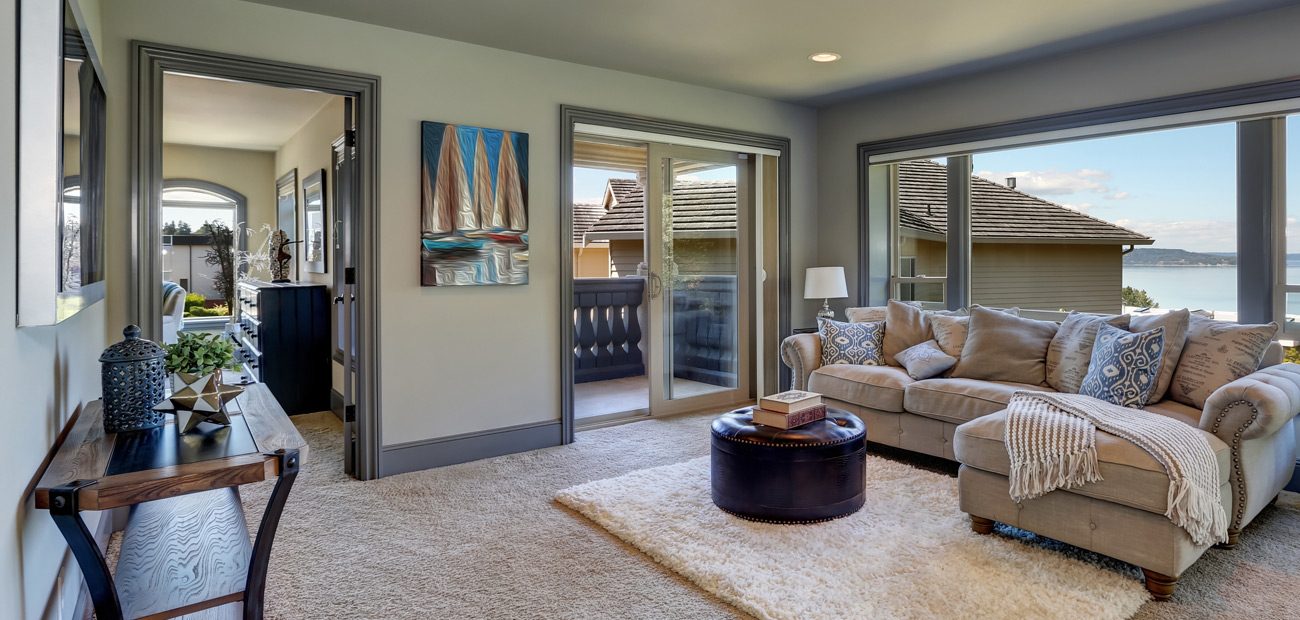
"pajama lounge" room

© Iriana Shiyan – Fotolia.com

New Living Rooms for Everyday Life

Designers, builders, and homeowners are looking to new secondary living spaces near bedrooms to provide a cozy secret getaway from the rest of the house. Sometimes called a “pajama lounge,” it’s a room where a family can comfortably gather without worrying about entertaining nonfamily members.

By its name alone, the living room sounds like a comfortable repose for all. But with open floor plans and busy lives defining factors for many Americans, this shared public space often epitomizes the struggle between enjoying real life and keeping a home prim and ready for visitors. A family room or even a kitchen with seating can be too large, open, busy, and associated with entertaining guests. That’s why many seek an alternative space in which to unwind together.


pajama room

© Courtesy of The Agency

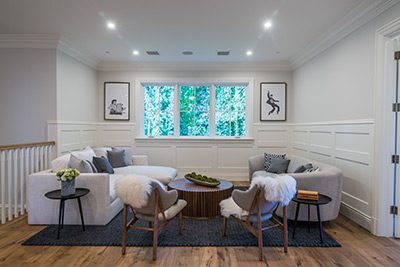
A large home in the Brentwood Park area of Los Angeles offers the ultimate in comfortable luxury: two pajama rooms, one in the basement and this one upstairs near all the main bedrooms.


Chicago designer Rebecca Pogonitz, founder of GOGO Design Group, credits the Scandinavian appreciation for a simpler, more soul-nourishing lifestyle—often known by the Danish term ”hygge” (pronounced hue-guh)—for this move toward coziness and comfort. “My clients crave time for self-care and family,” Pogonitz says. “Many had this growing up but now find their family members aren’t together at home even for dinner. They want to recreate that human connection.”

Now, this desire is finding its way into home design by way of spaces that are sometimes called “pajama lounges,” a cutesy name that suggests a room in which to gather before bedroom, literally in PJs or sweats. This space is usually closer to bedrooms, often upstairs, as an intermediate area for intimate evening hours after dinner and before heading off to sleep. “It’s a place that has a totally different identity from a downstairs living or family room,” says Stephan Burke, a real estate salesperson with Cassis Burke Collection at Brown Harris Stevens in Miami.

Many existing layouts can accommodate this trend, as multipurpose, flex, or bonus rooms can easily be staged to this aesthetic. Madison, Conn.–based architect Duo Dickinson, author of A Home Called New England (Rowman & Littlefield), says it’s important for homes to keep evolving to better reflect how people today want to live. “Homes are just like our clothes. They need to move, grow, and shrink as we do,” he says.

Be aware that buyers may be looking for such spaces, even if they don’t yet know it as a trend or haven’t heard the “pajama lounge” term. While few listings will explicitly include this room as a feature, you can take cues from the examples below and apply them to extra bedrooms, oversized hallways, finished basements, or attic spaces. 

How New Construction Tackles the Trend


pajama room

© Toll Brothers


Like most home trends, the new-home construction industry can most easily incorporate this change, sometimes by paring the size of bedrooms. Industry groups such as the National Sleep Foundation and the Better Sleep Council suggest scaling back bedroom furniture and accessories to create a more dedicated space for sleep. Dickenson agrees, and says he’s seeing consumers shift away from bedroom designs that accommodate other functions such as homework, reading, and hanging out. “Our clients are increasingly asking that their bedrooms are sized to the beds, plus adequate space around them. The once typical 20-foot-by-20-foot floor plan is decreasing to 14 feet by 16 feet. Closets, however, never shrink,” he says.

Builder Ralph Ramirez, founder of ICH Builders in Coral Gables, Fla., has been including pajama lounges for several years and says they can be pretty small—as little as 10 feet by 10 feet. He often makes them larger, though, so they can serve other functions such as working out, paying bills, and doing homework.

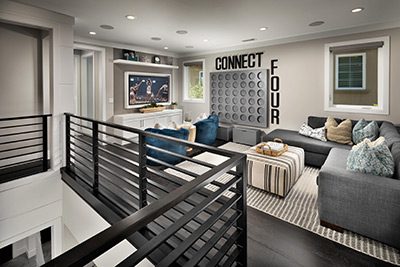
Toll Brothers Inc., a national builder based in Horsham, Penn., has incorporated this type of space for years in its larger homes (6,000 square feet and up), though CJ Ametrano, vice president of national interior merchandising, says the company prefers to call them flex rooms. She adds that the company recently began to incorporate them in its smaller 2,500- to 3,000-square-foot houses by scaling back the size of other rooms.  

Another builder that focuses on large luxury homes takes the concept a step further by giving the pajama lounge some of the best views in the house. Architect Paul Fischman of Miami-based Choeff Levy Fischman puts the spaces near bedrooms on the second level so they overlook water views, as most of their houses face the ocean or intracoastal waterways.

And even when a site seems impossibly tight, Lexington Homes has found a way to squeeze in these spaces. The Chicago builder is adding pajama lounges to the three-story townhomes it’s constructing in the city’s Avondale neighborhood, on the third floor near the master bedroom suite. “The idea,” says co-principal Jeff Benach, “is that children whose rooms and bedroom are on the second floor will come up to the parents’ level so all can hang out together.” For those parents who don’t want to climb an extra flight of stairs, the master suite and flex room might be switched with the second-floor children’s bedrooms. The floor on which the flex space is placed is less important than ensuring that there’s a bathroom close by, Benach says.

Staging Existing Spaces

The key to furnishing a pajama lounge is a mix of comfortable seating upholstered in natural materials, a soft rug underfoot, some tables for games, a bookshelf or two, and good lighting—all in a soothing spa-like palette. Boston designer Frank Roop of Frank Roop Design Interiors put together this look in a second-floor room in a former fisherman’s cottage, which also takes advantage of water views. He custom designed an unusually large sofa that’s more like a big bed at 4 feet deep and 10 feet long. “Users can lie down and stretch out rather than sit upright,” he says. Other creature comforts: an ottoman with a flip top to store blankets and also a TV cabinet.

Because the pajama lounge is often used by children, more whimsical touches might be considered, as Chicago-based architectural firm Morgante Wilson Architects did in recent construction of a suburban house. Taking advantage of the 20-foot-high ceilings on the second level, the design team built a loft into one end of an extra bedroom, reached by a ladder, where the three children in the home can play. “It’s a place where the family can crash together,” says K. Tyler, the principal in charge of interior design at the firm.

Having the option of food close at hand rather than having to traipse downstairs is another worthwhile addition, says Santiago Arana, a real estate salesperson with The Agency in Los Angeles and owner of Cutting Edge Development Inc. A few features he recommends in this space are a minifridge, microwave, sink, and espresso or coffee machine.

The Screen-Time Question

Some families gather specifically to watch movies or favorite TV shows. But others may want to make these lounges tech-free to avoid disrupting family conversation, games, and relaxation. “It’s a place where [family] members might meditate and take a break from everyday life, talk, or read a book,” says broker-associate Carol Cassis, a colleague of Burke’s in Miami.

Cindy Graham, a licensed psychologist and founder of Brighter Hope Wellness Center in Clarksville, Md., considers it a matter of personal family preference and balance. “Many millennials who grew up with technology are now raising children and helping to push the pendulum back the other way. They are advocating to spend time together without as much technology as they may have had, and the results can be positive,” she says. “The family is the first place to learn to interact with others, and, in my work, we are seeing better language development [with less technology use] since there’s increased opportunity for conversations and social interaction.”

Graham and her husband, a Linux systems and software engineer, waited to introduce a Friday movie night routine until their younger child was two years old, since the American Academy of Pediatrics discourages screen media other than video-chatting before 18 months. She encourages adding blankets and other tactile objects to the room and allowing eating there. “Food becomes another opportunity to bond, learn manners, and talk about preferences,” she says.

However a pajama lounge is furnished and wherever it’s located, the goal should be to reflect the needs of the family who will be using it, according to Sherry Petersik, co-author of Lovable Livable Home. “You need things that will drive your family into the room,” says Petersik, who also manages the blog Young House Love with her husband, John. “If your family no longer includes young children, don’t make it a playroom.”

The couple furnished a room down the hall from all the family bedrooms in their two-story, colonial-style home in Richmond, Va., as a pajama lounge. However, they call it their “lazy room.” Says Petersik: “It works for us with tons of cabinetry for storage, window seat, and three chair lounges pushed together. A lot of people like to use updated bean-bag chairs.” Instead of spending evenings there, however, the family gathers in the morning before heading downstairs. Petersik says the timing doesn’t change their casual dress code. “We’re still in our PJs,” she says.

Facebooktwitterpinterestlinkedin

How Does Your State Rank in Down Payments? | #DownpaymentRankings #TalkToYourAgent #SiliconValleyAgent #YajneshRai #YourAgentMatters #01924991

Facebooktwitterpinterestlinkedin

How Does Your State Rank in Down Payments? | Realtor Magazine

The average down payment for a home is decreasing, which could be good news for those looking to buy. Prospective buyers may need to save less money for a down payment, according to a new study by LendingTree.

The average down payment amount for U.S. homes dropped in the third quarter by nearly 10 percent, falling from $52,480 to $47,265, the study shows. However, the overall average down payment percentages for conventional 30-year, fixed-rate purchase mortgage offers stayed about the same—about 18.05 percent.

LendingTree ranked states based on their average down payments.

Lowest average down payments (by percentage):

Alaska

  • Average down payment percentage: 15.41%
  • Average offered down payment: $36,476
  • Average offered loan amount: $236,643

West Virginia

  • Average down payment percentage: 15.44%
  • Average offered down payment: $21,415
  • Average offered loan amount: $138,696

Mississippi

  • Average down payment percentage: 15.78%
  • Average offered down payment: $22,964
  • Average offered loan amount: $145,523


Highest average down payments:

California

  • Average down payment percentage: 21.44%
  • Average offered down payment: $97,809
  • Average offered loan amount: $454,146

Hawaii

  • Average down payment percentage: 21.32%
  • Average offered down payment: $69,923
  • Average offered loan amount: $328,046

Delaware

  • Average down payment percentage: 21.29%
  • Average offered down payment: $51,678
  • Average offered loan amount: $242,735


Facebooktwitterpinterestlinkedin

A Home Where Someone Died: Does That Need to Be Disclosed? | #InCAWeDisclose #TalkToYourAgent #SiliconValleyAgent #YajneshRai #YourAgentMatters #01924991

Facebooktwitterpinterestlinkedin

A Home Where Someone Died: Does That Need to Be Disclosed? | Realtor Magazine

You’re trying to sell a home that a former owner passed away in. Must you reveal that to home buyers, and will it give some buyers the creeps?

In the majority of cases, with a peaceful death inside a home, “there’s no legal obligation in most states requiring that [sellers] disclose it,” Jason Wells, a real estate professional and attorney at Wells Law Group in Phoenix.

Indeed, the majority of states do not require sellers or their real estate agents to disclose incidents such as homicides, felonies, suicides, or natural deaths in a property, or any rumored paranormal activity associated with the home, according to HomeLight, a real estate referral company.

Certainly, there are some exceptions to that, including California, South Dakota, and Alaska. For example, in California, any death on a property in the last three years must be disclosed to buyers. Check with your state’s housing authority for rules in your market, or view HomeLight’s interactive map that breaks down disclosure laws by state.

Some states require that real estate practitioners disclose up front if a home is stigmatized, but what constitutes a stigma can vary. Violent deaths like murders and suicides may stigmatize a property and, therefore, may have a different set of rules to follow. Cases like these could potentially affect the home’s value, and in the majority of states, murders on a property are required to be disclosed to buyers, according to an article at realtor.com®.

When disclosures aren’t made, real estate pros and the former owners run the risk of buyers learning of them after they move in—and often from the neighbors. To avoid potentially unsettling surprises, Katie Walsh, a real estate pro at Keller Williams Legacy Once in Chandler, Ariz., advises her buyers to search for the address of the home, or visit Diedinhouse.com, a site that lets users purchase reports detailing whether a death has occurred at an address.

Also, sellers need to be up front. If a buyer asks whether a death has occurred in the home, home sellers and real estate professionals are legally required to tell them the truth.

Facebooktwitterpinterestlinkedin

Mortgage Rates Roll Back This Week | #MortgageRates #TalkToYourAgent #SiliconValleyAgent #YajneshRai #YourAgentMatters #01924991

Facebooktwitterpinterestlinkedin

Mortgage Rates Roll Back This Week | Realtor Magazine

mortgage rates for 30, 15, ARM. Full information at http://www.freddiemac.com/pmms/

® REALTOR® Magazine


Mortgage rates took a slight breather this week as borrowing costs moved lower and offset last week’s uptick.

Still, the housing market is trying to adjust to rates that are much higher than a year ago. “While higher mortgage rates have led to a decline in home sales this year, the weakness has been concentrated in expensive segments versus entry-level and first-time buyer [segments], which remain firm throughout most of the rest of the country,” says Sam Khater, Freddie Mac’s chief economist. “Despite higher mortgage rates, the monthly mortgage payment remains affordable. For many buyers the chronic lack of entry-level supply is a larger hurdle than higher mortgage rates because choices are limited and the inventory shortage has caused home prices to rise well above fundamentals.”

Freddie Mac reports the following national averages with mortgage rates for the week ending Nov. 1:

  • 30-year fixed-rate mortgages: averaged 4.83 percent, with an average 0.5 point, dropping from last week’s 4.86 percent average. Last year at this time, 30-year rates averaged 3.94 percent.
  • 15-year fixed-rate mortgages: averaged 4.23 percent, with an average 0.5 point, falling from last week’s 4.29 percent average. A year ago, 15-year rates averaged 3.27 percent.
  • 5-year hybrid adjustable-rate mortgages: averaged 4.04 percent, with an average 0.3 point, down from last week’s 4.14 percent average. A year ago, 5-year ARMs averaged 3.23 percent.
Facebooktwitterpinterestlinkedin

Homes With Patios Gaining More Popularity | #HomesWithPatios #TalkToYourAgent #SiliconValleyAgent #YajneshRai #YourAgentMatters #01924991

Facebooktwitterpinterestlinkedin

Homes With Patios Gaining More Popularity | Realtor Magazine

More new homes are being built with patios, as homeowners show a greater craving for more outdoor space. About 58.6 percent of new single-family homes started in 2017 included a patio, according to an analysis by the National Association of Home Builders. That makes patios more common than decks (23.8 percent), but still shy of the popularity of porches (64.7 percent).

The West South Central and Mountain regions of the U.S. tend to show the highest preference for homes with patios. On the other hand, the Middle Atlantic region has the lowest share of homes with patios.

The Annual Builder Practices Survey, conducted by Home Innovation Research Labs, shows that the average size of a patio on a new home is about 260 square feet. Poured concrete is the most often material used for the surface, followed by concrete pavers, natural stone, and brick pavers.


NAHB patios chart. Visit source link at the end of the article for more information.

© National Association of Home Builders


Read more ideas about getting the most out of a patio space: That Small Backyard Can Still Be a Selling Point and 5 Biggest Yard and Patio Staging Mistakes

Facebooktwitterpinterestlinkedin

3 Reasons HOAs Are Getting Sued | #InterestingStuff #TalkToYourAgent #SiliconValleyAgent #YajneshRai #YourAgentMatters #01924991

Facebooktwitterpinterestlinkedin

3 Reasons HOAs Are Getting Sued | Realtor Magazine

Issues related to drone usage, imagery copyright, and mold are putting homeowner associations at increased risk of litigation, according to national insurer USI Insurance Services.


Drone flying over neighborhoods

© Colin Anderson – Blend Images/Getty Images


Some residents have sued their condo boards for using drones to snap photos of buildings that also capture interior views of their units through the windows. Community associations may use drones to collect information on the conditions of roofs and common grounds, but they need to be careful, Marvin Nodiff, an attorney in St. Louis, told The Washington Post. “Associations should protect against potential impacts as drones become more popular for commercial and other uses,” Nodiff says. Benny L. Kass, a lawyer in Washington, D.C., advises that boards adopt rules to regulate, control, and monitor who can use a drone and when.

HOAs also reportedly are facing copyright issues more frequently. HOAs offering free movie nights to foster a sense of community—such as with big blowup screens on lawns—may infringe on copyright law by showing a licensed movie. This can also occur when playing music at events. The fines can be steep, rising up to $150,000, Kass notes. The national Community Association Institute offers guidance to HOAs on curtailing copyright issues

The USI report also cautions that mold is a growing issue among HOAs. “Damage from mold is specifically excluded in most standard property insurance policies,” according to USI. HOAs must address water problems and clean up mold promptly at properties, USI says.

Facebooktwitterpinterestlinkedin

Where Home Prices Are Falling the Most | #AppreciationDepreciation #TalkToYourAgent #SiliconValleyAgent #YajneshRai #YourAgentMatters #01924991

Facebooktwitterpinterestlinkedin

Where Home Prices Are Falling the Most | Realtor Magazine

Housing affordability is worsening due to higher mortgage rates, which is prompting a slowdown for what home sellers are able to get for their home. The U.S. median home price rose 4.8 percent in the third quarter, the slowest rate of annual appreciation since the second quarter of 2016, according to a new report released by ATTOM Data Solutions, a real estate data firm.


Where home prices are falling

© Waldemarus – iStock/Getty Images Plus


“The continued slowdown in the rate of home price appreciation nationwide and in many local markets is a rational response to worsening home affordability—which has deteriorated at an accelerated pace this year due to rising mortgage rates,” says Daren Blomquist, senior vice president at ATTOM Data Solutions. “Markets not experiencing this price appreciation cool down may have more of an affordability cushion to work with, but some are in danger of overheating if home price gains continue to run hot.”

Rates of home appreciation slowed in 74 of the 150 metro areas that ATTOM tracks, including Los Angeles, Chicago, Dallas-Fort Worth, Houston, and Miami—which all posted single-digit percentage gains in median home prices compared to a year ago.

“I think the key factor underpinning the decelerating price appreciation is the impact of rising rates on the monthly payment,” says Tendayi Kapfidze, chief economist at mortgage marketplace LendingTree. “Absent financing structures that allow a borrower to increase leverage while mitigating an increase in the monthly debt service, buying power is decreasing across the board. This especially affects the marginal buyer who doesn’t have a lot of wiggle room.”

Kapfidze says buyer demand may still be high, but some potential buyers are falling out of the market and others are moving down in price due to the worsening in affordability conditions.

Counter to the national trend, home price appreciation is still accelerating in 76 of the 150 metro areas that ATTOM tracked. For example, the following markets all posted double-digit percentage gains in median home prices compared to a year ago: San Jose, Calif.; Boise, Idaho; Las Vegas; Grand Rapids, Mich.; Lakeland, Fla.; Colorado Springs, Colo.; Dayton, Ohio; San Francisco; and Atlanta.

Facebooktwitterpinterestlinkedin

Single Women Prop Up First-Time Buyer Segment | #WayToGoSingleWomen #TalkToYourAgent #SiliconValleyAgent #YajneshRai #YourAgentMatters #01924991

Facebooktwitterpinterestlinkedin

Single Women Prop Up First-Time Buyer Segment | Realtor Magazine

Lower affordability and continued inventory crunches aren’t sidelining single women home buyers, who, for the second consecutive year, account for 18 percent of all buyers, according to the National Association of REALTORS®’ 2018 Profile of Home Buyers and Sellers. Single women are the second most common buyer type behind married couples (63 percent), according to NAR’s report. Single men are the third most common buyer type, accounting for half the number of their female counterparts at 9 percent. However, single men tend to purchase pricier homes than single women—a median of $215,000 compared to $189,000, respectively.

Happy Young Woman Dancing

© Michael Heim – EyeEm/Getty Images


Single women buyers, many of whom are first-timers, are proving a powerful force in the housing market. However, first-time buyers, who once dominated the buying pool, are a shrinking segment. The share of first-time buyers fell to a three-year low this year, according to NAR’s report. First-time buyers comprised 33 percent of the housing market this year, down from 34 percent last year. The number of first-time buyers has not gone above 40 percent since the first-time home buyer tax credit ended in 2010, NAR notes.

“With the lower end of the housing market—smaller, moderately priced homes—seeing the worst of the inventory shortage, first-time home buyers who want to enter the market are having difficulty finding a home they can afford,” says NAR Chief Economist Lawrence Yun. “Low inventory, rising interest rates, and student loan debt are all factors contributing to the suppression of first-time home buyers.”

However, Yun notes that existing-home sales data has shown in recent months that inventory is rising slowly on a year-over-year basis. That may “encourage more would-be buyers who were previously convinced they could not find a home to enter the market,” Yun says.

Facebooktwitterpinterestlinkedin