To understand how much your home is worth, you have to know what affects its value. The Zestimate home value is Zillow’s tool for extrapolating the real market value of your home, based on existing home-related data and actual sales prices in your area.
Thousands of data points correlate with home values and sale prices — some of which are obvious (like the condition of the home) and some that aren’t.
Here are several surprising things that can affect either the existing value of your home or the price someone is willing to pay for it, all based on data.
1. Proximity to a Starbucks
How far do you have to drive to get a Frappuccino? If the answer is “not that far,” you’re in luck.
Photo from Shutterstock.
A 2015 Zillow report found that, between 1997 and 2014, homes within a quarter-mile of a Starbucks increased in value by 96 percent, on average, compared to 65 percent for all U.S. homes, based on a comparison of Zillow Home Value Indexdata with a database of Starbucks locations.
To evaluate if this effect is isolated to Starbucks, the research team looked at another coffee hot spot (one with particular pull on the East Coast): Dunkin’ Donuts.
The data showed that homes near Dunkin’ Donuts locations appreciated 80 percent, on average, during the same 17-year period — not quite as high as homes near a Starbucks, but still significantly above the 65 percent increase in value for all U.S. homes.
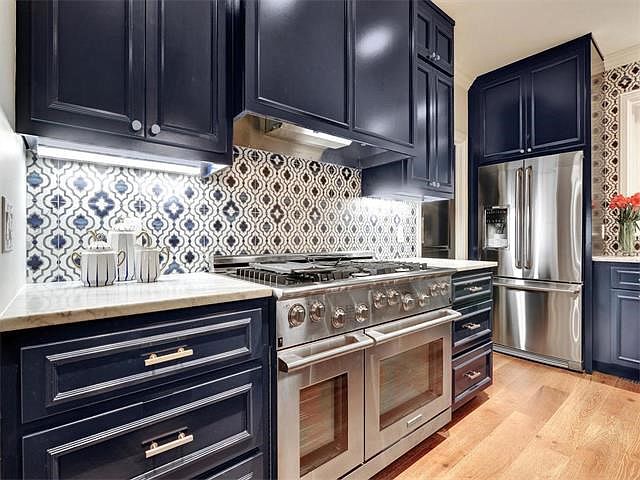
2. Blue kitchens and blue bathrooms
Beyond America’s obsession with curb appeal, what’s inside your house counts a lot too — especially the colors you paint the rooms (particularly the kitchen).
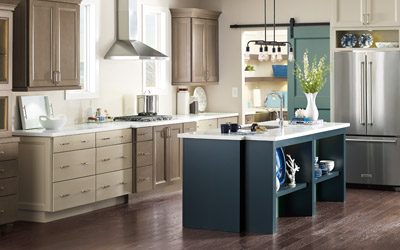
According to Zillow’s 2017 Paint Color Analysis, which examined more than 32,000 photos from sold homes around the country, homes with blue kitchens sold for a $1,809 premium, compared to similar homes with white kitchens.
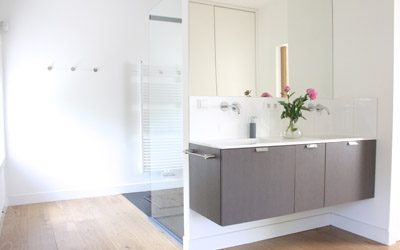
Blue is also a popular bathroom shade. The same analysis found that homes with pale blue to soft periwinkle-blue bathrooms sold for $5,440 more.
Walls painted in cool neutrals, like blue or gray, can signal that the home is well cared for or has other desirable features.
3. Trendy features
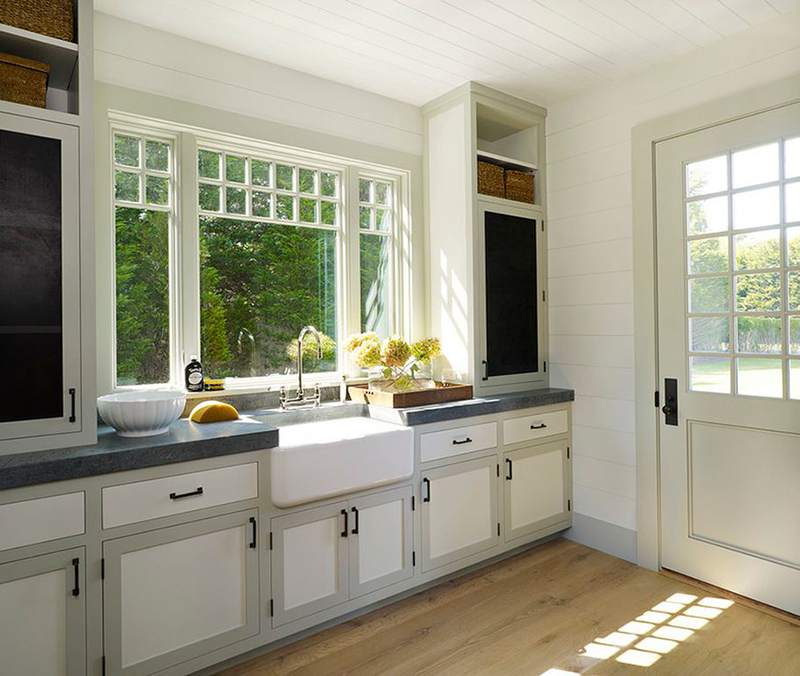
Joanna Gaines’ aesthetic is permeating more than just your YouTube search history. Zillow listings mentioning the shiplap queen’s favorite features — like barn doors and farmhouse sinks — sell faster and for a premium, according to a 2016 Zillow analysis of descriptions of more than 2 million homes sold nationwide.
Listings with “barn door” in the description sold for 13.4 percent more than expected — and 57 days faster than comparable homes without the keyword. Meanwhile, listings touting “farmhouse sink” led to a nearly 8 percent sales premium.
Sellers can use the listing descriptions to highlight trendy details and features that might not be noticeable in the photos.
4. How close you are to a city
If you own a home in a major American metropolitan area, you’re most likely sitting on a significant (and rapidly appreciating) financial asset. Case in point: Home values in the New York, NY, metro area are worth $2.6 trillion, per a recent Zillow analysis.
Photo from Shutterstock.
The average urban home is now worth 35 percent more than the average suburban home. Since 2012, the median home value in urban areas has increased by 54 percent, while the median home value in suburban areas is up just 38 percent.
The new year is kicking off with lower mortgage rates for home shoppers and people looking to refinance their mortgages. The benchmark 30-year fixed-rate mortgage dipped to a 4.51 percent average this week, Freddie Mac reports.
“Low mortgage rates combined with decelerating home price growth should get prospective home buyers excited to buy,” says Sam Khater, Freddie Mac’s chief economist. “However, it will be interesting to see how the recent turmoil in the stock market will affect homebuying activity in the coming months.”
Freddie Mac reports the following national averages with mortgage rates for the week ending Jan. 3:
30-year fixed-rate mortgages: averaged 4.51 percent, with an average 0.5 point, falling from last week’s 4.55 percent average. Last year at this time, 30-year rates averaged 3.95 percent.
15-year fixed-rate mortgages: averaged 3.99 percent, with an average 0.4 point, dropping from last week’s 4.01 percent average. A year ago, 15-year rates averaged 3.38 percent.
5-year hybrid adjustable-rate mortgages: averaged 3.98 percent, with an average 0.2 point, dropping from last week’s 4 percent average. A year ago, 5-year ARMs averaged 3.45 percent.
How much is that kitchen remodel going to cost you? That’s a hard number to nail down. It’s not like you can cost compare on Amazon.
Instead, you need to research, create a budget, and track your expenses. Having your own kitchen remodel worksheet can help. Download it here. (You’ll be prompted to make a copy of the interactive worksheet — just for you).
Or, scroll on to see what kind of costs to expect and how to save on a kitchen remodel to get the most return on your investment.
Costs of a Typical Kitchen Remodel
Below are itemized costs of kitchen materials and labor so you can see where the possibilities for savings exist.
Price ranges on materials include builder-grade, mid-grade, and better quality, but not the most expensive you can buy. These numbers are meant to convey typical costs.
Item
Estimated Materials Cost*
Estimated Labor*
Kitchen Cabinets
$6,000 – $15,000
$600 – $1,140
Dishwasher
$600 – $1,300
$115 – $270
Range / Stovetop
$350 – $3,000
$115 – $270
Wall Oven
$1,000 – $3,500
$115 – $270
Refrigerator
$350 – $4,000
$115 – $270
Range Hood
$175 – $600
$115 – $270
Microwave
$300 – $700
$115 – $270
Countertops
$700 – $3,750
$100 – $1,000
Flooring
$350 – $1,000
$150 – $3,250
Garbage Disposal
$150 – $250
$200 – $250
Paint
$150 – $2,000
$300 – $950
Sink and Faucet
$200 – $800
$250 – $650
Total
$10,325 – $35,900
$2,240 – $9,140
* Based on a 12-by-15-foot kitchen. Your costs will vary based on your kitchen’s size and the you choose.
Home values moved 5.1 percent higher this past November compared to November 2017, according to a new report by CoreLogic. However, appreciation growth is starting to curtail from its 5.4 percent annual gain in October. CoreLogic is predicting a 4.8 percent gain in home values by November 2019.
The National Association of REALTORS® also recently reported an uptick in inventory entering more markets as more homeowners put their homes up for sale. Buyers are having more choice, prompting some sellers to lower their asking prices due to the added competition, according to CoreLogic researchers.
Some buyers may still be skittish, however, due to affordability concerns. “The rise in mortgage rates has dampened buyer demand and slowed home-price growth,” says Frank Nothaft, CoreLogic’s chief economist. “Interest rates for new 30-year fixed-rate loans averaged 4.9 percent during November, the highest monthly average since February 2011. These higher rates and home prices have reduced buyer affordability.”
NAR has predicted home sales to top about 5.3 million for 2018, which would fall in line with sales performance from 2000. The strong economy may get more buyers purchasing in the new year.
“Given the 17 million more jobs now compared to the turn of the century, home sales are clearly underperforming today,” says Lawrence Yun, NAR’s chief economist. “That also means there is a steady longer-term growth potential.”
Certainly, a strong economy helps homeowners feel confident about the value of their property, adds Frank Martell, president and CEO of CoreLogic. “If recent declines in the stock market shake consumer confidence in the national economy, we may see homeowners’ perception of home values change and a subsequent buyer’s market emerge in 2019.”
The paint companies have released their color forecasts for the new year. Here are the hot hues expected to make waves in 2019. Which one is your favorite?
Living Coral / Photo Credit: Furniture Choice
Living Coral: Paint company Pantone announced “Living Coral” as its 2019 Color of the Year. The orange shade with golden undertones embodies “warmth and comfort,” Pantone says. “Living Coral easily delivers a graphic pop to a space,” says Rebecca Snowden, an interior style adviser at Furniture Choice. “Introducing it through small elements will brighten up a room, creating a sense of coziness that’s also fresh and chic.” For example, the energetic tone can liven up cushions, throws, and rugs in a living room. In a dining area, color blocked plates and coasters in the peachy hue may add some spark to a table arrangement, she says.
Blueprint / Photo credit: Behr
Blueprint: Behr has gone blue with its top color choice for the new year. Blueprint is a mid-tone blue that is described as warmer than denim but softer than navy. Behr is embracing a full range of blue, teal, and grays as key color choices in 2019. “Layer light and dark blues on walls, cabinets, furniture, and decor for impactful results,” Behr says.
Cavern Clay / Photo Credit: Sherwin-Williams
Cavern Clay: Sherwin-Williams has picked a warm terra-cotta color called Cavern Clay as its 2019 Color of the Year. The color embodies an American Southwest, modern desert aesthetic. “This warm, earthy hue is both casual and refined,” Sherwin-Williams says. “It can be the backdrop of a playful, welcoming dining room or kitchen when paired with bright tiles, warm stone, and sculptural greenery.” It also compliments materials like leather and woodgrains.
Metropolitan Gray / Photo Credit: Benjamin Moore
Metropolitan Gray: Benjamin Moore expects the gray trend to continue in the new year, which is shown through its neutral pick with Metropolitan Gray. “It’s a color in the neutral spectrum that references a contemplative state of mind and design,” says Ellen O’Neill, Benjamin Moore’s director of strategic design intelligence. “Not arresting nor aggressive, this understated yet glamorous gray creates a soothing, impactful common ground.”
Shifting economies, demographics, and land shortages are issues altering how we live and what buyers are looking for in a home. Going smaller has become bigger—a trend Not So Big House author and architect Sarah Susanka first advocated more than 20 years ago.
A desire for greater affordability, convenience, healthfulness, sustainability, and old-fashioned comfort are still on the wish lists of many clients. But Connecticut architect Duo Dickinson says he’s witnessing another trend: a renewed willingness to remodel.
With a mind to resale value, here are eight interior design trends that experts anticipate becoming more dominant in the new year, and advice on how you can apply these predictions to your real estate business.
Why it’s happening: Research shows that natural light can boost healthfulness, both physical and emotional, so architects and window manufacturers are responding. Dickinson’s top suggestions to clients are to repair or reglaze windows, add more windows, build a deck, or add on a screened porch. “It gives them an important connection with the outdoors,” he says. Manufacturers like Marvin Windows and Doors are debuting new product lines, such as windows mulled together for a wall of light, and the company’s new Marvin Modern collection minimizes framing for maximum sightlines. Rick Gehrke with RE/MAX Executives in Boise, Idaho, says he’s seeing more roll-up garage doors fitted with glass for views outdoors.
How you can take action: Let clients know that new glazing can make a big difference to the enjoyment and efficiency of a home, and it’s an affordable update. Dickinson says a quality single window or door with glazing might cost $1,000. An entire wall of glass may run $5,000 to $10,000, but the return on investment can be huge if it captures a view or lightens a dark space.
Why it’s happening: With reports of contaminants in drinking water, toxic levels of formaldehyde being released from laminate flooring, and other home health scares, consumers are increasingly concerned about how their home may affect their health. But rather than compromising health and wellness, homes can provide an opportunity to enhance lives.
Building experts await the U.S. debut of the DARWIN Home Wellness Intelligence platform at the January 2019 Consumer Electronics Show in Las Vegas. The platform focuses on air filtration, water purification, circadian lighting, and comfort-focused technologies, all to simulate the natural outdoor environment. “We wanted to get rid of stagnant air that’s two to five times worse than outdoor air, contaminated water that runs through old corroded pipes, synthetic materials that offgas, and artificial light that disrupts natural circadian rhythms,” says Paul Scialla, founder and CEO of Delos, DARWIN’s developer. “It also responds to changes it detects, such as pollutants coming in on the bottom of our shoes.” The first fully integrated DARWIN home was launched two months ago in Australia, with the platform adding only $2,000 to the cost of the project, he says. Eventually, Delos plans to make the technology available for retrofits of existing single-family homes.
How you can take action: Staying abreast of new building techniques and smart home developments will help you better serve clients who are eager to make their homes healthier.
Why it’s happening: According to a 2018 Houzz Bathroom Trends Study, baby boomers now account for the largest share of home owners choosing to renovate—and their top project is redoing the master bathroom. “A significant proportion of boomers (56 percent) are aware of the needs that arise aging in place,” says Nino Sitchinava, Houzz economist. “They are proactive about integrating accessibility features that address these needs during renovations.” Popular changes include removing tubs that are difficult to climb into and out of, adding accessible shower seats and grab bars, and installing zero-threshold entries between rooms.
How you can take action: Knowing the costs will help you serve as a trusted adviser to buyers. The median cost for a large master bathroom renovation was estimated at $16,000 by Houzz. If that’s too much, suggest piecemeal changes. Grab bars, for example, range between $140 and $300, depending on whether the wall includes blocking support or if it must be added, says Richard Duncan, a universal design expert and co-founder of the Better Living Design Institute in Asheville, N.C.
Why it’s happening: Natural disasters are occurring more frequently and sometimes with little warning. The most forward-thinking homebuilders are developing resilient solutions for new and existing homes. “The weather is getting almost biblical, and homes that don’t address that run a legitimate risk of being seriously damaged or destroyed and having their resale value put in question,” says Nathan Kipnis of Kipnis Architecture and Planning Solutions in Chicago. His designs include oversized gutters and downspouts that direct water to rain gardens or other landscape features that can handle intense rain. He also recommends an ice and water shield on the roof to create a rain barrier, so the interior has greater protection. Coastal homes should add hurricane straps where the roof and walls intersect, he says, to reduce possible wind damage. Sustainable features are also critical to decarbonize the built environment and conserve resources. Kipnis favors all-electric systems, including induction cooktops, mini-split HVAC systems, and heat pump water heaters. Homeowners could take it a step further and have the garage wired to be a charging station for electric cars and add solar panels to the roof.
How you can take action: Direct clients to experts who know how to build and remodel houses to withstand the weather and keep energy costs down. Also, know how and where products and materials are made, since more buyers are asking, says Amanda Mason, senior design director at Chicago-based Belgravia Group. You can increase your knowledge by obtaining the National Association of REALTORS®’ Green Designation or attending a green-building conference.
Why it’s happening: Color swings keep rooms fresh, but what may appeal often depends on how trend-focused the locale is, along with the age and style of the home. According to Sue Wadden, director of color marketing at Sherwin-Williams, “Grays are now in the midst of a warming trend.” In Chicago, real estate pro Jennifer Ames, with Coldwell Banker Residential Brokerage, says, “It’s back to more white and off-whites.” Her clients are seeking a more neutral, calm background. In Boise, Idaho, beige appeals to the broadest range of buyers, but millennials moving downtown favor a statement wall of bright turquoise or magenta, says real estate salesperson Gehrke.
When it comes to cabinetry, colors are becoming more robust nationwide. Manufacturer MasterBrand Cabinets has found blue tones are becoming more popular, while teal, sage, and olive colors are making inroads. But when it comes to selling, color expert Amy Wax generally recommends being more cautious and favoring lighter colors that convey an easy-to-decorate, move-in atmosphere.
How you can take action: Learn preferences of buyers in your market, which may require asking paint store salespeople, designers, architects, and color experts. Then share what you learn with clients. “You can help buyers find a look by showcasing an updated aesthetic that doesn’t feel contrived,” Wadden says.
Why it’s happening: After so much focus on clean, spare Scandinavian design, there’s yearning for more warmth and comfort with natural touches. In fact, Miami-based designer Antony Chandler, president of Archiforma Group, thinks sitting in your living room should evoke the feeling of lying in a hammock under a great tree on a breezy summer day. To get the look, Chandler suggests prints and florals in natural-colored tones. Butcher block kitchen countertops and a mix of warmer natural materials such as wood, leather, silk, and stone will help capture the natural feel. Chicago designer Steve Kadlec suggests open grain oak cabinetry, metallic linen draperies, saddle leather, and woven cotton rugs. A warmer, more natural glow can also be illuminated through new LED lights, says Chicago designer Tom Segal, of Kaufman-Segal Design.
How you can take action: Your sellers don’t have to revamp rooms completely. Make suggestions on incorporating a few pieces to get the look. “You can capture a concept with a single well-chosen piece. Make it bold, beautiful, and memorable, and your listing will stand out in buyers’ minds,” Chandler says.
Why it’s happening: Affordability is in great demand, with rising home prices and a shortage of desirable downtown locations. “What’s needed is more dense land planning, common outdoor space, greater acceptance of attached homes, and sometimes doing without a garage,” says architect Bill Ramsey with KTGY Architecture and Planning’s Denver office. What’s considered livable yet affordable often needs to be larger than tiny homes, most of which are less than 500 square feet. John Hunt, president of Atlanta-based MarketNsight, a research firm focused on the building industry, thinks there’s a more viable option: microhouses, which range from 500 to 1,000 square feet. They fit community codes for permanent housing, unlike tiny homes that often must be built atop trailers due to their modest square footage. Microhouses also offer equity, unlike rental microapartments. They can be constructed as narrow townhouses or as a one-story, single-family designs. Home builder Jim Chapman Jr. recently received approval from the city of East Point outside Atlanta for 40 microhouses, each between 500 and 1,000 square feet on a 7.69-acre historic downtown site. Prices will start in the high $100,000s.
How you can take action: This small livable option can be a good investment for your buyers. Find out if there are any developments in the works in your market. “Many pay higher prices for lower-square-foot rentals,” Hunt says.
Why it’s happening: For the millennial generation, quality supersedes quantity. But this isn’t limited to their desire for smaller, better homes, says Chicago designer Rebecca Pogonitz of GOGO design group. It also applies to what they choose to put inside their homes when they decorate. “It’s not about keeping up with the Joneses. How they live dictates their choices,” she says. “They’re very practical about the money they spend, often researching and gathering ideas from sites like Houzz and Pinterest that mix high and low, and then asking experts to cull and complete a look.”
Finished projects might translate into a combination of luxury vinyl planks—which are more practical than expensive real wood boards—and furnishings from readily available online resources like Wayfair, Crate and Barrel, and Arhaus. The benchmark isn’t how fancy or rare something is, but if it’s practical, gives them the right experiences, and nourishes their spirit.
A Kansas City, Mo., couple lost their entire $130,000 down payment on a home purchase from a money wire scam that has been increasingly targeting real estate transactions.
Ross and Melinda Fulton were purchasing a home to live closer to their daughters and new granddaughter in the Kansas City area. Ross, a retired pastor of 46 years, and Melinda found the perfect home in Independence, Mo., and were planning to pay for it with cash.
They received an email from someone they thought was their real estate agent. The message was sent from an iPhone and was signed with their agent’s name. As reported by KSHB-41 Kansas City, the email read:
Hello Ross and Melinda, In preparation for your closing on the 30th of November. The closing balance will be required to be wired 26th of November. I would like to know if you will be able to perform the wire on the 26th, so I can inform (actual title company’s name).
Melinda replied that they’d be bringing their checkbook. She then received this message back, again signed by her real estate agent:
Hello Melinda, Due to the increasing incidence of fraud with certified bank checks, we will require all funds needed for closing to be tendered in the form of a wire transfer. We no longer accept certified checks as good funds.
The Fultons wired the money. The money is now gone with little chance of getting it back.
“It looks as though someone had been monitoring our emails with our REALTOR®, and at the important time entered in and gave us instructions for wiring money to a bank account representing the title agency and we followed those instructions with our bank and sent the money away,” Melinda told KSHB-41. The scammer knew the address of the home they were buying, their REALTOR®’s name, email address, title company’s name, and closing date.
Warn your clients that this could happen to them, too, and make sure they take the proper precautions. Paul Hentzen, the couple’s attorney, offers the following tips:
Verify wire fraud directions through a phone call.
Watch email addresses closely. The Fulton’s case did show a slight difference in the email address of their agent. KSHB-41 included an example, with the names changed, of how the scammer’s email address was different: johnsmith@comcast.com (real) vs. johnsmith.comcast@mail.fr (fake)
Watch for any syntax errors such as words missing, or differences in how the person has talked or communicated to you previously. Hentzen provides the following example of syntax errors: “The closing balance will be required to be wired 26th of November. I would like to know if you will be able to perform the wire on the 26th, so I can inform”
Let’s face it: Looks matter to home buyers who are trying to make a connection with a property. Even in a competitive seller’s market, which characterized real estate in 2018, proper staging is essential to getting homes sold. Staging can even increase a property’s value by up to 5 percent, according to the National Association of REALTORS®’ 2017 Profile of Home Staging, the latest report available. Did you catch on to any design trends this year to improve your listing’s appearance? These were the hottest staging styles and tips of 2018 featured in REALTOR® Magazine’s Styled Staged & Sold blog.
1. Dos and Don’ts of Hiring a Home Stager
The right professional stager needs to complement your selling strategy, support your sellers’ goals, and be able to work with the home’s existing decor. Audra Slinkey, president and founder of Home Staging Resource, breaks down the questions you should ask a stager and how to judge his or her professional experience to make sure it’s a good fit for your listing.
2. Jaw-Dropping Transformations of Outdoor Spaces
Home buyers are increasingly judging the livability of patios, terraces, and other outdoor entertainment areas. These spaces—not matter how small or large—can be a selling point, so it would be wise to explore outdoor staging for your listings. As an example, see how this once-drab outdoor space became a central entertainment area that extended the home’s appeal.
3. By the Numbers: Home Features Buyers Sprung for in 2018
Open floor plans remained all the rage, while smart homes grew in popularity. Having a pulse on the latest design trends can help you anticipate what buyers will be seeking in their next home. Were you on top of the styles that took center stage this year? Refresh your memory with these infographics; you never know—they may spill over into 2019 home design trends.
4. The Secret to Kitchen Envy: A Stylish Island
The star item of many kitchen makeovers is the center island. It’s not only a gathering spot for cooking but also for eating, working, and socializing. To make it even more of a focal point, many homeowners are freshening up the look of their islands, moving from traditional colors to eye-popping designs. These stylish examples will inspire you and your clients.
5. Before and After: How Staging Makes the Difference
When staging a home, there’s a lot to consider: the potential buyer’s needs, the original purpose of the space, the layout, and the latest design trends. The wrong furnishings can make a space feel cramped. Professional stager Patti Stern offers her best insights—along with before and after visual examples—for how to stage in a way that will attract the largest buyer pool.
More homes may soon be energy-free. Homes and commercial buildings consume 40 percent of all energy used in the U.S., but the growth of net-zero homes could drastically curtail that. The Zero Energy Ready Homes—those that make the energy they use—are becoming more of a reality.
In 2017, 8,547 units of net-zero housing or zero-already housing had been built in the U.S. About 38,863 were under construction, according to the Net-Zero Energy Coalition.
The growth of net-zero is expected to get a big boost when California’s new law takes effect in 2020, which will require all new homes to be net-zero. (Commercial buildings must meet that deadline by 2030.) The European Union must meet that same goal by 2020 for all new buildings in Europe.
New technologies have reduced in price over the past decade, which has helped to make net-zero homes more possible.
“Costs are changing quickly,” Alisa Petersen, a senior associate at Rocky Mountain Institute, an energy and environmental think tank, toldThe Wall Street Journal. “You don’t have to throw every efficiency measures at a home to make it net-zero.”
Net-zero homes are sealed tightly against drafts and are well-insulated to prevent heat leaks through the walls, windows, and doors. An energy recovery system helps prevent stale air, humidity, and mold issues. Solar panels are a big part of net-zero homes, too. The interiors of net-zero homes tend to be quieter and freer of pollution than conventional structures.
Net-zero homes provide luxury and energy efficiency, says Sam Bargetz, co-founder of the architecture firm Loadingdock5 based in Brooklyn, N.Y. “It’s much quieter than a regular building, and it’s dust-free,” Bargetz says.
Do you believe in love at first sight? Many house hunters do: They describe stepping inside a house and instantly feeling like it’s “home.” But was it the price, the amenities, or the location that attracted them? Home improvement website Porch.com surveyed nearly 1,000 consumers about their first home purchase to find some of the top factors that influenced their buying decisions.
Aesthetic appeal, affordability, commute time, and neighborhood character were the top draws, according to the survey. Sixty-seven percent of baby boomers and 61 percent of Gen Xers say affordability was the most important factor when searching for their first home. Millennials also placed a high priority on finding a home within their budget, as well as renovated bathrooms.
Whether the home was move-in ready also was a powerful influencer, respondents say. “We know home renovations can get pricey, and one thing that appeals to potential first-time home buyers is finding a home where the kitchen and bathrooms are fresh and up to date,” according to Porch.com’s study.
“Emotions obviously play an important role in purchasing a first home,” according to the Porch.com survey, which finds that Gen Xers were the most emotionally driven when deciding which home to purchase. Twenty-one percent of Gen Xers—more than both millennials and baby boomers—mentioned the importance of their partner falling for the right house.