In master bathroom remodels, showers are taking the primary focus, finds a new survey from Houzz, a home remodeling website. Homeowners are making extra space for fancier showers. Eighty-three percent of homeowners recently surveyed say they updated their shower during a master bathroom renovation, and 54% increased the shower size, according to the Houzz 2019 Bathroom Trends Study, released on Tuesday.
Roomier showers remove some common pet peeves homeowners have with their master bathrooms: The showers can be too small and outdated.
Homeowners are making substantial improvements to their master bathroom. Bathrooms have the second highest median spend in home remodels at $8,000 nationally—a 14% annual increase from 2017 to 2018. The median spent on a major master bathroom remodel was between $10,100 to $12,000, while a minor remodel cost between $2,000 to $2,300. San Francisco and San Jose homeowners tended to spend the most on their master bathroom remodels at $15,000 and $13,000, respectively.
“Bathrooms have always been a top room to renovate, along with kitchens, and now we’re seeing homeowners double down on their master bathrooms,” says Nino Sitchinava, Houzz principal economist. “The cost of materials including stone and tile has increased due to trade disputes, driving up master bathroom spend. Despite this, renovation activity remains strong, propped by high home equities and homeowners’ desire to stay put given the limited housing supply.”
Some additional bathroom remodel trends that emerged from this year’s Houzz report:
Accent walls: More than one-third of homeowners renovating their bathroom added an accent wall. More than half of the accent walls appeared in neutral palettes of gray (22%), blue (16%), or white (15%). Sixteen percent chose a bold, multicolored accent wall.
Medicine cabinets: Two in five homeowners say they opted for custom or semi-custom medicine cabinets during their renovation. Two-thirds of the upgraded medicine cabinets have mirrors on the outside. Many owners also opted for specialty features with their medicine cabinets, such as lighting on the outside, hidden plugs, or antifog systems.
Mirrors: Seventy-seven percent of homeowners replaced their mirror during a master bathroom renovation. In general, they opted for two mirrors over each of the two sinks. The top features in mirror upgrades included antifog systems, LED lighting, and hidden plugs.
High-tech toilets:One-third of remodeled master bathroom toilets contained high-tech features, such as self-cleaning units and seats with bidets, heat, overflow protection, or nightlights.
Lighting: Eighty-one percent of renovating homeowners also updated their lighting, such as additional wall lights, recessed lights, or shower lights. Some owners opted for decorative touches, like chandeliers (17%) or pendant lights (15%). Most of the new lighting uses both metal and glass.
Alternative flooring:Ceramic or porcelain tile is the most popular flooring material in master bathrooms, but its use is declining (25% in 2019, from 30% in 2017). Flooring materials like vinyl and resilient and engineered wood flooring is also on the rise (10% in 2019, up from 6% in 2017).
Many home sellers are forgetting to hide their prescription drugs prior to an open house, warn real estate professionals.
Besides staging, decluttering, and stowing away jewelry or valuables, home sellers are overlooking the need to tuck prescription drugs away from medicine cabinets and drawers, they say. A recent article at realtor.com® warns of the dangers and calls out specific medications like Oxycontin, attention deficit disorder medications like Concerta and Adderall, depression and anxiety medications like Zoloft and Xanax, and sleep aids like Ambien for being targets of open house vandals. Some over-the-counter cough suppressants or heartburn medications also may be at risk of being swiped.
“If you’re getting ready to show your home, walk around the house thinking like a stranger,” realtor.com® notes in the article. “What’s easy to pick up? What might be easy to sell? This is a great guideline for medications, but also for hiding any valuables in your home. Think about wine, perfume bottles, expensive lotions, even your designer tie collection.”
To discard old pill bottles, some real estate professionals are giving their clients Deterra bags and other drug-deactivation systems to safely dispose of them prior to showings. When mixed with warm water, the Deterra bags absorb active ingredients in the pills and make the drugs inactive.
“We’re giving them to agents to give to homeowners when they’re buying or selling homes,” Heidi Kasama, former president of Nevada REALTORS®, told realtor.com®.
From shiny kitchen cabinets to wooden ceiling beams, several home design trends aim to liven up neutral interiors in the new year. Home remodeling website Houzz recently asked designers to chime in about what design trends they expect to grow more popular over the next few months. Here are a few trends they flagged.
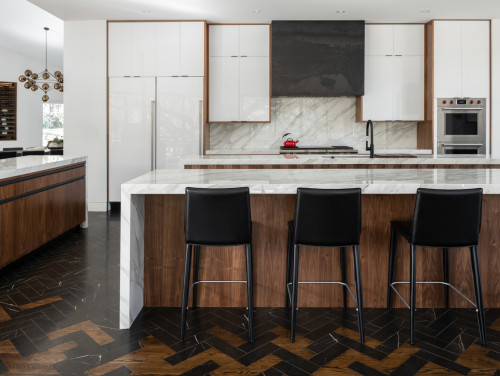
High-gloss kitchen cabinetry. Flat-panel cabinets with a high-gloss finish are gaining popularity, Kimmie Rokahr, a designer with DesignLoft Cabinets, told Houzz. The shinier finish bounces light around the space. Also, the flat-panel design gives a modern look that makes the cabinets appear like they’re receding. Additionally, don’t forget about the kitchen hood.
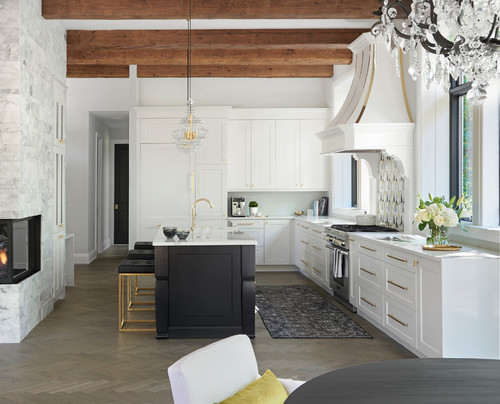
Wooden beams. More attention in home design is being placed on dressing up the home’s fifth wall. Wood ceiling beams are one way to do that. Designer Cynthia Soda of Soda Pop Design says the contrasting wooden beams can add some warmth to an otherwise all-white space. It can help accentuate the room’s height by drawing eyes upward.
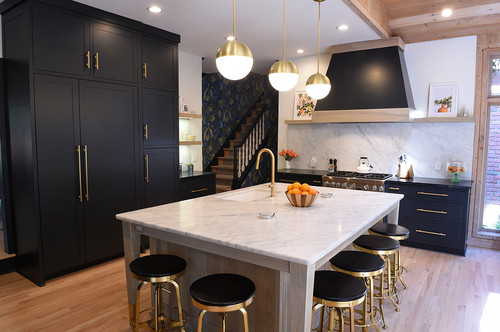
Brass accents. Kitchen designs are incorporating more contrasts, and brass is one way to achieve that. Tecola Robinson of Tecola Camille Interiors told Houzz that she’s seeing more black or dark kitchen cabinets paired with brass or gold hardware for a visual pop.
A surge in first-time home buyers is expected to hit the housing market over the next three years. About 8.3 million first-time buyers are projected to enter the mortgage market between 2020 and 2022, predicts a new report from TransUnion. That marks a jump from the 7.6 million first-time buyers that were added in the previous three-year period between 2016 and 2018.
However, plenty of housing market challenges persist for new buyers, including higher home prices, sluggish wage growth, and limited housing inventory. “But we may be starting to see daylight as slowing home price appreciation, low unemployment, increased wage growth, and low interest rates are helping affordability,” says Joe Mellman, senior vice president and mortgage business leader at TransUnion. “As a result, we are optimistic that first-time home buyers will contribute more to homeownership than at any time since the start of the Great Recession.”
First-time home buyers are younger today than they were around the time of the Great Recession. The median age of buyers fell from 39 in 2010 to 36 in 2018. The first-time home buyer share has increased by 6% among 25- to 34-year-olds, according to TransUnion’s research.
TransUnion surveyed 943 residents who have never owned a home but plan to buy within the next three years. Their top motivators to purchase a home were to seek more privacy (45%) and to build equity or wealth (44%). Other common reasons included getting married (24%) and expanding their family (23%).
But the most common reason respondents cited for delaying a home purchase was concerns of not having enough money for a down payment or monthly payments (58%). Half of those respondents—or 51%—said they believed they needed to meet a down payment require of 10% to 20% to buy a home.
Greater buyer education may be needed. Many respondents said they don’t understand the homebuying process. Sixty-seven percent believed a high credit score is necessary to purchase a home, and 34% said they were not familiar with any mortgage financing options. Consumers were unfamiliar with mortgage programs available to people with lower credit scores or those that require only 3% down.
“Many of our potential first-time home buyer respondents don’t seem to be aware of the wide variety of financing options available to them,” Mellman says. “It suggests there’s a large opportunity for lenders to proactively identify consumers who are interested in becoming first-time home buyers and then educating them on options they may not be aware of. Consumers may find homeownership programs that are more flexible than they originally thought, and lenders in turn can gain new customers.”
Respondents also cited other common reasons for delaying a home purchase, such as desiring a more steady job (39%) and home prices being too high (35%). Sixty percent, however, did say they would be willing to relocate to another city or state if the cost of a home was lower than at their current location. Generation Z respondents, born in or after 1995, were the most likely to say they’d be willing to move.
However, home buyers are still taking advantage of historically low mortgage rates, Freddie Mac reports. “Purchase activity continues to show strength, indicating obvious homebuyer demand,” says Sam Khater, Freddie Mac’s chief economist. “However, the lack of housing supply remains a major barrier to not just the housing market but the overall economic recovery.”
Freddie Mac reports the following national rates for the week ending Oct. 31:
30-year fixed-rate mortgages: averaged 3.78%, with an average 0.5 point, rising from last week’s 3.75% average. Last year at this time, 30-year rates averaged 4.83%.
15-year fixed-rate mortgages: averaged 3.19%, with an average 0.6 point, rising from last week’s 3.18% average. A year ago, 15-year rates averaged 4.23%.
5-year hybrid adjustable-rate mortgages: averaged 3.43%, with an average 0.4 point, up from last week’s 3.4% average. A year ago, 5-year ARMs averaged 4.04%.
For the third time this year, the Federal Reserve cut interest rates by a quarter point in an attempt to bolster a slowing economy. The federal funds rate will hover between 1.5% and 1.75%.
The Fed’s benchmark rate does not directly affect long-term mortgage rates, but it does often influence them. The latest rate cut has economists torn on the effect it could have.
Mortgage rates have been falling for nearly a year. The average 30-year fixed-rate mortgage is under 4%, according to Bankrate.
“Mortgage rates this low at the end of an economic cycle are nearly unprecedented, and may be very well keeping the housing market—and U.S. economy—afloat,” Ralph McLaughlin, deputy chief economist at CoreLogic, told CNBC.
The average homeowner who refinances into a lower rate could trim $150 a month off their mortgage payment, according to Bankrate. The Fed’s rate cut also could prompt adjustable-rate mortgages to fall, and it could be slightly less expensive to borrow money from a home equity line of credit or pay back a current HELOC loan.
“[The Fed] rate cut will soon make it less expensive to fix up your home as sellers prepare for the 2020 homebuying season,” Holden Lewis, an expert with NerdWallet, told Forbes.com. “A lower Fed rate reduces the cost of borrowing from a home equity line of credit—a popular way for homeowners to pay for renovations and repairs. While the prime homebuying months are in late spring and summer, buyers often start looking at homes as early as February, so the timing of today’s cut is coming at an ideal time.”
However, economists are less bullish that the latest rate cut will translate to much savings in 30-year fixed mortgages.
Richard Barrington, a financial expert for Moneyrates.com, told CNBC that lenders may be less inclined to lend money and may even charge a higher interest rate to combat risk if they sense the economy is weakening.
Policymakers said on Wednesday after the Fed’s meeting that the U.S. economy was posting “solid” job gains and household spending was on the rise. But they also noted that business investment and export activity remained weak. The economy grew at a 1.9% pace in the third quarter, which is the second consecutive reading that fell well-below the first-quarter report of 3.1%.
“The committee will continue to monitor the implications of incoming information for the economic outlook as it assesses the appropriate path of the target range for the federal funds rate,” the Fed wrote in a statement.
The Fed has one final meeting of the year in December.
Lower mortgage rates have increased buying power by 6%, and more house hunters want to take advantage. That helped boost contract signings by 1.5% in September, the second consecutive month for increases, the National Association of REALTORS® reported Tuesday.
NAR’s Pending Home Sales Index, a forward-looking indicator based on contract signings, rose to a reading of 108.7 in September. (An index reading of 100 is equal to the level of contract activity in 2001.) Contract signings are up 3.9% year over year.
“Even though home prices are rising faster than income, national buying power has increased 6% because of better interest rates,” says Lawrence Yun, NAR’s chief economist. “Furthermore, we’ve seen increased foot traffic as more buyers are evidently eager searching to become homeowners.”
Fort Wayne, Ind., Rochester, N.Y., Pueblo, Colo., Columbus, Ohio, and Topeka, Kan., saw the largest increase in active listings in September compared to a year ago.
Yun says the upper end of the market is particularly performing strongly. However, sales should be even higher, he says. Yun has called for more homebuilding to meet increasing buyer demand.
“Going forward, interest rates will surely not decline in a sizable way, so the changes in the median price will be the key to housing affordability,” Yun says. “But home prices are rising too fast because of insufficient inventory.”
Besides greater new-home construction, Yun also called on exploring other ideas to increase inventories, such as greater use of modular, factory-constructed homes, converting old shopping malls or vacant office space into condos, and permitting more accessory dwelling units.
Accessory dwelling units are popping up in more backyards, CNBC reports. These standalone housing units are either serving as rentals to generate extra income for homeowners or extra space for aging parents or adult children who move back home.
The growing interest in ADUs has sparked changes to local and state zoning rules to allow for more construction. Some communities are even pointing to ADUs as a solution for a lack of affordable housing. For example, the city of Portland, Ore., waived impact fees in 2010, making it significantly less expensive to build ADUs in the city. It also prompted construction to soar: The number of ADU permits rose from 86 in 2010 to 660 in 2018, accessorydwellings.org reports.
“ADU is still, for the most part, an affluent homeowner product, meaning you have to have cash on hand to take this on,” Steve Vallejos, CEO of Prefab ADU, told CNBC. His company’s most popular ADU model is a 288-square-foot home that costs about $105,000 to build. ADUs are “addressing financing, it’s addressing standardizing products within cities, and then also it’s creating partner relationships with contractors, architects, and even other builders,” Vallejos says. “There are many different scenarios that people look into based on income, lot size, different zoning rules—so we build ADUs that start at about 150 square feet going up to 1,200 square feet.”
Some homeowners view ADUs as a rental income generator. Some are even turning their ADUs into a retirement plan. Homeowner Lisa Puchalla of Washington, D.C., told CNBC that she and her husband can envision themselves retiring one day in their ADU. The District of Columbia is another city that recently relaxed its building codes to allow for more ADUs. The Puchallas have an ADU in the side yard of their home and rent the ADU out on a monthly basis. “I can definitely see us hanging out there, retiring and traveling, and then renting the main house,” she says.
When it comes to selling a home, the small tweaks can sometimes make the largest difference. From the tile grout to the smells, Apartment Therapy recently asked real estate pros to chime in with the easy-to-overlook attributes of a home that could increase a home’s value.
“It’s these small things that show pride of ownership,” Dana Bull, a real estate pro with Sagan Harborside Sotheby’s International Realty in Marblehead, Mass., told Apartment Therapy. “Buyers feel more confident in a transaction and can be more likely to pay a premium if they believe the home has been properly managed and maintained by a seller.”
The often overlooked areas that can make some of the biggest difference include:
Clean surfaces and crevices
Take note of those baseboards and tile grout because the cleaner they are, the bigger the impact. “Buyers notice everything,” Bull told Apartment Therapy. “I’ve had clients ‘ooh’ and ‘ahh’ over a basement floor so clean you could eat off it. Even little details matter, like clean grout, tidy closets, and a swept basement floor. Yes, I’ve had buyers get hung up over shoddy tile work and I definitely can’t blame them.” Clean or replace grout and caulk in the bathrooms to give off super-clean vibes.
Swapping out the light fixtures makes a big difference, too. For example, replace old ceiling fans or light fixtures with more modern choices. “If you want to do a little more work, recessed lighting gives any space a bright, modern touch,” Sarah Maguire, a real estate pro with Compass in Boston told Apartment Therapy.
A smell test
The smell of a home has a big impact on first impressions. Sellers should watch what they cook when they have their home on the market, such as avoiding fish, broccoli, or other foods that can leave pungent lingering odors in a home. “Make sure your home has a pleasant smell, but don’t keep candles or air fresheners in sight,” suggests the Donahue Maley Burns Team. “You don’t want potential home buyers to think you’re covering something up.”
The 30-year fixed-rate mortgage was on the rise last week, leaping to a 12-week high. But rates are still well below year-ago levels.
“The outlook for a favorable resolution to the trade dispute between the U.S. and China is still unclear, introducing some volatility into financial markets and the benchmark 10-year Treasury yield,” says Sam Khater, Freddie Mac’s chief economist. “Mortgage rates are following suit but are near historic lows, while mortgage applications to purchase a home remain higher year over year.”
Freddie Mac reports the following national averages with mortgage rates for the week ending Oct. 24:
30-year fixed-rate mortgages: averaged 3.75%, with an average 0.5 point, rising from last week’s 3.69% average. Last year at this time, 30-year rates averaged 4.86%.
15-year fixed-rate mortgages: averaged 3.18%, with an average 0.5 point, rising from last week’s 3.15% average. A year ago, 15-year rates averaged 4.29%.
5-year hybrid adjustable-rate mortgages: averaged 3.4%, with an average 0.3 point, up from last week’s 3.35% average. Last year at this time, 5-year ARMs averaged 4.14%.