Home shoppers are being greeted with much lower mortgage rates to kick off 2020 than they were a year ago. The 30-year fixed-rate mortgage averaged 3.72% this week, compared to 4.51% at the beginning of 2019.
Improving economic data has led to a stability in mortgage rates over the last few weeks. Thirty-year rates have generally hovered around an average of 3.7% for the past two months.
What a difference a year makes: “The stability is welcome news after the interest rate turbulence of the last year, which caused a slowdown in the housing market and other interest rate-sensitive sectors,” says Sam Khater, Freddie Mac’s chief economist. “The low mortgage rate environment combined with the red-hot labor market is setting the stage for a continued rise in home sales and home prices.”
Freddie Mac reports the following national averages with mortgage rates for the week ending Jan. 2:
30-year fixed-rate mortgages: averaged 3.72%, with an average 0.7 point, falling slightly from a 3.74% average a week ago. Last year at this time, 30-year rates averaged 4.51%.
15-year fixed-rate mortgages: averaged 3.16%, with an average 0.7 point, dropping from last week’s 3.19% average. A year ago, 15-year rates averaged 3.99%.
5-year hybrid adjustable-rate mortgages: averaged 3.46%, with an average 0.3 point, rising slightly from a 3.45% average last week. A year ago, 5-year ARMs averaged 3.98%.
Security officials are warning consumers to not abbreviate “2020” in official documents because they say it can be an easy way for scammers to commit forgery. They say the abbreviation makes it easy for scammers to change out the numbers on paperwork. For example, if you write a date like “1/3/20,” scammers could change it to “1/3/2000” or 1/3/2021.”
Instead, write out the full year as “1/3/2020” or, better yet, write out the name of the month as well to read “January 3, 2020.” It “could possibly protect you and prevent legal issues on paperwork,” Dusty Rhodes, a Hamilton County, Ohio, auditor told the USA Today Network.
Why would scammers want to change a date? They could seek to establish an unpaid debt or to attempt to cash an old check.
Police departments across the country have urged the public to write out the year. “This is very sound advice and should be considered when signing any legal or professional document,” the East Millinocket Police Department in Maine wrote in a Facebook post. “It could potentially save you some trouble down the road.”
Pending home sales rose 1.2% in November after slipping the prior month, according to the National Association of REALTORS®’ latest housing report, which was released Monday. Year-over-year contract signings were up 7.4% nationally, according to the report.
November’s Pending Home Sales Index reached 108.5; an index of 100 is equal to the level of contract activity in 2001. The West region of the country reported the highest monthly growth in pending home sales at 5.5%, while the Midwest jumped 1%. The Northeast and South saw only minor adjustments in month-over-month contract activity.
“Despite the insufficient level of inventory, pending home contracts still increased in November,” said NAR Chief Economist Lawrence Yun, noting that housing inventory has been in decline for six straight months. “Favorable conditions are expected throughout 2020 as well, but supply is not yet meeting the healthy demand.”
At NAR’s first-ever Real Estate Forecast Summit earlier this month, housing economists predicted 2% GDP growth, a 3.7% unemployment rate, and a 3.8% average mortgage rate. “Sale prices continue to rise, but I am hopeful that we will see price appreciation slow in 2020,” Yun said at the event. “Builder confidence levels are high, so we just need housing supply to match and more home construction to take place in the coming year.”
Here’s the regional breakdown of November results:
West: Pending home sales grew 5.5% and were up 14.0% from a year ago.
Midwest: Pending home sales rose 1% and were 5% higher than a year ago.
Northeast: Pending home sales slid 0.1% but were 2.6% higher than a year ago.
South: Pending home sales decreased 0.2%, but were 7.7% higher than a year ago.
More than 30% of homeowners say the floors are what they dislike most about their properties, according to a survey conducted by online loan marketplace LightStream. New flooring may even increase a home’s value, Dan DiClerico, an expert with HomeAdvisor, told realtor.com®. “Putting down new flooring is a smart investment,” DiClerico says. “But more importantly, it can dramatically transform the look and feel of the home, while making it safer and more functional.”
Realtor.com® asked design experts to weigh in on some of the top trends for flooring in 2020. Some of their predictions include:
Tile that looks like wood.“The designs are very convincing, so you could mistake them for real wood, and there’s no wear and tear or risk of scratching,” DiClerico says. “In general, we’re seeing increased interest in engineered flooring over natural wood, mainly because it’s easier to maintain without too much sacrifice of style.” HomeAdvisor estimates the cost of installing ceramic or porcelain tile to be $3,000 to $4,000 for a 200-square-foot area.
Vinyl plank flooring.Waterproof floors are becoming more common, and vinyl planks have emerged as one of the hottest flooring trends. Vinyl can resemble hardwood flooring at a fraction of the cost. Its water resistance makes it a popular choice in kitchens and bathrooms. Vinyl flooring can cost anywhere from 50 cents to $5 per square foot, and installation costs an extra $3 to $5 per square foot, according to HomeAdvisor.
Marble.Porcelain tile that looks like marble is also trending. “They look extremely realistic compared to their genuine counterparts, making it difficult to tell the difference but getting the same beautiful look at a fraction of the cost,” Debbie Lori Travin of DLT Interiors told realtor.com®. The cost ranges widely: between $13.50 and $83 per square foot.
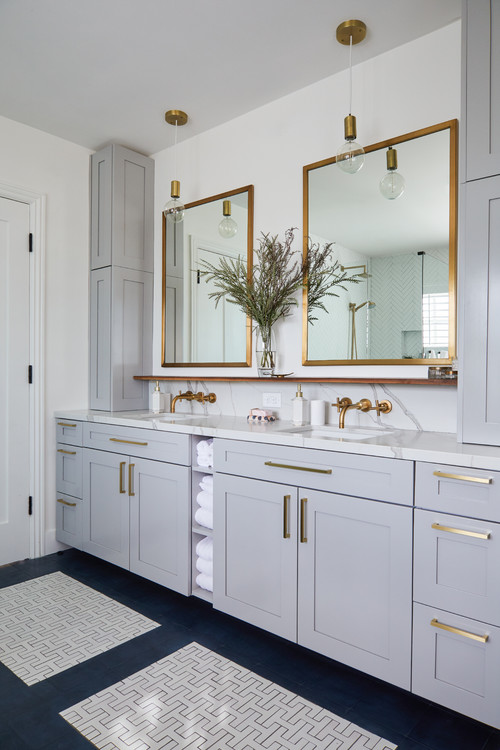
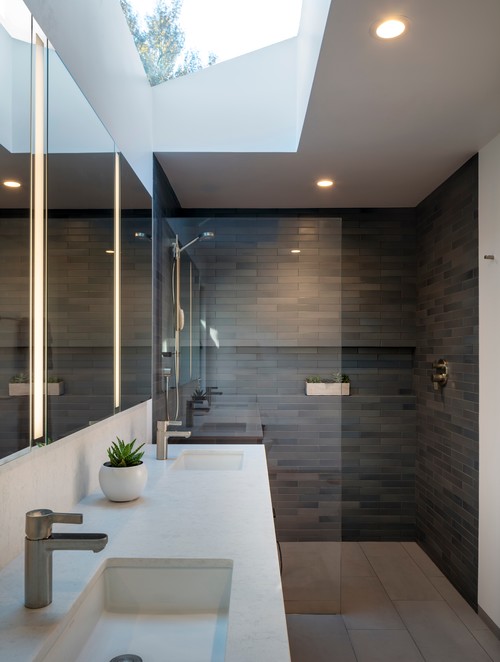
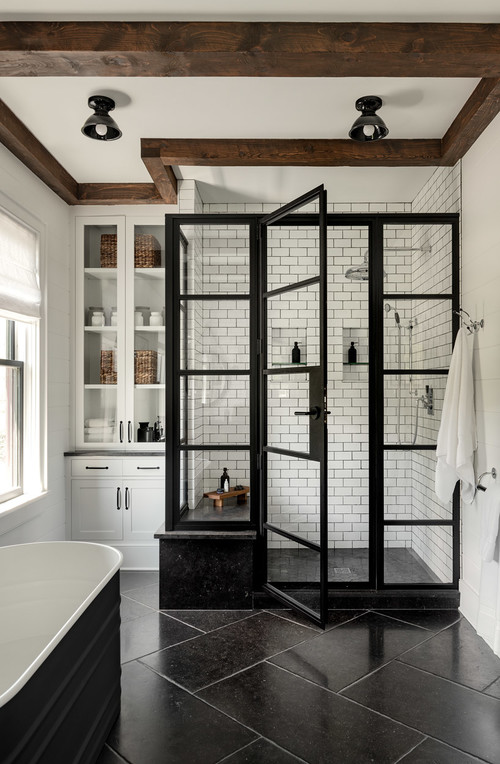
Shaker-style cabinets, brass accents, and white-and-wood combos dominated bathroom trends in 2019, according to Houzz, a home remodeling website. The following are the most-saved bathroom photos that were uploaded to Houzz in 2019.
Brass accents. Add some bling: Brass finishes—whether antiqued, brushed, or polished—grew in popularity in 2019, particularly with cabinet hardware.
Living room layouts enabling greater social interaction, as well as design accents like built-ins, were big trends this year. Houzz, a popular home remodeling site, recently rounded up the living room and family room photos uploaded to its site this year that the highest number of users saved.
1. Shiplap: Add visual interest with shiplap to a wall otherwise overtaken by a large flat-screen TV.
3. Well-situated sofas: Float the sofa so it’s not right up against the wall; for example, try using a console table directly behind the couch to give the living room some breathing space.
The interest rate for the 30-year fixed-rate mortgage averaged 3.9% for 2019, the fourth lowest annual average since 1971, according to Freddie Mac. For 2020, Freddie’s outlook mirrors that of the real estate industry’s top economists, who discussed their predictions at the National Association of REALTORS®’ first-ever Real Estate Forecast Summit earlier this month: Low mortgage rates and an improving economy will help drive steady home sales, construction, and increases in home prices.
“While the outlook for the housing market is bright, worsening housing affordability is no longer a coastal phenomenon and is spreading to many interior markets, and it is a threat to the continued recovery in housing and the economy,” says Freddie Mac Chief Economist Sam Khater. NAR Chief Economist Lawrence Yun, too, has long called for greater homebuilding in entry-level price points to satisfy affordability and housing demand for first-time buyers.
Freddie Mac reports the following national averages with mortgage rates for the week ending Dec. 26:
30-year fixed-rate mortgages: averaged 3.74%, with an average 0.7 point, mostly unchanged from last week. Last year at this time, 30-year rates averaged 4.55%.
15-year fixed-rate mortgages: averaged 3.19%, with an average 0.7 point, unchanged from last week. A year ago, 15-year rates averaged 4.01%.
5-year hybrid adjustable-rate mortgages: averaged 3.45%, with an average 0.3 point, rising from last week’s 3.37% average. A year ago, 5-year ARMs averaged 4%.
More home shoppers purchased newly constructed homes in November, bringing new-home sales to their best three-month performance since 2007, the U.S. Commerce Department reported Monday. Economists credit low mortgage rates, low unemployment, and strong income growth for the sales uptick.
Sales of new single-family homes increased 1.3% to an annualized pace of 719,000 in November. “Fueled by the limited number of resales available for purchase, low interest rates, and low unemployment, new home sales are finishing the year strong,” says Greg Ugalde, chairman of the National Association of Home Builders. New-home sales are running 10% higher than in 2018. Plus, builder confidence is high, indexes show, which bodes well for 2020, adds NAHB Chief Economist Robert Dietz.
Low inventory of new homes, however, continues to put pressure on prices. The median sales price of a new home rose 7.2% compared to a year ago, reaching $330,800 in November. Inventory of new homes stand at a 5.4-month supply. There are 323,000 new single-family homes for sale (but just 76,000 are completed and ready to occupy).
New home sales are performing strongest in the South, up 14.5% from a year ago in November, followed by a 12% increase in the West. In the Northeast and Midwest, meanwhile, new-home sales are down 10.4% and 7.6%, respectively.
Inventory remains a pressing issue for the overall housing market in both the new-home and existing-home markets. Lawrence Yun, chief economist at the National Association of REALTORS®, says that housing starts are short by 135,000 compared to the long-term average—and well short of the 5 million to 6 million that is needed to fully end the housing shortage.
“More home construction appears to be on the way as we move into 2020, as reflected in the very high confidence of home builders,” Yun said last week. “They are clearly recognizing an improving business opportunity. Overall, more construction will mean more housing inventory to choose from for consumers. Home sales can then easily rise while taming the fast growth in home prices.”
Last week, NAR also released a report that showed sales of previously owned homes fell in November, likely due to inventory constraints. Yun said existing-homesales likely will be “choppy when inventory levels are low,”but a strong economy should help keep demand strong.
Off-trend may become the new trend in interior home design in the new year. Bigger, bolder statements are coming in favor over all-white or neutral interiors. Forbes.com recently interviewed interior and furniture designers to find out the hottest looks they expect to emerge over the next decade.
Statement lighting.Lighting fixtures aren’t just for brightening a room; they also make a bold statement. You don’t need to add in extra wiring to add lights, either. “This is exactly why wall sconces with optional wire guard will become increasingly available,” Forbes.com reports. “These accents are ideal for anyone who wants to invest in statement lighting without the commitment to hardwiring.
Color transforms as the new neutral.Neutral color schemes are being pushed aside for warmer and more saturated hues.“Tiles, cabinetry, and walls all serve as opportunities for more color,” Christina Coop, co-founder of Hygge & West, told Forbes.com. Expect shades of pink to become more popular in the new year, as well as greens and blues.
Dolley Levan Frearson, co-founder of High Fashion Home, told Forbes.com that she predicts soft peachy corals and terra cotta—“colors that feel soft yet grounded in earth tones”—to also trend. “I also love golden yellow tones in lush fabrics like velvets to buttery, caramel leathers or leather-look,” she adds.
Patterns everywhere.Layered patterns likely will grow in popularity in 2020 and beyond. Expect to see more patterns in tabletop and textile designs. “We’ll be seeing more pattern mixing with color, tying together patterns of varying origin and scale,” Coop told Forbes.com. “Pattern matching, where the same pattern flows from the wall to upholstered furniture or bedding, is also becoming more common.”
Standout trims and ceiling.High-contrast design is emerging. It gives an “otherwise more monochromatic room a crispness and a fresher take on neutrals,” Kelley Mason, stylist at Lulu & Georgia, told Forbes.com. “Bold black and white feels fresh yet timeless, especially in graphic or art deco-inspired patterns.” Colorful trim is one way to achieve this, such as high gloss black colored trim against a monotone wall color. Also,wallpaper on the ceilingcan add high design to a space.
Americans are boosting their credit scores, which bodes well for applicants seeking a mortgage to snag the lowest rates. The average credit score hit its highest level since 2011, reaching 682–two points higher than a year ago, Experian reports in its State of Credit report. Consumers also are taking on more mortgage debt than a year ago, and delinquency rates are decreasing too.
“We’re seeing a promising trend in terms of how Americans are managing their credit as we head into a new decade,” says Shannon Lois, Experian’s head of analytics, consulting, and operations. “Average credit card balances and debt are up year over year, yet utilization rates remain consistent at 30 percent, indicating consumers are using credit as a financial tool and managing their debts responsibly.”
Comparing borrowing behaviors between genders, women’s average credit scores are four points higher than men’s (686 vs. 682, respectively). Men tend to carry more mortgage debt than women–$220,421 compared to $203,603.
By generation, Gen Xers, millennials, and Gen Zers tend to carry more debt than older generations. They also tend to have higher delinquency rates, the Experian study shows. Here’s a breakdown showing their average credit scores and mortgage debts:
Generation Z
Average credit score: 641
Mortgage debt: $159,677
Millennials
Average credit score: 647
Mortgage debt: $222,924
Gen X
Average credit score: 665
Mortgage debt: $243,430
Baby boomer
Average credit score: 710
Mortgage debt: $193,894
Silent generation
Average credit score: 731
Mortgage debt: $162,162
By state, the five states with the highest average credit scores, according to Experian, are:
Minnesota: 715
Vermont: 708
South Dakota: 707
New Hampshire: 707
Massachusetts: 705
Meanwhile, the states with the lowest average credit scores are Mississippi (652) and Louisiana (654).