Buying Still Beats Renting—Finding a Home is Hard | #BuyVsRent #TalkToYourAgent #SiliconValleyAgent #YajneshRai

Facebooktwitterpinterestlinkedin

Buying Still Beats Renting—If You Can Find a Home | Realtor Magazine

Despite rising home prices, it’s still cheaper to own a home than to rent, reports CNBC. But the toughest part for those who want to buy is actually finding a home.

Inventory levels in April dropped 9 percent compared to a year ago, and listings spent an average of 29 days on the market before selling—the shortest timeframe since the National Association of REALTORS® began tracking such data in 2011.

“One thing we added this month to our REALTORS® Confidence Index is analyzing data on REALTORS®’ comments,” said Danielle Hale, managing director of housing research at NAR. “The two biggest phrases in the comments this month were ‘low inventory’ and ‘multiple offers.’”

The least expensive homes are the toughest to find. Sales of homes below $100,000 dropped 17 percent in April year-over-year. Also, sales of homes under $250,000 dropped more than 6 percent. Yet a new Trulia report shows it’s cheaper to buy than rent in all of the nation’s 100 largest metro markets. So while consumers may have more financial incentive to buy now, they are hard-pressed to find an actual home to buy.

The report shows that buying a home is 33.1 percent cheaper than renting, but there are big differences across metros. For example, it’s more than 50 percent cheaper to buy than rent in Baton Rouge, La., if a consumer is purchasing with a 20 percent down payment and 30-year fixed-rate mortgage. On the other hand, in San Jose, Calif., buying is only 3.5 percent cheaper than renting.

Facebooktwitterpinterestlinkedin

Why Housing Is on Track for a Good Year | #HousingOnGoodTrack #TalkToYourAgent #SiliconValleyAgent #YajneshRai

Facebooktwitterpinterestlinkedin

Why Housing Is on Track for a Good Year | Realtor Magazine

Low mortgage rates and strong job growth are giving the housing market one of its best years in decades—even as overall economic growth has weakened—according to Freddie Mac’s monthly Outlook report for May. The report’s optimism is a change from the mortgage giant’s previous predictions, when economists said the housing market likely would not perform as well as it did in 2016.

New-home sales in March were better than expected, and existing-home sales that month rose to the highest level since 2007. Now Freddie economists expect home sales to top 6 million in 2017. “Despite weak economic growth, housing got off to a good start in 2017 because low mortgage rates have given the spring homebuying season a pleasant surprise,” says Sean Becketti, Freddie Mac’s chief economist. “Mortgage rates started March just above four percent and have mostly drifted lower since then, even falling below 4 percent. With home sales, housing starts, and home values up, 2017 is shaping up to be the best year for housing in over a decade.”

Also, unemployment in the U.S. is at 4.4 percent, the lowest rate since 2001.

Mortgage originations in the first quarter of this year totaled about $60 billion more than expected, mostly due to an uptick in refinances, according to Freddie. Mortgage originations in 2017 are expected to rise to more than $200 billion. In the first quarter of this year, 49 percent of refinance borrowers took cash out. That also marks the highest share since the fourth quarter of 2008 but remains far below the peak of 89 percent in the third quarter of 2006.

Facebooktwitterpinterestlinkedin

Mortgage Rates Hit Lowest Averages of the Year | #LowMortgageRates #TalkToYourAgent #SiliconValleyAgent #YajneshRai

Facebooktwitterpinterestlinkedin

Mortgage Rates Hit Lowest Averages of the Year | Realtor Magazine

Mortgage rates dipped to their lowest averages of the year this week, Freddie Mac repots. “As we predicted, the 30-year mortgage rate fell 7 basis points this week in a delayed reaction to last week’s sharp drop in Treasury yields,” says Sean Becketti, Freddie Mac’s chief economist. “The survey rate stands at 3.95 percent today, a new low for the year.”

Freddie Mac reported the following national averages with mortgage rates for the week ending May 25:

  • 30-year fixed-rate mortgages: averaged 3.95 percent, with an average 0.5 point, falling from last week’s 4.02 percent average. Last year at this time, 30-year rates averaged 3.64 percent.
  • 15-year fixed-rate mortgages: averaged 3.19 percent, with an average 0.5 point, falling from last week’s 3.27 percent average. A year ago, 15-year rates averaged 2.89 percent.
  • 5-year hybrid adjustable-rate mortgages: averaged 3.07 percent, with an average 0.4 point, dropping from last week’s 3.13 percent average. A year ago, 5-year ARMs averaged 2.87 percent.
Facebooktwitterpinterestlinkedin

Couples Spats Common in Homebuying | #WorkOnYourList #TalkToYourAgent #SiliconValleyAgent #YajneshRai

Facebooktwitterpinterestlinkedin

Couples Spats Common in Homebuying | Realtor Magazine

Buying a home can be stressful on couples. Sixty-percent of millennial and Gen X couples say they disagreed occasionally, frequently, or “a lot” when buying a house with their partner or spouse, according to a new survey released by LendingHome. They surveyed 514 adults ages 25 to 45 who were in a relationship (engaged, married, or domestic partnerships) and purchasing a home within the past year.

Couples who have been together a longer time tend to be more harmonious in the home-buying process, according to the survey. Those who had been together five or more years disagreed frequently only 14 percent of the time when searching for a home. On the other hand, couples who have been together for four years or less disagreed twice as much, with nearly 30 percent disagreeing frequently or more often.

So, what are couples disagreeing about? Their top disagreements were the level of debt to take on (49 percent); the style of home to purchase (46 percent); size of house (45 percent); and whether or not to buy a house in need of renovation (43 percent), according to the survey.

Some couples’ disagreements may be based on gender. For example, the survey showed that women tend to prefer traditional, cozy homes in the suburbs. Men, however, tend to prefer more modern homes in urban settings.

“Buying a home together is more than playing house and making Pinterest boards of dream kitchens; it’s a serious commitment with enormous financial implications,” says Samantha Burns, The Millennial Love Expert, a licensed couples therapist and dating coach in Boston. “So you need to feel secure and confident in your relationship before taking this step together. In searching for your dream home, get clear on your wants versus needs, firm deal breakers, and ability to analyze the pros and cons. By getting on the same page at the beginning, you’ll be able to minimize conflict throughout your home search.”

Regardless, most couples say they’re able to leave their homebuying disagreements behind after the transaction is complete. Sixty percent of couples surveyed said their disagreements when buying a home didn’t matter in the end. In fact, more than 50 percent of couples said they felt more committed to the relationship after purchasing the house.

Buying a home can be stressful on couples. Sixty-percent of millennial and Gen X couples say they disagreed occasionally, frequently, or “a lot” when buying a house with their partner or spouse, according to a new survey released by LendingHome. They surveyed 514 adults ages 25 to 45 who were in a relationship (engaged, married, or domestic partnerships) and purchasing a home within the past year.


Couples who have been together a longer time tend to be more harmonious in the home-buying process, according to the survey. Those who had been together five or more years disagreed frequently only 14 percent of the time when searching for a home. On the other hand, couples who have been together for four years or less disagreed twice as much, with nearly 30 percent disagreeing frequently or more often.

So, what are couples disagreeing about? Their top disagreements were the level of debt to take on (49 percent); the style of home to purchase (46 percent); size of house (45 percent); and whether or not to buy a house in need of renovation (43 percent), according to the survey.

Some couples’ disagreements may be based on gender. For example, the survey showed that women tend to prefer traditional, cozy homes in the suburbs. Men, however, tend to prefer more modern homes in urban settings.

“Buying a home together is more than playing house and making Pinterest boards of dream kitchens; it’s a serious commitment with enormous financial implications,” says Samantha Burns, The Millennial Love Expert, a licensed couples therapist and dating coach in Boston. “So you need to feel secure and confident in your relationship before taking this step together. In searching for your dream home, get clear on your wants versus needs, firm deal breakers, and ability to analyze the pros and cons. By getting on the same page at the beginning, you’ll be able to minimize conflict throughout your home search.”

Regardless, most couples say they’re able to leave their homebuying disagreements behind after the transaction is complete. Sixty percent of couples surveyed said their disagreements when buying a home didn’t matter in the end. In fact, more than 50 percent of couples said they felt more committed to the relationship after purchasing the house.

Facebooktwitterpinterestlinkedin

Time on Market Hits New Low in April | #SanJoseBayAreaTopsChart #TalkToYourAgent #SiliconValleyAgent #YajneshRai

Facebooktwitterpinterestlinkedin

Time on Market Hits New Low in April | Realtor Magazine

Low inventory pushed existing-home sales down in April and sped up the median number of days a home sat on the market to a new low of 29 days, the National Association of REALTORS® reported Wednesday. That is the shortest timeframe since NAR began tracking such data in May 2011. The previous record was 32 days, which was reached last May.

The Metros With the Fastest Sales

According to inventory data from realtor.com®, these are the metro areas where listings were on the market the shortest amount of time in April:

  • San Jose-Sunnyvale-Santa Clara, Calif.: 23 days
  • San Francisco-Oakland-Hayward, Calif.: 25 days
  • Denver-Aurora-Lakewood, Colo.: 27 days

Though homes are selling faster, inventory woes persist. Total existing-home sales—which are completed transactions of single-family homes, townhomes, condos, and co-ops—decreased 2.3 percent to a seasonally adjusted annual rate of 5.57 million in April. However, sales are still 1.6 percent higher than a year ago.

“Last month’s dip in closings was somewhat expected given that there was such a strong sales increase in March at 4.2 percent, and new and existing inventory is not keeping up with the fast pace of homes coming off the market,” says Lawrence Yun, NAR’s chief economist. “Demand is easily outstripping supply in most of the country, and it’s stymieing many prospective buyers from finding a home to purchase.”

Regional Breakdown

Here’s a closer look at how existing-home sales fared across the country in April:

  • Northeast: Existing-home sales decreased 2.7 percent to an annual rate of 730,000. Sales are now 2.7 percent below a year ago. Median price: $267,700, up 1.6 percent from a year ago.
  • Midwest: Existing-home sales rose 3.8 percent to an annual rate of 1.36 million in April. Sales are 0.7 percent below a year ago. Median price: $194,500, up 7.8 percent from a year ago.
  • South: Existing-home sales dropped 5 percent to an annual rate of 2.3 million but are 3.6 percent higher than a year ago. Median price: $217,700, up 7.9 percent from a year ago.
  • West: Existing-home sales decreased 3.3 percent to an annual rate of 1.18 million in April, but are still 3.5 percent above a year ago. Median price: $358,600, up 6.8 percent from April 2016.

Source: National Association of REALTORS®

Total housing inventory at the end of April stood at 1.93 million existing homes available for sale, NAR reported. That’s 9 percent lower than a year ago, when inventory stood at 2.12 million. At the current sales pace, unsold inventory is at a 4.2-month supply.

“REALTORS® continue to voice the frustration their clients are experiencing because of the insufficient number of homes for sale,” Yun says. “Homes in the lower- and mid-market price range are hard to find in most markets, and when one is listed for sale, interest is immediate and multiple offers are nudging the eventual sales prices higher.” 

Here are a few additional housing indicators from NAR’s latest report:

  • The median existing-home price for all housing types last month was $244,800, up 0.6 percent from a year ago.
  • Short sales took the longest to sell at a median of 88 days on the market in April. Foreclosures sold in a median of 46 days. Foreclosures and short sales comprised 5 percent of sales in April, down from 7 percent a year ago. Broken out, 3 percent of sales were foreclosures and 2 percent were short sales. Foreclosures sold for an average discount of 18 percent below market value, while short sales were discounted 12 percent.
  • First-time home buyers comprised 34 percent of sales in April, matching the highest percentage since last September.
  • All-cash transactions made up 21 percent of sales in April, down from 24 percent a year ago. Individual investors make up the biggest bulk of cash sales. They purchased 15 percent of homes, up from 13 percent a year ago.
Facebooktwitterpinterestlinkedin

Home Insurance Myths to be Busted | #HomeInsuranceMyths #TalkToYourAgent #SiliconValleyAgent #YajneshRai

Facebooktwitterpinterestlinkedin

Home Insurance Myths to be Busted | Realtor Magazine

Most mortgage lenders require borrowers to purchase home insurance, but many buyers may be confused about what their policy covers. Realtor.com® recently highlighted several common myths consumers believe when it comes to home insurance.

Myth number one: All of a home’s belongings are covered. “A homeowners insurance policy is not designed to cover everything,” says Jeanne Salvatore, chief communications officer at the Insurance Information Institute. “Each policy clearly sates what’s covered and what’s not.” Personal valuables, for example, aren’t typically covered by a basic policy. “If you have valuable art or fine jewelry inside your house, you might need a scheduled personal property policy to cover these items,” says Laurie Pellouchoud, vice president at Allstate.

Myth number two: Coverage should be based on the market value of a home. Fifty-two percent of buyers believe they should purchase insurance coverage based on their home’s market value, according to a survey by Insure.com. However, with most insurance policies, rates are based on the cost to rebuild the home, not the value of the property. “In most cases, you need less coverage than the market value of your house,” Salvatore says.

Myth number three: Flood coverage is included in most standard policies. Flood coverage typically is not included in standard insurance policies. Homeowners who live in an area that is prone to flooding likely will be required to purchase a separate policy to protect themselves. Separate flood insurance is available from the National Flood Insurance Program and some private insurers. Even homeowners who live outside a flood zone may be wise to consider buying the extra protection against floods, experts say.

Facebooktwitterpinterestlinkedin

What Owners Want in Kitchen Remodels | #KitchenRemodel #TalkToYourAgent #SiliconValleyAgent #YajneshRai

Facebooktwitterpinterestlinkedin

What Owners Want in Kitchen Remodels | Realtor Magazine

Kitchen revamps tend to be one of the most popular home remodeling projects. About 10.2 million American households tackled a kitchen remodel or replacement work in 2015, according to a recent report from the National Kitchen & Bath Association. Homeowners tend to want new flooring, countertops, cabinets, sinks, and faucets in their kitchen remodels.

Also, “more homeowners are incorporating smart technology using the Amazon Echo or Google Home to connect to their appliances for cost savings, energy efficiency, and convenience,” says Elle H-Millard, who specializes in kitchen and bathroom trends at the NKBA.

Read more: Vinyl Flooring Is Stealing the Spotlight

The majority of homeowners aren’t spending big bucks in their renovations. Forty-one percent of homeowners’ work in their kitchen remodels was devoted to replacement projects costing less than $1,500. Twenty-two percent of respondents say they had minor remodeling done, between $1,500 to $5,000; 18 percent of homeowners had major remodels completed that cost between $5,000 to $10,000; and 19 percent completely remodeled their kitchens, spending more than $10,000.

Nearly 80 percent of homeowners who underwent a complete kitchen renovation spent on new appliances, according to the NKBA. Refrigerators were the top appliance replaced, followed by range ovens and dishwashers.

As for countertops, homeowners still largely prefer granite, followed by laminate at 23 percent and marble at 19 percent.

Homeowners still say they like wood flooring best too, but they weren’t as likely to splurge on real hardwood flooring for their kitchen renovations, according to the NKBA’s survey. Laminate flooring was the most popular material in the kitchen at 32 percent, with ceramic and stone tiles following closely at 31 percent; both are often designed to mimic wood. Actual wood, meanwhile, was chosen by 18 percent of survey respondents.

“Wood has that timeless feel,” says H-Millard. But “porcelain tile would be much more durable than wood, [and] laminate would be much more cost-effective.”

Sinks were another popular area of kitchen renovations. Stainless steel is the most popular option at 72 percent, but 9 percent of homeowners opt for enameled cast-iron sinks.

Facebooktwitterpinterestlinkedin

The Wood Paneling Trend Is Back With a Twist | #HomeUpgrades #TalkToYourAgent #SiliconValleyAgent #YajneshRai

Facebooktwitterpinterestlinkedin

The Wood Paneling Trend Is Back With a Twist

Wood paneling is back, but we’re not talking about he 1960s version that you may still be peeling down from some of your listings.

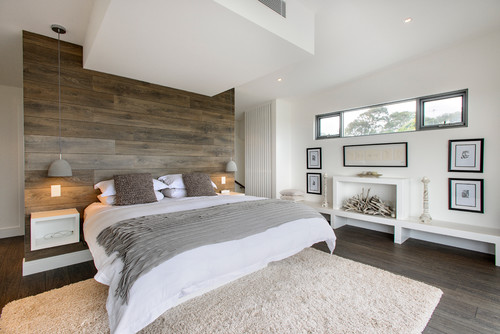
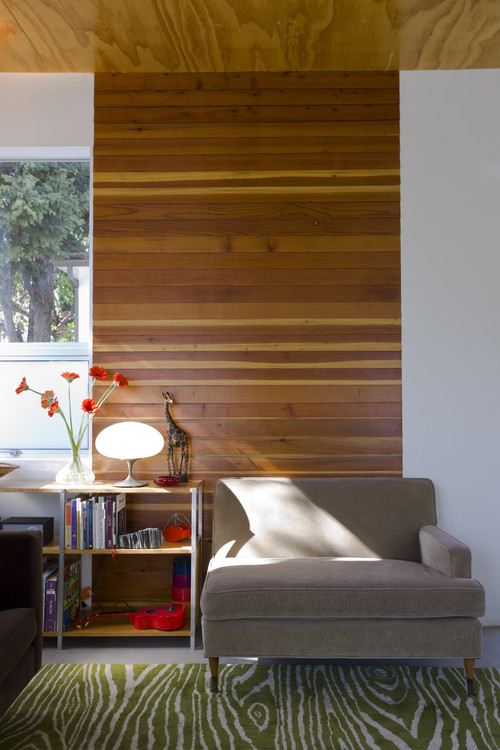
Instead, today’s wood paneling trend is being used as an accent wall, instead of a complete cover of an entire room. For example, wood panels in walnut may be used as an accent wall behind the bed in the master bedroom. Or, maybe one wall will be covered in white distressed shiplap, a trend popularized by HGTV “Fixer Upper” hosts Chip and Joanna Gaines.

Wood in all finishes, whether clear stain or in its natural form, are being used to create sophisticated, sleek accent walls. You may even find wood panels in the closets, such as cedar-covered closet walls  (with added bonuses of having a distinctive smell and being a natural repellant to insects, like moths, too).

Realtor.com® reports on the trend: “Knotty pieces of wood bring a very organic look, while painted varieties are classic and always popular with homeowners and potential buyers.”

Designers are certainly proving you dress up and modernize any space with wood panels. See a few examples from Houzz.

Facebooktwitterpinterestlinkedin

Building Credit Without Credit | Real Estate | #CreditHistory #TalkToYourAgent #SiliconValleyAgent #YajneshRai

Facebooktwitterpinterestlinkedin

Building Credit Without Credit | Real Estate | capemaycountyherald.com

It’s a catch-22 situation: you need credit to get credit. And if you want to buy a house, you need to have good credit. Although fixing a bad credit score is difficult, establishing a good one from a clean slate is fairly easy. This means for first time home-buyers, there is hope. Those three digits can halt your home-buying dreams if they’re not up to par, so read on to see how you can build good credit from the beginning and make your dreams a reality.

The Basics

Let’s start with credit 101. As mentioned above, you need credit to build credit, therefore applying for a credit card is an easy way to do this. Whenever you apply for a credit card, 90 percent of lenders check your FICO credit score over other types of credit scores. Your FICO credit score grades your credit history based on the following: The length of your credit history, the different types of credit you have and any recent lines of credit make up 35 percent of your score; your payment history makes up another 35 percent; and the amount of debt you have makes up the last 30 percent. The closer your score is to 700, the better. Anything under 600 is considered a bad credit score.


When applying for a credit card, you should be primarily concerned with the card’s annual percentage rate (APR). Take that rate and divide it by 12 to determine the amount of interest you’ll pay per month. If you plan on paying your card off every month, APR won’t be as much of a concern. But if you’re only able to pay a portion of the balance each month, APR is important as interest can accumulate fast.

Unfortunately those without credit can’t just apply for any credit card out there. Below you’ll find two types of credit cards that are available to help you build credit from nothing.

Retail Credit Cards

Retail credit cards are easy to obtain for credit-less adults. However, they tend to have the highest interest rates around, often reaching 27.99 percent. But, if you use this card responsibly, it can be a gateway to lower-interest cards with better benefits. The trick is to pay off the entire balance each month (if you can) to avoid digging yourself in deep with that high interest. Before you know it, you will have a great credit score and start receiving offers for “legit” credit cards.

Secured Credit Cards

If you have no credit or bad credit, secured credit cards can help you build a good score. Secured cards usually have looser approval requirements with an APR lower than that of retail cards. These cards typically have an annual fee, but are probably your only option.

This alternative credit card, offered by most banks, allows you to open a line of credit by putting down a cash deposit of a couple hundred dollars. If you put down a deposit and meet all of your monthly payments within the year, you will get your deposit back plus a full-fledged line of credit. In some cases, the banks will even allow your deposit to grow interest.


Now What?

While credit cards are an easy way to build credit, they are also an easy way to build bad credit. Once you build your credit, the easiest way to maintain a good score is this:

• Never miss a payment – Missing a payment can lead to late fees and increased APR, and will bring your score down.

• Pay more than the minimum – Minimum payments keep you in the clear, but don’t do much to fight the interest growing on your balance. Pay as much as your budget allows, even if that means adding an extra 10 bucks to the mandatory minimum payment. This will bring your score up.

• Always check your score!

Facebooktwitterpinterestlinkedin

2018 Looking Strong For Real Estate | #Strong2018 #TalkToYourAgent #SiliconValleyAgent #YajneshRai

Facebooktwitterpinterestlinkedin

Big Expectations for Home Sales Through 2018 | Realtor Magazine

More homes are predicted to be sold this year than in more than a decade. In 2017, the number of existing-home sales is expected to increase about 3.5 percent to 5.64 million. By 2018, existing-home sales will likely rise another 2.8 percent to 5.8 million, according to forecasts by the National Association of REALTORS®.

The rise in new jobs, pent-up household formation, and increasing consumer confidence are helping to propel the housing market forward, says Lawrence Yun, NAR’s chief economist.

The new-home sector is also expected to see a surge over the next year. New-home sales are expected to rise 10.7 percent this year to 620,000. The sector is also expected to tick up another 8 percent in 2018 to 670,000 sales, NAR predicts.

Buyers are likely to face higher prices on homes. Prices are expected to increase 5 percent in 2017 and another 3.5 percent in 2018, NAR predicts.

“As a result, buyers are compromising on the number of rooms, length of a commute, or other home qualities,” says Joseph Kirchner, senior economist of realtor.com®. “Meanwhile, builders are mostly building for the mid- to upper price range. This mismatch in supply and demand is making affordability more acute for those with modest incomes.”

To still get in, buyers are devoting higher percentage of their incomes toward homeownership or compromising on smaller homes or a home farther from the city center where they work.

“They may need to spend more of their disposable income,” Bajuk says. “Or they may need to lower their expectations on what kind of home they get.”

Facebooktwitterpinterestlinkedin