December 2017 Housing Affordability Index | #HousingAffordability #TalkToYourAgent #SiliconValleyAgent #YajneshRai #YourAgentMatters

Facebooktwitterpinterestlinkedin

December 2017 Housing Affordability Index

At the national level, housing affordability is practically flat from last month and down from a year ago. Mortgage rates increased to 4.22 percent this December, up 1.7 percent compared to 4.15 percent a year ago.

  • Housing affordability declined from a year ago in December moving the index down 2.3 percent from 163.8 to 160.1. The median sales price for a single family home sold in December in the US was $247,900 up 5.7 percent from a year ago.
  • Nationally, mortgage rates were up seven basis points from one year ago (one percentage point equals 100 basis points) while median family incomes rose 4.1 percent.

reg inc

  • Regionally, the West recorded the biggest increase in price at 8.6 percent. The Midwest had an increase of 7.5 percent while the Northeast had a gain of 6.7 percent. The South had the smallest incline in price of 5.8 percent.
  • Regionally, all four regions saw a decline in affordability from a year ago. The Midwest had the biggest decline of 4.4 percent. The West followed with a decline of 4.0 percent. The South had a decline of 1.0 while the Northeast had the smallest decline of 0.8 percent.
  • On a monthly basis, affordability is down from last month in two of the four regions. The Northeast had the biggest gain of 3.5 percent followed by the Midwest with a gain of 1.3 percent. The West had a decline of 0.1 percent. The South had the biggest drop in affordability of 0.9 percent.
  • Despite month-to-month changes, the most affordable region was the Midwest, with an index value of 203.1. The least affordable region remained the West where the index was 111.5. For comparison, the index was 161.7 in the South, and 177.5 in the Northeast.

dec aff

  • Mortgage applications are currently up 0.7 percent. There are plenty of potential homebuyers interested entering in the housing market as rates continue to rise. There is job growth and incomes are rising but still not at the pace of home prices. New construction is on the rise however low inventory remains a concern due to the pressure it puts on home prices.
  • What does housing affordability look like in your market? View the full data release here.
  • The Housing Affordability Index calculation assumes a 20 percent down payment and a 25 percent qualifying ratio (principal and interest payment to income). See further details on the methodology and assumptions behind the calculation here.

reg mort

comp

Facebooktwitterpinterestlinkedin

Hot Home Trend: Black Is Back |#BlackIsTrending #TalkToYourAgent #SiliconValleyAgent #YajneshRai #YourAgentMatters

Facebooktwitterpinterestlinkedin

Hot Home Trend: Black Is Back

Black is getting popular in home design. Black fixtures, appliances, and even black furniture are emerging as one of the hottest trends in the new year.

Black fixtures are replacing brass or rubbed bronze as a trendy home hardware in 2018.

Black makes a great finish because it goes with anything. In matted finishes, it can also be easier to clean than your lighter, polished metals–so that’s definitely an added perk for homeowners too.

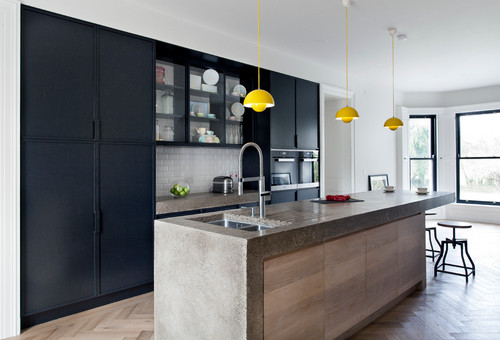
Black cabinets in the kitchen are getting trendy too. To offset the darkness, some homeowners are mixing the black cabinets with lighter cabinets. Check out this one from Weston Lodge…

Black stainless appliances are also gradually gaining more momentum in the kitchen. Black stainless was once again being showed in the newest appliance models at CES 2018, the consumer electronics show this year. As  more smudge proof, black stainless is proving itself as a trendy alternative to traditional stainless.

Facebooktwitterpinterestlinkedin

5% Mortgage Rates Aren’t Scaring Buyers | #BuyersAreOkWithInterestRates #TalkToYourAgent #SiliconValleyAgent #YajneshRai #YourAgentMatters

Facebooktwitterpinterestlinkedin

5% Mortgage Rates Aren’t Scaring Buyers | Realtor Magazine

Mortgage rates are inching higher, and most home buyers seem unfazed by it. Only 6 percent of prospective home buyers recently surveyed said they would stop their home search if mortgage rates rose above 5 percent, according to a new survey released by the real estate brokerage Redfin of more than 4,000 consumers.

Mortgage rates hovered below 4 percent at the end of 2017, but in January the average 30-year fixed-rate mortgage surpassed 4 percent. For the last five consecutive weeks, rates have been on the rise, with the 30-year mortgage rate averaging 4.32 percent in Freddie Mac’s most recent survey.

However, 27 percent of consumers who plan to buy a home in the coming year did say that a 5 percent mortgage rate would cause them to slow their plans to buy. A quarter of buyers said that an increase would have zero impact on their plans.

Higher rates may cause some buyers to rush their timelines. Twenty-one percent of potential buyers surveyed said that a rate bump to 5 percent would cause them to increase their urgency to buy. Another 21 percent said that such an increase would instead make them want to look in more affordable areas or to buy a smaller home.

Facebooktwitterpinterestlinkedin

Silicon Valley residents want more housing, but … | #NeedToBalance #TalkToYourAgent #SiliconValleyAgent #YajneshRai #YourAgentMatters

Facebooktwitterpinterestlinkedin

Silicon Valley residents want more housing, but …

Fed up with soaring prices that are increasingly putting home ownership, or even a decent rental, out of reach, Bay Area residents overwhelmingly say they want more housing built, according to a new poll. But it better not make their commutes worse.

Residents said they support everything from new single family homes to housing for the homeless in their communities, tossing aside NIMBY concerns that sometimes throw a wrench in building plans. But there were limits to their enthusiasm. Respondents balked at building anything that would cut into the Bay Area’s cherished open spaces or funnel more people onto crowded local freeways and public transit, making their treks to work longer.

The responses, in a five-county poll conducted for the Silicon Valley Leadership Group and this news organization, left some housing advocates hopeful that public sentiment is shifting in favor of building more housing. But the survey also illustrates the hurdles the Bay Area faces in solving its housing shortage.

“I think as more people personally experience the crisis of the lack of affordable housing, we’re seeing public support gradually move upwards, including support for bringing new affordable housing into people’s own neighborhoods — which is a new trend in the 27 years I’ve been working in the field,” said Matt Schwartz, president and CEO of housing nonprofit California Housing Partnerships. “This feels like something different and new that is happening now.”

Tyler Young is one of many Bay Area residents feeling the impact of the region’s housing crunch first-hand. The 31-year-old lawyer moved his family to Dublin from San Francisco in 2015 when his landlord decided to raise the monthly rent by $700, asking $5,000 for a two-bedroom apartment near AT&T Park. Now Young, his pregnant wife and 2-year-old son rent a condo in Dublin for $3,000 a month.

“I do think it’s a serious issue,” Young said of the housing shortage. That’s why he supports building housing of all types, including in his own neighborhood.

“I welcome as much development as can happen,”  he said, “but I understand that there are people who don’t feel that way.”

Of the 900 registered voters surveyed, 64 percent said they favor building significant quantities of new housing, and 53 percent said they would support new construction even if it changed the character of their neighborhood. But fewer than half — 46 percent — were willing to sacrifice open space for new development, and just 30 percent said they would support new housing that brought more people onto local roads and transit systems, making their commutes worse.

When speaking generally, 89 percent of people supported both building more low-income housing and more housing for the homeless. A slightly smaller percentage would welcome those developments into the communities where they live and shop and where their kids go to school. Seventy-eight percent of respondents supported building low-income housing in their own neighborhood, and 69 percent supported building homeless housing in their neighborhood.

Those numbers seem high to Laura Foote Clark, executive director of the pro-development organization YIMBY Action, but she said that support won’t necessarily translate into more building permits. Saying you support housing in a survey is one thing, she said. It’s quite another to show up at city meetings or email local elected officials to voice that opinion.

“There’s two fundamental problems,” Clark said. “Those people are not necessarily aware of how to engage with government in order to express that point of view. And then the second big problem is housing takes place in a particular place. So everyone might be supportive of housing in general, and then when you propose a specific project, that general support sometimes wanes.”

Facebooktwitterpinterestlinkedin

Here’s what a 5 percent mortgage rate would mean to buyers | #NeedToBraceForHigherRates #TalkToYourAgent #SiliconValleyAgent #YajneshRai #YourAgentMatters

Facebooktwitterpinterestlinkedin

Here’s what a 5 percent mortgage rate would mean to buyers

  • Mortgage rates have not been at 5 percent since 2011.
  • A 5 percent rate would cause more than a quarter of today’s homebuyers to slow their plans, according to a Redfin survey.
  • Housing affordability is starting to hurt.
 

Mortgage rates are now at their highest level in four years and poised to move even higher. The timing couldn’t be worse, as the usually busy spring housing market kicked into gear early this year amid higher home prices and strong competition for a record low supply of homes for sale.

Add it all up, and affordability is starting to hurt.

The average rate on the popular 30-year fixed is now right around 4.50 percent, still low when looking historically, but buyers over the past six years have gotten more used to rates in the 3 percent range. Mortgage rates have not been at 5 percent since 2011.

A 5 percent rate would cause more than a quarter of today’s homebuyers to slow their plans, according to a Redfin survey of 4,000 consumers at the end of last year. Just 6 percent said they would drop their plans to buy altogether. About one-fifth of consumers said 5 percent rates would cause them to move with more urgency to purchase a home, fearing rates would rise even further. Another fifth said they would consider more affordable areas or just buy a smaller home.


 Despite rate concerns, the bigger issue for buyers is changes to tax laws that had lowered the cost of homeownership. Specifically, the deduction on property taxes is now limited to $10,000. While that does not affect homeowners in the majority of the country, it does hit those in high-cost states like New York, New Jersey and Illinois, and those in higher-priced housing markets like California.

Some have claimed that higher rates and the new tax law will put downward pressure on home prices, alleviating some of the current sticker shock, but other factors are fighting that assertion.

“Tight credit, lack of inventory and high demand are the major factors that tell us there’s no housing bubble, despite rapid price increases,” said Redfin’s chief economist, Nela Richardson. “There are still many more buyers than the current housing supply can support, with no major relief in sight.”

Unlike during the last housing bubble in the mid-2000s, mortgage lenders today are much more strict with regard to the borrower’s ability to repay the loan. They are required by new regulations in the industry to be that way. Higher mortgage rates may mean some borrowers on the margins will not qualify for the size of the loan they need or want.

Mortgage rates have been quite volatile in recent weeks especially given the wide swings in the stock market. Rates loosely follow the yield of the 10-year Treasury, which moved higher again Monday. Things could change Wednesday, with the release of the monthly read on the consumer price index.

“The most informative and disconcerting reaction would be a weak CPI reading followed by a knee-jerk rally that then gives way to more selling. That would be the worst case scenario in terms of implications for the bigger picture,” wrote Matthew Graham, chief operating officer of Mortgage News Daily. “Conversely, an eventual rally that follows stable or stronger CPI would suggest bonds are increasingly ready to hold their ground near current levels.”

Facebooktwitterpinterestlinkedin

Agents Are Getting Properties Sold Faster | #AgentsSellFaster #TalkToYourAgent #SiliconValleyAgent #YajneshRai

Facebooktwitterpinterestlinkedin

Agents Are Getting Properties Sold Faster | Realtor Magazine

At the end of 2017 properties sold at a quicker pace, despite inventory shortages and rising home prices. On average, homes sold in December were on the market for 40 days, down from 52 days a year ago, according to the December 2017 REALTORS® Confidence Index Survey.

Since 2011, the median number of days on the market has been decreasing. In May 2011, properties were typically listed for three months. For all of 2017, properties were on the market for a median of just 35 days.

Realtor.com® reports that days-on-market dropped in 78 percent of the 500 places it tracked in December 2017. Cities in California continue to see some of the quickest sales in the country. The following metro areas saw properties spend the shortest amount of time on the market in December 2017 compared to a year ago:

  • San Jose-Sunnyvale-Santa Clara, Calif: 37 days
  • San Francisco-Oakland-Hayward, Calif.: 45 days
  • Vallejo-Fairfield, Calif.: 45 days
  • Nashville-Davidson-Murfreesboro-Franklin, Tenn.: 46 days
  • Ogden-Clearfield, Utah: 47 days
  • Provo-Orem, Utah: 48 days
  • Stockton-Lodi, Calif.: 48 days
  • San Diego-Carlsbad, Calif.: 49 days

Thirty-four percent of properties sold at their original price or at a net premium from the list price in December, according to the REALTORS® Confidence Index. Seventy-one percent of contracts from October to December 2017 settled on time, up from 61 percent a year ago. REALTORS® surveyed report the biggest issues affecting transactions in December were “low inventory” and “tax reform.”

Facebooktwitterpinterestlinkedin

Loan Demand Stalls in Volatile Week | #LoanDemandBlip #TalkToYourAgent #SiliconValleyAgent #YajneshRai

Facebooktwitterpinterestlinkedin

Loan Demand Stalls in Volatile Week | Realtor Magazine

The highest mortgage rates in four years caused a pause in mortgage applications from home buyers and refinancers during a time when the market generally starts picking up in preparation for the spring season. Any shakeout from dips in the stock market in recent days will become more evident in mortgage demand in next week’s report from the Mortgage Bankers Association.

Total mortgage application volume last week—which reflects home purchases and refinancings—barely budged at 0.7 percent higher on a seasonally adjusted basis compared to one week earlier, the MBA reported Wednesday. A hopeful sign for housing, however: Volume is still 5 percent higher than the same week a year ago.

Purchase applications were mostly unchanged last week while applications to refinance eked out a 1 percent gain during the week, the MBA reports.

The average 30-year fixed-rate mortgage was 4.50 percent, the highest level since April 2014, the MBA reports.

“While the stock market leapt into the new year with strong gains, only to give it all back over the past few days, interest rates have generally moved higher, with the 10-year Treasury and 30-year mortgage rates about 30 basis points higher than where we started at the beginning of January,” says Mike Fratantoni, the MBA’s chief economist. “A strong job market, accelerating wage growth, and expectations of faster rate hikes from the Fed all have played roles in pushing up longer-term rates.”

At the start of this week, mortgage rates did recede slightly after volatility in the stock market sent investors flocking back to the bond market, CNBC reports. Mortgage rates loosely follow 10-year Treasury yields.

Facebooktwitterpinterestlinkedin

Mortgage Rates Keep On Pressing Higher | #MortgageTickingUp #TalkToYourAgent #SiliconValleyAgent #YajneshRai

Facebooktwitterpinterestlinkedin

Mortgage Rates Keep On Pressing Higher | Realtor Magazine


The 30-year fixed-rate mortgage reached its highest average since December 2016, Freddie Mac reports. This is the fifth consecutive week that mortgage rates have been on the rise, increasing borrowing costs for home shoppers heading into the spring buying season.

Following a turbulent Monday,financial markets settled down with the 10-year Treasury yield resuming its upward march. Mortgage rates have followed,” says Len Kiefer, Freddie Mac’s deputy chief economist. “Will higher rates break housing market momentum? It’s too early to tell for sure, but initial readings indicate housing markets are sustaining their momentum so far.” 

Freddie Mac reports the following national averages with mortgage rates for the week ending Feb. 8:

  • 30-year fixed-rate mortgages averaged 4.32 percent, with an average 0.6 point, rising from last week’s 4.22 percent average. Last year at this time, 30-year rates averaged 4.17 percent.
  • 15-year fixed-rate mortgages averaged 3.77 percent, with an average 0.5, up from a 3.68 percent average last week. A year ago, 15-year rates averaged 3.39 percent.
  • 5-year hybrid adjustable-rate mortgages averaged 3.57 percent, with an average 0.4 point, increasing from last week’s 3.53 percent average. A year ago, 5-year ARMs averaged 3.21 percent.
Facebooktwitterpinterestlinkedin

Could the Inventory Crunch Worsen? | #WhenWillTheSupplyIncrease #TalkToYourAgent #SiliconValleyAgent #YajneshRai

Facebooktwitterpinterestlinkedin

Could the Inventory Crunch Worsen? | Realtor Magazine

Housing permits, a gauge of new-home activity, slipped in the final quarter of 2017, which could worsen a housing shortage already shaking many markets across the country.

Single-family permits are running at only 56 percent of normal activity, according to the National Association of Home Builders/First American Leading Markets Index.

“We are concerned with the sluggish permit activity,” says Robert Dietz, chief economist at the National Association of Home Builders. “The weak permit numbers indicate that builders may be hesitant to start projects as they contend with supply-side hurdles, such as rising material prices and labor shortages.”

Permit levels are at or above normal in only 62 of the 337 metro areas tracked in the NAHB/First American Index, which is a drop of 7.5 percent compared to the third quarter of 2017.

Despite sluggish permits, the index showed that many markets are showing a stronger recovery in their economy and home prices. Housing markets in 195 of the 337 metro areas tracked nationwide returned to or exceeded their last normal levels of economic and housing activity in the fourth quarter of 2017. The LMI measures three components: housing permits, employment, and home prices.

Employment is at 98 percent of normal activity, while home price levels are well above normal at 158 percent. Single-family permits were the only of the three components to see a decline in the fourth quarter of 2017.

Overall, the index shows the fastest-growing new-home metro areas are in the South and West, says NAHB Chairman Randy Noel.

The major metros scoring the highest on the LMI—meaning they are performing at the highest levels compared to their historic normal market level—are Baton Rouge, La.; Austin, Texas; Honolulu; Oxnard, Calif.; and Provo, Utah. Among smaller metro areas, the metros scoring the highest in besting their own previously normal market levels are: Odessa, Texas; Midland, Texas; Walla Walla, Wash.; Florence, Ala.; and Gadsden, Ala.

Facebooktwitterpinterestlinkedin

Housing in 2018: San Jose neighborhoods top `hot’ list | #HotRealEstateSanJose #TalkToYourAgent #SiliconValleyAgent #YajneshRai

Facebooktwitterpinterestlinkedin

Housing in 2018: San Jose neighborhoods top `hot’ list


The last is in San Francisco.

Redfin experts say that’s largely because tech workers, even very well compensated ones, are getting priced out of the San Francisco Peninsula. Others are drawn by new jobs from companies such as Google and Apple — or by Google’s plans to build a downtown campus around San Jose’s largest transit hub, Diridon Station.

“While the San Francisco Peninsula has traditionally been the hottest of the hot places, we’re seeing it become unaffordable for even the tech giants that helped create its demand in the first place,” said Redfin Silicon Valley agent Kalena Masching.

Compared to Palo Alto, where the median sale price last year topped $2.5 million, and San Francisco, where the average home sold for $1.3 million, San Jose’s median home price of over $1 million (and rising) apparently looks like a deal.

Topping the list is San Jose’s Bucknall neighborhood, where the median sale price last year was $1.57 million and 100 percent of homes sold for above list price.

In recent weeks, Masching said, open houses have been swamped, homes have been getting 15 to 20 offers each, and people have taken off work to check out houses the moment they come on the market.

She’s also noticed something else: “What we’re seeing is a disregard for recent comparable sales and people deciding what the home is worth to them and just giving that as their offer.”

The demand for real estate in the South Bay has been well documented; late last year, Zillow predicted the San Jose metropolitan area would be the hottest housing market in the country in 2018. But that it landed nine neighborhoods out of 10 on Redfin’s latest list surprised even Redfin economist Nela Richardson.

The interest, she said, is fueled by a lack of housing supply throughout the Bay Area — and “speculative interest” in Google’s expansion. “Basically Google’s just extending its tentacles,” Richardson said, “and yet it’s having a dramatic effect on one city.”

Redfin created the list based on the increase in the number of homes marked as “favorites” in each area and the number of page views on Redfin.com.

As Redfin noted, this further uptick in interest will only put more pressure on the housing market.

In December, the San Jose area had the lowest rate of homes per sale that Redfin had ever recorded — anywhere in the country — and its home prices rose a whopping 31.9 percent from the previous year.

Facebooktwitterpinterestlinkedin