Mortgage Meltdown Unlikely Despite Hike in Risky Loans | #SafeMortgages #TalkToYourAgent #SiliconValleyAgent #YajneshRai #01924991 #YourAgentMatters #TeamYaj #SangeetaRai #02026129

Facebooktwitterpinterestlinkedin

Mortgage Meltdown Unlikely Despite Hike in Risky Loans | Realtor Magazine

Housing analysts are hoping it’s not a case of déjà vu. Unconventional mortgage lending is on the rise, in 2018 reaching its highest level since the financial crisis of 2008. These mortgages include subprime loans, financing offered to borrowers with blemished credits.

While these more risky loans are on the rise, some economists shrug off the notion that the economy is headed for another mortgage meltdown.

Despite the uptick in these types of loans, the number of unconventional mortgages is still less than 3% of loans made in 2018. In 2006, for comparison, unconventional mortgages made up 39% of the market. Negative amortization lending, in which the balances on the loan grow, have generally vanished from the market.

Further, Guy Cecala, publisher of Insider Mortgage Finance, told Kiplinger’s Money Power that the unconventional mortgages of today aren’t quite as risky as they once were. Most lenders are now required to make an effort to determine if a borrower has the “ability to repay” the loan. Lenders also may look to counter some of the risks of applicants, such as offsetting a high debt-to-income ratio, limited documentation, or interest-only loan with a high credit score and a large down payment, Kiplinger’s reports.

The largest concentration of nonconventional loans in recent months has been among borrowers with limited or alternative documentation, such as those who are self-employed, those having a debt-to-income ratio above 43%, and those desiring an interest-only loan, according to CoreLogic, a real estate data firm. Lenders are also loosening up underwriting in some cases to add more mortgage business and distinguish themselves from competitors, Cecala says

Facebooktwitterpinterestlinkedin

Lot Values Surge to Record Highs | #LandValue #TalkToYourAgent #SiliconValleyAgent #YajneshRai #01924991 #YourAgentMatters #TeamYaj #SangeetaRai #02026129

Facebooktwitterpinterestlinkedin

Lot Values Surge to Record Highs | Realtor Magazine

A major culprit behind the rising costs of new-home construction: pricey lots. In fact, the median single-family lot price outpaced inflation to reach a record high in 2018, according to a newly released analysis from the National Association of Home Builders. Half of lots sold for at or above $49,500.

“Given that the nation’s lots are getting smaller and home production is still significantly below the historically normal levels, it might seem surprising that lot values keep going up,” NAHB reports on its blog, Eye on Housing. “However, the rising lot values are consistent with persistent record lot shortages that NAHB reported recently. They are also consistent with significant and rising regulatory costs that ultimately increase developments costs and boost lot values.”

Single-family spec homes started in New England are on the priciest lots in the nation. Half of all sold single-family homes started in the region last year were more than $140,000—a record high for the area. “New England is known for strict local zoning regulations that often require very low densities,” NAHB reports. “Therefore, it is not surprising that the typical single-family spec homes started in New England are built on some of the largest and most expensive lots in the nation.”

The Pacific division—consisting of California, Oregon, and Washington—have the smallest lots in the nation, but median lot values reached $87,000 last year, the second priciest in the nation.

The West South Central region—consisting of the states of Texas, Oklahoma, Louisiana, and Arkansas—saw lot values rise the most in 2018. The median lot values in the region have more than doubled since the housing boom (when lots were priced under $30,000), NAHB reports. Lot values are usually the lowest in the nation in this region, but starting in 2015, prices caught up with the national median. Half of the lots in the region sell for more than $62,000—25% above the national median lot value for single-family spec homes.

Overall, however, NAHB does note that while the lot price surge is a new nominal national record, lot values when adjusted for inflation have not reached the same levels yet as the housing boom years.


NAHM lot values map. Visit source link at the end of this article for more information.

© National Association of Home Builders

Facebooktwitterpinterestlinkedin

Non-Owners Agree: “I Want to Buy a Home” | #HomeOwnership #TalkToYourAgent #SiliconValleyAgent #YajneshRai #01924991 #YourAgentMatters #TeamYaj #SangeetaRai #02026129

Facebooktwitterpinterestlinkedin

Non-Owners Agree: “I Want to Buy a Home” | Realtor Magazine

Many non-owners—those renting or living with someone else—are eager to buy a home. But their current financial situation is what is mostly holding them back.

The National Association of REALTORS®’ newly released “2019 Profile of Buyers and Sellers” report contained a new section this year, including a survey about non-owners and their views on homeownership. NAR released its annual report during the 2019 REALTORS® Conference & Expo in San Francisco this week.

But the main reason they aren’t buying yet is because they can’t afford to make the jump into ownership. “Making the largest financial purchase in one’s life relies on the financial strength to do so,” the report notes. Seventy-five percent of non-owners surveyed say they believe homeownership is part of the American dream. Eighty-one percent of non-owners say they want to own a home in the future.


Aspiring buyers chart. Content reflects article text.

© National Association of REALTORS®


Fifty-seven percent of non-owners say they believe it would be “somewhat” difficult to become a homeowner based on their current financial situation. But there is hope: 49% view the economy as improving, and 42% view their personal financial situation as improving over the next 6 months.

Those who do finally transition into homebuying are getting more help from family. The 2019 NAR report shows that a third of first-time buyers used down payment help from family and friends. But those looking to buy continue to find a shortage of homes for sale at their price points as well as higher home prices. “Low inventory conditions hurt would-be first-time buyers most,” Lawrence Yun, NAR’s chief economist, said about the findings of the report. “Their homeownership dream and the opportunity to build wealth gets delayed until more inventory choices reach the market.”

But as soon as that happens and non-owners find themselves in a more stable financial situation, aspiring buyers say they’ll be ready to buy and believe they need to do so for their long-term financial health. After all, 78% of non-owners surveyed say they feel owning a home is a smart financial investment—about the same rate as recent home buyers, the NAR survey showed. Seventy-three percent say that owning a home would make it easier for them to save money and build assets over the long run; 20% believe owning a home is less risky than renting a home.

The triggers that will most motivate aspiring buyers into homeownership sooner: marriage or starting a family (31%); improvement in their financial situation (30%); and the desire to settle in one location (16%).


Ownership beliefs. Content reflects article text.

© National Association of REALTORS®


The largest share of non-owners surveyed were millennials (at 49%), followed by 26% who were Gen Xers and 12% young boomers. Fifty-nine percent of non-owners are single and never married; 25% are married.

Facebooktwitterpinterestlinkedin

Buying a Home? Plan for Some Additional Expenses | #PlanningAhead #TalkToYourAgent #SiliconValleyAgent #YajneshRai #01924991 #YourAgentMatters #TeamYaj #SangeetaRai #02026129

Facebooktwitterpinterestlinkedin

Buying a Home? Plan for Some Additional Expenses

You’re excited because you just found the perfect home. The neighborhood is great, the house is charming and the price is right.

But the asking price is just the beginning. Be prepared for additional — and often unexpected — home-buying costs that can catch buyers unaware and quickly leave you underwater on your new home.

Expect the unexpected

For almost every person who buys a home, the spending doesn’t stop with the down payment. Homeowners insurance and closing costs, like appraisal and lender fees, are typically easy to plan for because they’re lumped into the home-buying process, but most costs beyond those vary.

The previous owners of your home are the biggest factor affecting your move-in costs. If they take the refrigerator when they move out, you’ll have to buy one to replace it. The same goes for any large appliance.

And while these may seem like a small purchase compared to buying a home, appliances quickly add up — especially if you just spent most of your cash on a down payment.

You’ll also be on the hook for any immediate improvements the home needs, unless you negotiate them as part of your home purchase agreement.

Unfortunately, these costs are the least hidden of those you may encounter.

When purchasing a home, definitely hire a home inspector (this costs money too!) to ensure the home isn’t going to collapse the next time it rains. Inspectors look for bad electrical wiring, weak foundations, wood rot and other hidden problems you may not find on your own.

Worse still, these problems are rarely covered by home insurance. If an inspector discovers a serious problem, you’ll then have to decide if you still want to purchase the home. Either way, you’ll be out the cost of hiring the inspector.

Consider the creature comforts

Another cost is your own comfort. There are a number of smaller considerations you may not think about until after you move in.

Are you used to having cable? If so, is your new home wired for cable? It’s much harder to watch a technician crawling around punching holes in your walls when you own those walls.

And if you’re moving from the world of renting to the world of homeownership, you’ll probably be faced with much higher utility bills. Further, you could find yourself paying for utilities once covered by a landlord, like water and garbage pickup.

Plan ahead

The best way to prepare for the unknown and unexpected is through research and planning. This starts with budgeting before house hunting and throughout your search.

Look at homes in your budget that need improvements, and then research how much those improvements could cost. Nothing is worse than buying a home thinking you can fix the yard for a few hundred dollars and then realizing it will cost thousands.

There’s really no limit to how prepared you can be. Say you find a nice home that’s priced lower than others in the area because of its age. You may save money on the list price, but with an older house, you could be slapped with a much higher home insurance payment, making the house more expensive in the long run.

This is where preparation comes in. Research home insurance and property prices in the areas you’re considering to make more educated decisions before you ever make that first offer.

Clearly define how much you intend to put toward your down payment, and then look at how much cash that leaves for improvements and minor costs, like changing the locks. That way, when you find a house at the high end of your range, you’ll know to walk away if it requires a new washer and dryer or HVAC system upgrade.

Establish a rough estimate for as many costs as you can think of, and be extremely critical of homes at the top of your budget — otherwise, you could easily end up being house-poor.

Know your budget and plan ahead. Buying a home is a lot less scary when you know what you’re getting into.

Facebooktwitterpinterestlinkedin

Housing Market Sees Re-Acceleration in Home Prices | #GoingUp #TalkToYourAgent #SiliconValleyAgent #YajneshRai #01924991 #YourAgentMatters #TeamYaj #SangeetaRai #02026129

Facebooktwitterpinterestlinkedin

Housing Market Sees Re-Acceleration in Home Prices | Realtor Magazine

Good news for sellers: Home prices are on the rise. But buyers should brace for higher prices.

Nearly all—93%—of the largest metros in the U.S. saw home prices rise in the third quarter over the past year. A shortage of homes for sale, combined with higher demand, continues to push home prices higher, according to the latest quarterly report from the National Association of REALTORS®, released Thursday.

The national median existing single-family home price in the third quarter was $280,200, a 5.1% increase from a year ago.

“Incremental price increases are to be expected, but the housing market has been seeing re-acceleration in home prices as more buyers want to take on lower interest rates in the midst of insufficient supply,” says Lawrence Yun, NAR’s chief economist. “Unfortunately, income and wages are not rising as fast and will make it difficult to buy once rates rise.”

Ninety-six out of 178 metros that NAR tracked saw home price growth of 5% or higher. Ten metros saw double-digit increases in the third quarter annually, led by Montgomery, Ala. (12.6%); Spokane-Spokane Valley, Wash. (12.6%); and Salt Lake City (12%).

Yun has repeatedly called on the new-home industry to build more to meet the growing demand. He acknowledges there has been some progress. “In some markets, yes, we’re seeing construction companies ramp up plans to build more houses,” Yun says. “But in an overall comparison of 2019 and 2018, fewer homes have been built. So, hopefully home builders will expand their plans in order to better address the national inventory shortage.”

At the end of the third quarter, 1.83 million existing homes were available for sale. That is 2.7% less than the year ago. The average supply during the third quarter was 4.1 months.

While the majority of metros saw higher prices in the third quarter, a few markets did register lower prices, notably in areas long-known for high costs. Single-family median home prices moderated in the third quarter in markets such as San Jose-Sunnyvale-Santa Clara, Calif. (–4.6%); San Francisco-Oakland-Hayward, Calif. (–2.5%); and San Diego-Carlsbad, Calif. (–0.8%).

Facebooktwitterpinterestlinkedin

Mortgage Rates Reverse Course After Recent Increases | #Rates #TalkToYourAgent #SiliconValleyAgent #YajneshRai #01924991 #YourAgentMatters #TeamYaj #SangeetaRai #02026129

Facebooktwitterpinterestlinkedin

Mortgage Rates Reverse Course After Recent Increases | Realtor Magazine

Mortgage rates for 30, 15, ARM. Full information at http://www.freddiemac.com/pmms/

© REALTOR® Magazine


Following three consecutive weeks of increases, the 30-year fixed-rate mortgage posted a drop this week. The average rate was 3.69%, Freddie Mac reports.

“After a yearlong slide, mortgage rates hit a cycle low in September 2019 and have risen in six out of the last nine weeks due to modestly better economic data and trade-related optimism,” says Sam Khater, Freddie Mac’s chief economist. “The improvement in sentiment has been one of the main drivers behind the surge in equity prices and will provide a halo effect to consumer spending heading into the important holiday shopping season.”

Freddie Mac reports the following nationwide averages with mortgage rates for the week ending Nov. 7:

  • 30-year fixed-rate mortgages: averaged 3.69%, with an average 0.5 point, falling from last week’s 3.78% average. Last year at this time, 30-year rates averaged 4.94%.
  • 15-year fixed-rate mortgages: averaged 3.13%, with an average 0.4 point, dropping from last week’s 3.19% average. A year ago, 15-year rates averaged 4.33%.
  • 5-year hybrid adjustable-rate mortgages: averaged 3.39%, with an average 0.3 point, falling from last week’s 3.43% average. A year ago, 5-year ARMs averaged 4.14%.
Facebooktwitterpinterestlinkedin

What’s on the Wish List of First-Time Buyers? | #BuyersWishList #TalkToYourAgent #SiliconValleyAgent #YajneshRai #01924991 #YourAgentMatters #TeamYaj #SangeetaRai #02026129

Facebooktwitterpinterestlinkedin

What’s on the Wish List of First-Time Buyers? | Realtor Magazine

Millennials tend to have higher expectations than older homeowners did about their ideal starter home, according to a new survey by Clovered, a home insurance resource. Millennials tend to want larger homes with modern designs.

More millennials are entering the housing market for the first time. Clovered recently surveyed more than 1,000 consumers about their first home to learn which features and amenities mattered to them the most.


Clovered dream home chart. Visit source link at the end of this article for more information.

© Clovered


The top factors first-time buyers tended to place the most weight on when considering where to buy their starter home include:

  1. Affordability of the area
  2. Low crime rates
  3. Proximity to workplace
  4. Climate
  5. Geography of the area
  6. Friendly neighbors
  7. Proximity to a variety of stores/shopping options
  8. Move-in ready
  9. Proximity to friends and family
  10. Tax rates

“It’s hard to deny the emotional aspect of buying a home,” Clovered researchers note in the study. “When you’re touring potential listings and trying to decide where you want to raise your family or put down roots, you’re fantasizing about what life in that home could be like. Instead of thinking about where the house is located or how much you’ll have to pay in property taxes, it’s the tangible features of a home that really help sell it for most people.”

The most important home features first-time buyers surveyed said they were looking for:

  1. Central air conditioning: 62.7%
  2. Private backyard: 61.9%
  3. Storage: 53.5%
  4. Plenty of natural light: 50.4%
  5. A separate laundry room: 40.3%
  6. Hardwood floors: 39.5%
  7. Walk-in closet in master bedroom: 34.8%
  8. Open floor plan: 32.7%
  9. Quality kitchen cabinets: 29.2%
  10. Backyard deck: 26.4%
Facebooktwitterpinterestlinkedin

Study: High-End Showers Are Key in Home Remodels | #Remodelling #TalkToYourAgent #SiliconValleyAgent #YajneshRai #01924991 #YourAgentMatters #TeamYaj #SangeetaRai #02026129

Facebooktwitterpinterestlinkedin

Study: High-End Showers Are Key in Home Remodels | Realtor Magazine

In master bathroom remodels, showers are taking the primary focus, finds a new survey from Houzz, a home remodeling website. Homeowners are making extra space for fancier showers. Eighty-three percent of homeowners recently surveyed say they updated their shower during a master bathroom renovation, and 54% increased the shower size, according to the Houzz 2019 Bathroom Trends Study, released on Tuesday.

Roomier showers remove some common pet peeves homeowners have with their master bathrooms: The showers can be too small and outdated.

Homeowners are making substantial improvements to their master bathroom. Bathrooms have the second highest median spend in home remodels at $8,000 nationally—a 14% annual increase from 2017 to 2018. The median spent on a major master bathroom remodel was between $10,100 to $12,000, while a minor remodel cost between $2,000 to $2,300. San Francisco and San Jose homeowners tended to spend the most on their master bathroom remodels at $15,000 and $13,000, respectively.

“Bathrooms have always been a top room to renovate, along with kitchens, and now we’re seeing homeowners double down on their master bathrooms,” says Nino Sitchinava, Houzz principal economist. “The cost of materials including stone and tile has increased due to trade disputes, driving up master bathroom spend. Despite this, renovation activity remains strong, propped by high home equities and homeowners’ desire to stay put given the limited housing supply.”

Some additional bathroom remodel trends that emerged from this year’s Houzz report:

Accent walls: More than one-third of homeowners renovating their bathroom added an accent wall. More than half of the accent walls appeared in neutral palettes of gray (22%), blue (16%), or white (15%). Sixteen percent chose a bold, multicolored accent wall.

Medicine cabinets: Two in five homeowners say they opted for custom or semi-custom medicine cabinets during their renovation. Two-thirds of the upgraded medicine cabinets have mirrors on the outside. Many owners also opted for specialty features with their medicine cabinets, such as lighting on the outside, hidden plugs, or antifog systems.

modern bathroom

© Margaret Wright Photography / Houzz

Mirrors: Seventy-seven percent of homeowners replaced their mirror during a master bathroom renovation. In general, they opted for two mirrors over each of the two sinks. The top features in mirror upgrades included antifog systems, LED lighting, and hidden plugs.

High-tech toilets:One-third of remodeled master bathroom toilets contained high-tech features, such as self-cleaning units and seats with bidets, heat, overflow protection, or nightlights.

Lighting: Eighty-one percent of renovating homeowners also updated their lighting, such as additional wall lights, recessed lights, or shower lights. Some owners opted for decorative touches, like chandeliers (17%) or pendant lights (15%). Most of the new lighting uses both metal and glass.

Alternative flooring:Ceramic or porcelain tile is the most popular flooring material in master bathrooms, but its use is declining (25% in 2019, from 30% in 2017). Flooring materials like vinyl and resilient and engineered wood flooring is also on the rise (10% in 2019, up from 6% in 2017).

Facebooktwitterpinterestlinkedin

Avoid This Mistake When Open House Prepping | #OpenHouseTips #TalkToYourAgent #SiliconValleyAgent #YajneshRai #01924991 #YourAgentMatters #TeamYaj #SangeetaRai #02026129

Facebooktwitterpinterestlinkedin

Avoid This Mistake When Open House Prepping | Realtor Magazine

Many home sellers are forgetting to hide their prescription drugs prior to an open house, warn real estate professionals.

Besides staging, decluttering, and stowing away jewelry or valuables, home sellers are overlooking the need to tuck prescription drugs away from medicine cabinets and drawers, they say. A recent article at realtor.com® warns of the dangers and calls out specific medications like Oxycontin, attention deficit disorder medications like Concerta and Adderall, depression and anxiety medications like Zoloft and Xanax, and sleep aids like Ambien for being targets of open house vandals. Some over-the-counter cough suppressants or heartburn medications also may be at risk of being swiped.

“If you’re getting ready to show your home, walk around the house thinking like a stranger,” realtor.com® notes in the article. “What’s easy to pick up? What might be easy to sell? This is a great guideline for medications, but also for hiding any valuables in your home. Think about wine, perfume bottles, expensive lotions, even your designer tie collection.”

To discard old pill bottles, some real estate professionals are giving their clients Deterra bags and other drug-deactivation systems to safely dispose of them prior to showings. When mixed with warm water, the Deterra bags absorb active ingredients in the pills and make the drugs inactive.

“We’re giving them to agents to give to homeowners when they’re buying or selling homes,” Heidi Kasama, former president of Nevada REALTORS®, told realtor.com®.

Facebooktwitterpinterestlinkedin

3 Design Trends to Watch in 2020 | #DesignTrends #TalkToYourAgent #SiliconValleyAgent #YajneshRai #01924991 #YourAgentMatters #TeamYaj #SangeetaRai #02026129

Facebooktwitterpinterestlinkedin

3 Design Trends to Watch in 2020 | Realtor Magazine

From shiny kitchen cabinets to wooden ceiling beams, several home design trends aim to liven up neutral interiors in the new year. Home remodeling website Houzz recently asked designers to chime in about what design trends they expect to grow more popular over the next few months. Here are a few trends they flagged.

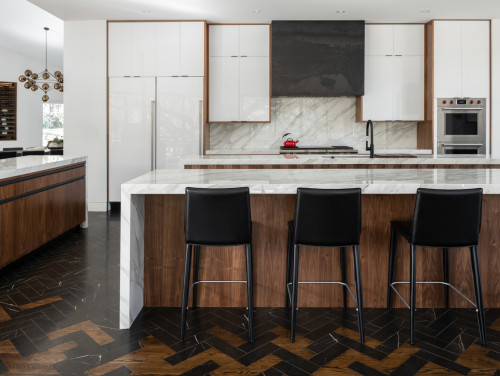
High-gloss kitchen cabinetry. Flat-panel cabinets with a high-gloss finish are gaining popularity, Kimmie Rokahr, a designer with DesignLoft Cabinets, told Houzz. The shinier finish bounces light around the space. Also, the flat-panel design gives a modern look that makes the cabinets appear like they’re receding. Additionally, don’t forget about the kitchen hood.


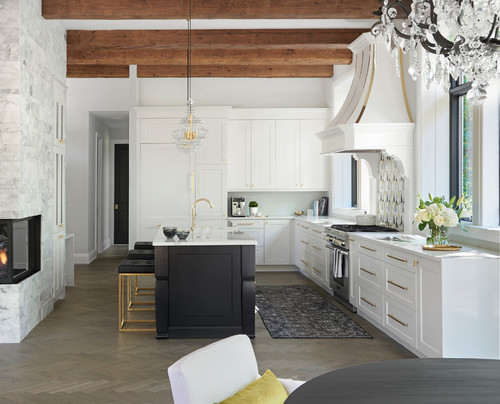
Wooden beams. More attention in home design is being placed on dressing up the home’s fifth wall. Wood ceiling beams are one way to do that. Designer Cynthia Soda of Soda Pop Design says the contrasting wooden beams can add some warmth to an otherwise all-white space. It can help accentuate the room’s height by drawing eyes upward.


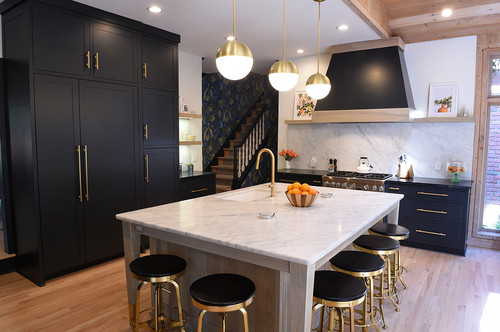
Brass accents. Kitchen designs are incorporating more contrasts, and brass is one way to achieve that. Tecola Robinson of Tecola Camille Interiors told Houzz that she’s seeing more black or dark kitchen cabinets paired with brass or gold hardware for a visual pop.

Facebooktwitterpinterestlinkedin