New Flooring Trends Emerging for 2020 | #FlooringTrends #TalkToYourAgent #SiliconValleyAgent #YajneshRai #01924991 #YourAgentMatters #TeamYaj #SangeetaRai #02026129

Facebooktwitterpinterestlinkedin

New Flooring Trends Emerging for 2020 | Realtor Magazine

More than 30% of homeowners say the floors are what they dislike most about their properties, according to a survey conducted by online loan marketplace LightStream. New flooring may even increase a home’s value, Dan DiClerico, an expert with HomeAdvisor, told realtor.com®. “Putting down new flooring is a smart investment,” DiClerico says. “But more importantly, it can dramatically transform the look and feel of the home, while making it safer and more functional.”

Realtor.com® asked design experts to weigh in on some of the top trends for flooring in 2020. Some of their predictions include:

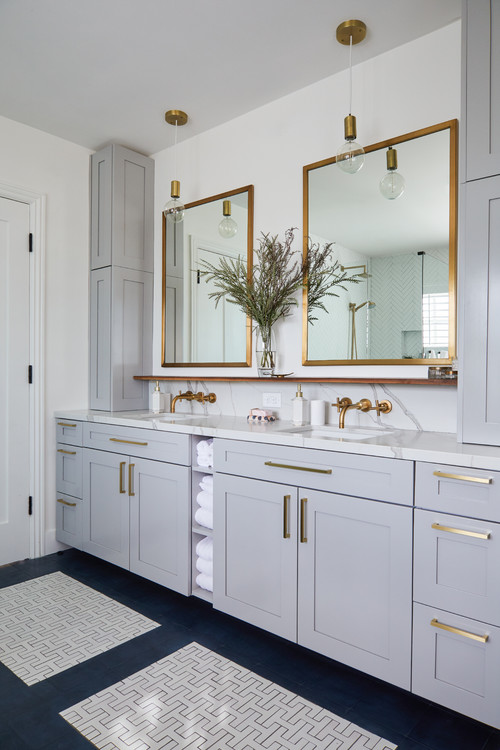
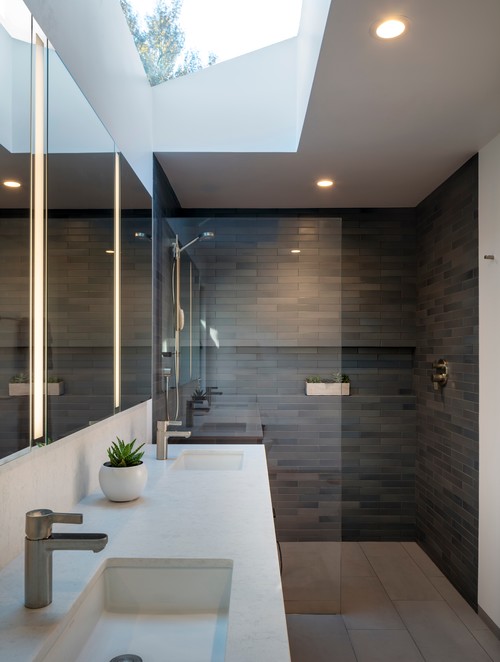
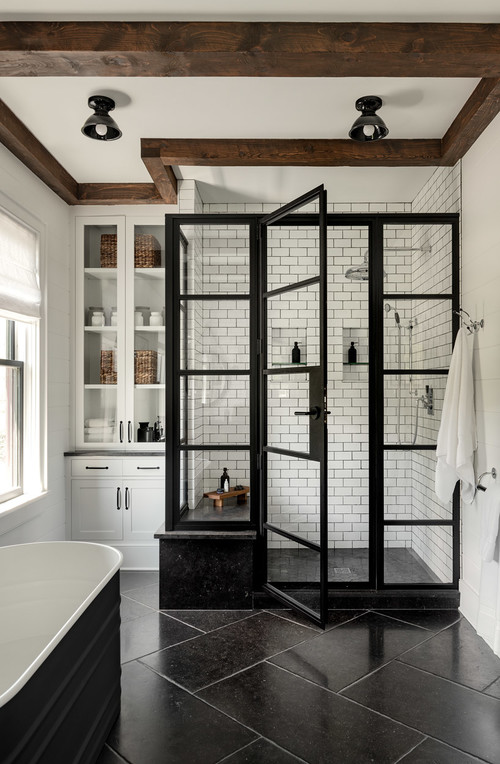
Tile that looks like wood.“The designs are very convincing, so you could mistake them for real wood, and there’s no wear and tear or risk of scratching,” DiClerico says. “In general, we’re seeing increased interest in engineered flooring over natural wood, mainly because it’s easier to maintain without too much sacrifice of style.” HomeAdvisor estimates the cost of installing ceramic or porcelain tile to be $3,000 to $4,000 for a 200-square-foot area.

Vinyl plank flooring.Waterproof floors are becoming more common, and vinyl planks have emerged as one of the hottest flooring trends. Vinyl can resemble hardwood flooring at a fraction of the cost. Its water resistance makes it a popular choice in kitchens and bathrooms. Vinyl flooring can cost anywhere from 50 cents to $5 per square foot, and installation costs an extra $3 to $5 per square foot, according to HomeAdvisor.

Marble.Porcelain tile that looks like marble is also trending. “They look extremely realistic compared to their genuine counterparts, making it difficult to tell the difference but getting the same beautiful look at a fraction of the cost,” Debbie Lori Travin of DLT Interiors told realtor.com®. The cost ranges widely: between $13.50 and $83 per square foot.

Facebooktwitterpinterestlinkedin

4 Most Popular Bathroom Trends of 2019 | #BathroomTrends #TalkToYourAgent #SiliconValleyAgent #YajneshRai #01924991 #YourAgentMatters #TeamYaj #SangeetaRai #02026129

Facebooktwitterpinterestlinkedin

4 Most Popular Bathroom Trends of 2019 | Realtor Magazine

Shaker-style cabinets, brass accents, and white-and-wood combos dominated bathroom trends in 2019, according to Houzz, a home remodeling website. The following are the most-saved bathroom photos that were uploaded to Houzz in 2019.

Brass accents. Add some bling: Brass finishes—whether antiqued, brushed, or polished—grew in popularity in 2019, particularly with cabinet hardware.


Minimalist style. Earthy tones in materials and color palettes keep bathroom design clean, simple, and timeless.


Black-and-white combo. Mix traditional farmhouse and modern design styles with a black-and-white combo, along with wood accents.


Symmetry. A black double vanity offers symmetry with the mirrors and sconces.

Facebooktwitterpinterestlinkedin

Houzz’s 3 Most Popular Living Room Styles of 2019 | #LivingRooms #TalkToYourAgent #SiliconValleyAgent #YajneshRai #01924991 #YourAgentMatters #TeamYaj #SangeetaRai #02026129

Facebooktwitterpinterestlinkedin

Houzz’s 3 Most Popular Living Room Styles of 2019 | Realtor Magazine

Living room layouts enabling greater social interaction, as well as design accents like built-ins, were big trends this year. Houzz, a popular home remodeling site, recently rounded up the living room and family room photos uploaded to its site this year that the highest number of users saved.

1. Shiplap: Add visual interest with shiplap to a wall otherwise overtaken by a large flat-screen TV.


Houzz living room photo

© Leslie Cotter Interiors


2. All about built-ins: Add organization, displays on open shelving, and a bar for entertaining.


Houzz living room photo

© TRG Architecture + Interior Design


3. Well-situated sofas: Float the sofa so it’s not right up against the wall; for example, try using a console table directly behind the couch to give the living room some breathing space.


Houzz living room photo

© designstiles


Facebooktwitterpinterestlinkedin

2019 Mortgage Rates Were Lowest in Nearly 50 Years | #LowRates #TalkToYourAgent #SiliconValleyAgent #YajneshRai #01924991 #YourAgentMatters #TeamYaj #SangeetaRai #02026129

Facebooktwitterpinterestlinkedin

2019 Mortgage Rates Were Lowest in Nearly 50 Years | Realtor Magazine

The interest rate for the 30-year fixed-rate mortgage averaged 3.9% for 2019, the fourth lowest annual average since 1971, according to Freddie Mac. For 2020, Freddie’s outlook mirrors that of the real estate industry’s top economists, who discussed their predictions at the National Association of REALTORS®’ first-ever Real Estate Forecast Summit earlier this month: Low mortgage rates and an improving economy will help drive steady home sales, construction, and increases in home prices.

“While the outlook for the housing market is bright, worsening housing affordability is no longer a coastal phenomenon and is spreading to many interior markets, and it is a threat to the continued recovery in housing and the economy,” says Freddie Mac Chief Economist Sam Khater. NAR Chief Economist Lawrence Yun, too, has long called for greater homebuilding in entry-level price points to satisfy affordability and housing demand for first-time buyers.

Freddie Mac reports the following national averages with mortgage rates for the week ending Dec. 26:

  • 30-year fixed-rate mortgages: averaged 3.74%, with an average 0.7 point, mostly unchanged from last week. Last year at this time, 30-year rates averaged 4.55%.
  • 15-year fixed-rate mortgages: averaged 3.19%, with an average 0.7 point, unchanged from last week. A year ago, 15-year rates averaged 4.01%.
  • 5-year hybrid adjustable-rate mortgages: averaged 3.45%, with an average 0.3 point, rising from last week’s 3.37% average. A year ago, 5-year ARMs averaged 4%.
Facebooktwitterpinterestlinkedin

New-Home Sales Surge to 12-Year High | #NewHomesSale #TalkToYourAgent #SiliconValleyAgent #YajneshRai #01924991 #YourAgentMatters #TeamYaj #SangeetaRai #02026129

Facebooktwitterpinterestlinkedin

New-Home Sales Surge to 12-Year High | Realtor Magazine

More home shoppers purchased newly constructed homes in November, bringing new-home sales to their best three-month performance since 2007, the U.S. Commerce Department reported Monday. Economists credit low mortgage rates, low unemployment, and strong income growth for the sales uptick.

Sales of new single-family homes increased 1.3% to an annualized pace of 719,000 in November. “Fueled by the limited number of resales available for purchase, low interest rates, and low unemployment, new home sales are finishing the year strong,” says Greg Ugalde, chairman of the National Association of Home Builders. New-home sales are running 10% higher than in 2018. Plus, builder confidence is high, indexes show, which bodes well for 2020, adds NAHB Chief Economist Robert Dietz.

Low inventory of new homes, however, continues to put pressure on prices. The median sales price of a new home rose 7.2% compared to a year ago, reaching $330,800 in November. Inventory of new homes stand at a 5.4-month supply. There are 323,000 new single-family homes for sale (but just 76,000 are completed and ready to occupy).

New home sales are performing strongest in the South, up 14.5% from a year ago in November, followed by a 12% increase in the West. In the Northeast and Midwest, meanwhile, new-home sales are down 10.4% and 7.6%, respectively.

Inventory remains a pressing issue for the overall housing market in both the new-home and existing-home markets. Lawrence Yun, chief economist at the National Association of REALTORS®, says that housing starts are short by 135,000 compared to the long-term average—and well short of the 5 million to 6 million that is needed to fully end the housing shortage.

“More home construction appears to be on the way as we move into 2020, as reflected in the very high confidence of home builders,” Yun said last week. “They are clearly recognizing an improving business opportunity. Overall, more construction will mean more housing inventory to choose from for consumers. Home sales can then easily rise while taming the fast growth in home prices.”

Last week, NAR also released a report that showed sales of previously owned homes fell in November, likely due to inventory constraints. Yun said existing-homesales likely will be “choppy when inventory levels are low,”but a strong economy should help keep demand strong.

Facebooktwitterpinterestlinkedin

How the Next Decade Will Influence Home Design | #DesignTrends #TalkToYourAgent #SiliconValleyAgent #YajneshRai #01924991 #YourAgentMatters #TeamYaj #SangeetaRai #02026129

Facebooktwitterpinterestlinkedin

How the Next Decade Will Influence Home Design | Realtor Magazine

Off-trend may become the new trend in interior home design in the new year. Bigger, bolder statements are coming in favor over all-white or neutral interiors. Forbes.com recently interviewed interior and furniture designers to find out the hottest looks they expect to emerge over the next decade.

Statement lighting.Lighting fixtures aren’t just for brightening a room; they also make a bold statement. You don’t need to add in extra wiring to add lights, either. “This is exactly why wall sconces with optional wire guard will become increasingly available,” Forbes.com reports. “These accents are ideal for anyone who wants to invest in statement lighting without the commitment to hardwiring.

Color transforms as the new neutral.Neutral color schemes are being pushed aside for warmer and more saturated hues.“Tiles, cabinetry, and walls all serve as opportunities for more color,” Christina Coop, co-founder of Hygge & West, told Forbes.com. Expect shades of pink to become more popular in the new year, as well as greens and blues.

Dolley Levan Frearson, co-founder of High Fashion Home, told Forbes.com that she predicts soft peachy corals and terra cotta—“colors that feel soft yet grounded in earth tones”—to also trend. “I also love golden yellow tones in lush fabrics like velvets to buttery, caramel leathers or leather-look,” she adds.

Patterns everywhere.Layered patterns likely will grow in popularity in 2020 and beyond. Expect to see more patterns in tabletop and textile designs. “We’ll be seeing more pattern mixing with color, tying together patterns of varying origin and scale,” Coop told Forbes.com. “Pattern matching, where the same pattern flows from the wall to upholstered furniture or bedding, is also becoming more common.”

Standout trims and ceiling.High-contrast design is emerging. It gives an “otherwise more monochromatic room a crispness and a fresher take on neutrals,” Kelley Mason, stylist at Lulu & Georgia, told Forbes.com. “Bold black and white feels fresh yet timeless, especially in graphic or art deco-inspired patterns.” Colorful trim is one way to achieve this, such as high gloss black colored trim against a monotone wall color. Also,wallpaper on the ceilingcan add high design to a space.

Facebooktwitterpinterestlinkedin

Average Credit Scores Surge to 8-Year High | #GoodMove #TalkToYourAgent #SiliconValleyAgent #YajneshRai #01924991 #YourAgentMatters #TeamYaj #SangeetaRai #02026129

Facebooktwitterpinterestlinkedin

Average Credit Scores Surge to 8-Year High | Realtor Magazine

Americans are boosting their credit scores, which bodes well for applicants seeking a mortgage to snag the lowest rates. The average credit score hit its highest level since 2011, reaching 682–two points higher than a year ago, Experian reports in its State of Credit report. Consumers also are taking on more mortgage debt than a year ago, and delinquency rates are decreasing too.

“We’re seeing a promising trend in terms of how Americans are managing their credit as we head into a new decade,” says Shannon Lois, Experian’s head of analytics, consulting, and operations. “Average credit card balances and debt are up year over year, yet utilization rates remain consistent at 30 percent, indicating consumers are using credit as a financial tool and managing their debts responsibly.”

Comparing borrowing behaviors between genders, women’s average credit scores are four points higher than men’s (686 vs. 682, respectively). Men tend to carry more mortgage debt than women–$220,421 compared to $203,603.

By generation, Gen Xers, millennials, and Gen Zers tend to carry more debt than older generations. They also tend to have higher delinquency rates, the Experian study shows. Here’s a breakdown showing their average credit scores and mortgage debts:

Generation Z

  • Average credit score: 641
  • Mortgage debt: $159,677

Millennials

  • Average credit score: 647
  • Mortgage debt: $222,924

Gen X

  • Average credit score: 665
  • Mortgage debt: $243,430

Baby boomer

  • Average credit score: 710
  • Mortgage debt: $193,894

Silent generation

  • Average credit score: 731
  • Mortgage debt: $162,162

By state, the five states with the highest average credit scores, according to Experian, are:

  1. Minnesota: 715
  2. Vermont: 708
  3. South Dakota: 707
  4. New Hampshire: 707
  5. Massachusetts: 705

Meanwhile, the states with the lowest average credit scores are Mississippi (652) and Louisiana (654).

Facebooktwitterpinterestlinkedin

Sellers: Hide Your Paperwork | #BeSafe #TalkToYourAgent #SiliconValleyAgent #YajneshRai #01924991 #YourAgentMatters #TeamYaj #SangeetaRai #02026129

Facebooktwitterpinterestlinkedin

Sellers: Hide Your Paperwork | Realtor Magazine

Watch out for prying eyes. Home sellers accumulate lots of paperwork during a transaction, such as estimates for home improvements, bills for services rendered, and warranties for appliances. Many homeowners may store these documents in a folder for safekeeping.

But as potential home buyers tour a house, homeowners may need to be reminded to hide their personal paperwork.


Labeling a document “Home Sale Documents” and leaving it in an area that is easily found is not the best move, a new article atOrange County Registerwarns. House hunters may be tempted to look at documents left out in the open, and viewing a listing agreement could reveal the commission that the seller is paying their agent and other information. Buyer’s agents know the commission that sellers will pay from the MLS listing, but allowing them to see the total commission may be giving away too much information, theRegister warns.

The receipts of recent work owners done on the house may also be revealing too much, the article warns. Buyers would be able to view the price owners paid for the exterior paint job, new cabinets, new counters, new appliances, or other projects. Certainly, sellers will disclose any repair and improvement information they did during escrow. But they are not obligated to disclose the price they paid for that work.

Facebooktwitterpinterestlinkedin

Finding the Right Type of Blinds for Your Windows | #BlindsShades #TalkToYourAgent #SiliconValleyAgent #YajneshRai #01924991 #YourAgentMatters #TeamYaj #SangeetaRai #02026129

Facebooktwitterpinterestlinkedin

Finding the Right Type of Blinds for Your Windows | Home Matters | AHS

Looking to buy new blinds? Check out our article on how to find the right type of blinds for your windows and learn more about installing blinds.

Woman looking out of window with blinds
 

Blinds and shades control the amount of light that enters your home, and they can enhance your family’s privacy by blocking the view inside. But the days of hanging up simple white mini-blinds in every room are over. These days, homeowners can choose from a plethora of different blinds and shades made in a range of different materials to fit every decorating style. They can serve a variety of purposes, including insulating windows and darkening or brightening a room.

Learn about some of the most common types of blinds and shades and how to find the right one for you.

Blinds or Shades – What’s the Difference?

Blinds and shades are both considered types of hard window dressing, but there are some key differences between them. Blinds use either vertical or horizontal slats that can be turned to adjust the amount of light they let in. They are usually made of wood, vinyl, metal or a composite. You can close the slats completely for maximum privacy, but because blinds cover the entire length of the window, they will maintain some privacy, even if the slats are opened all the way.

Shades are window coverings that are fabric-based, so they lend a softer look to rooms in which they are used. Shades may also be made of woven wood, typically bamboo. Instead of tilting slats to open or close shades, you pull them up and let them down in order to adjust the amount of light in a room. They offer less privacy than blinds because they do not cover the entire window when opened even partially.

What to Consider When Shopping for Blinds

When you’re shopping for blinds or shades, you should consider the following questions:

  • How much light or privacy do you want in each room?
  • Will the window coverings will be exposed to moisture?
  • Do you have kids?
  • Are you willing to have window coverings professionally cleaned?
  • How much are you looking to spend?
  • What’s your decorating style?
  • Do you need blinds for a glass door?

Blinds may be the best choice for rooms in which privacy is a priority but where you may still want some natural light. If you have kids, cords on blinds and shades can present a strangulation risk, so choose cordless models instead. You can clean blinds yourself, but shades will need to be professionally cleaned. And you may want to spend more on window coverings in high-traffic areas, like the family room or dining room, or for a specific window treatment that complements a prized decorative theme in your home.

If you’re looking to save a bit on your energy bills, you might also consider smart blinds, which can automatically open or close on a programmed schedule or via a command from a smartphone. 

Choosing Styles and Materials for Your Home

Choose blinds or shades that complement the décor of the room they’re in and meet the needs of that space. For example, blinds are ideal in a bathroom, where you may want maximum privacy but may also want some natural light occasionally. Vinyl blinds would hold up best in a moist environment, whereas wood blinds would warp, split or otherwise respond poorly to moisture in the air. 

Blinds can either be horizontal or vertical. Window blinds are typically horizontal, while door blinds are vertical. Vertical blinds can also be a great choice for picture windows or any window that is wide but relatively short. Choose wider horizontal slats to make small windows feel bigger or insulating blinds to keep your heating and cooling costs low.

Wood blinds come in a range of colors and finishes, and they may look best in formal areas like dens, sitting rooms and offices. However, if you want a softer look for a living room or bedroom, shades may be the better option. Popular styles of shades include Roman shades, which have wide pleats that fold up when the shade is raised; cellular shades, which use rows of air pockets to keep heat out during hotter months and in during the colder months; and blackout shades, which can darken a bedroom or media room by blocking all external light. Conversely, you could choose solar shades for a playroom, sun room, office or dining area. These sheer shades let in lots of light but block harmful UV rays that cause skin cancer and can fade upholstery, carpet and wood surfaces inside your home. 

Blinds and shades can keep your home comfortable and completely revamp the look of a room, and if you’re wondering how to install blinds, it usually only requires a few screws. Choose them carefully to complement your décor, insulate your windows, and meet your needs for privacy and light. You’ll find that your investment will make your house feel cozy for as long as you call it home.

Facebooktwitterpinterestlinkedin

Mortgage Rates Hold Steady This Week | #RatesThisWeek #TalkToYourAgent #SiliconValleyAgent #YajneshRai #01924991 #YourAgentMatters #TeamYaj #SangeetaRai #02026129

Facebooktwitterpinterestlinkedin

Mortgage Rates Hold Steady This Week | Realtor Magazine

The 30-year fixed-rate mortgage averaged 3.73%, unchanged from a week ago, Freddie Mac reports.

“The economy continued to pick up momentum with a solid increase in residential construction, improvement in industrial output in our nation’s factories and a rise in job openings,” said Sam Khater, Freddie Mac’s chief economist. “While the economy is in a sweet spot, improvements in housing market sales volumes will be modest heading into next year simply due to the lack of available inventory.”

Indeed, the National Association of REALTORS®’ Chief Economist Lawrence Yun said home sales could be “choppy when inventory levels are low,” but he noted that the economy is otherwise performing very well and buyer demand remains high. NAR released its existing-home sales report on Thursday, which showed sales slipped by 1.7% month over month in November. Read more: November Sales Slip Not Indicative of Larger Trend

Freddie Mac reported the following national averages with mortgage rates for the week ending Dec. 19:

  • 30-year fixed-rate mortgages: averaged 3.73%, with an average 0.7 point, unchanged from last week. Last year at this time, 30-year rates averaged 4.62%.
  • 15-year fixed-rate mortgages: averaged 3.19%, with an average 0.7 point, unchanged from last week. A year ago, 15-year rates averaged 4.07%.
  • 5-year hybrid adjustable-rate mortgages: averaged 3.37%, with an average 0.4 point, rising from last week’s 3.36% average. A year ago, 5-year ARMs averaged 3.98%.
Facebooktwitterpinterestlinkedin