The Top Landscaping Trends for 2018 | #LandscapingTrends #TalkToYourAgent #SiliconValleyAgent #YajneshRai #YourAgentMatters #01924991

Facebooktwitterpinterestlinkedin

The Top Landscaping Trends for 2018 | Realtor Magazine

Native plants, outdoor yoga spaces, and charging stations are among the hottest landscaping trends growing in consumer demand for 2018, according to a new report released by the American Society of Landscape Architects. Landscape architects were asked to rate the popularity of several residential outdoor design elements. Landscape architects noted a growth in the use of native plants, low-maintenance landscapes, and flexible-use spaces, for yoga classes or movie night. 

Overall, landscape architects ranked the following outdoor design elements as the overall most popular in 2018: 

  1. Fire pits/fireplaces
  2. Lighting
  3. Seating/dining areas
  4. Outdoor furniture
  5. Outdoor kitchens
  6. Decking (i.e. rooftop decking)
  7. Grills
  8. Movie/TV/video theaters, wireless/internet, stereo systems
  9. Outdoor heaters
  10. Stereo systems
  11. Pools and spa features (hot tubs, Jacuzzis, whirlpools, indoor/outdoor saunas)
  12. Utility storage
  13. Hammocks
  14. Outdoor cooling systems (including fans)
  15. Showers/baths
Facebooktwitterpinterestlinkedin

Mortgage Rates Retreat From 7-Year High | #SomeRateRelief #TalkToYourAgent #SiliconValleyAgent #YajneshRai #YourAgentMatters #01924991

Facebooktwitterpinterestlinkedin

Mortgage Rates Retreat From 7-Year High | Realtor Magazine


After climbing to their highest level in more than seven years, mortgage rates eased a bit this week. It was the first time they declined in four weeks, says Sam Khater, Freddie Mac’s chief economist. The 30-year fixed-rate mortgage fell 10 basis points to a 4.56 percent average this week. 

“The decline was driven by recent trade and geopolitical issues, which led to a sudden decrease in long-term Treasury yields,” Khater says. “Meanwhile, confident American consumers shrugged off the market volatility, as purchase mortgage applications continue to trend higher from a year ago.” 

But even with higher rates this year, Khater believes demand from home buyers will stay elevated as long as job growth and other economic fundamentals stay strong. 

“Extremely low inventory conditions in most markets are preventing sales from breaking out while also keeping price growth elevated,” Khater says. “Even if rates climb closer to 5 percent, sales have room to grow more—but only if current supply levels start increasing more meaningfully.” 

Freddie Mac reports the following national averages with mortgage rates for the week ending May 31: 

  • 30-year fixed-rate mortgages: averaged 4.56 percent, with an average 0.4 point, down from last week’s 4.66 percent average. Last year at this time, 30-year rates averaged 3.94 percent.
  • 15-year fixed-rate mortgages: averaged 4.06 percent, with an average 0.4 point, dropping from last week’s 4.15 percent average. A year ago, 15-year rates averaged 3.19 percent. 
  • 5-year hybrid adjustable-rate mortgages: averaged 3.80 percent, with an average 0.3 point, dropping from last week’s 3.87 percent average. A year ago, 5-year ARMs averaged 3.11 percent. 

Source: Freddie Mac

Facebooktwitterpinterestlinkedin

Drop in Rates Still Doesn’t Budge Loan Demand | #RateDropDemandStays #TalkToYourAgent #SiliconValleyAgent #YajneshRai #YourAgentMatters #01924991

Facebooktwitterpinterestlinkedin

Drop in Rates Still Doesn’t Budge Loan Demand | Realtor Magazine

Mortgage rates eased last week following recent increases, but would-be home buyers or refinancers didn’t bite. Total mortgage application volume, which reflects for refinancings and home buying, dropped 2.9 percent last week on a seasonally adjusted basis, the Mortgage Bankers Association reported Wednesday. This marked the sixth consecutive week of losses in applications. 

Mortgage application volume is now 10 percent lower than a year ago, the MBA reports. 

Refinance volume made up most of the drop last week, falling 5 percent week over week and reaching the lowest level since December 2000. Refinance volume was nearly 27 percent lower than a year ago, when mortgage rates were much lower. 

Mortgage applications for home purchases dropped 2 percent last week but remain 2 percent higher compared to a year ago, the MBA reports. 

The 30-year mortgage rate averaged 4.84 percent last week, down from 4.86 percent the previous week. 

“Rates slipped slightly over the week as concerns over U.S. trade policy and global growth sent some investors back to safer U.S. Treasurys,” says Joel Kan, a spokesman for the Mortgage Bankers Association. “Minutes from the most recent FOMC meeting also yielded a more dovish tone, which added to the downward pressure in rates.”

Facebooktwitterpinterestlinkedin

Even with mortgage rates up buying instead of renting makes sense for many – MarketWatch | #BuyerMakesSense #TalkToYourAgent #SiliconValleyAgent #YajneshRai #YourAgentMatters #01924991

Facebooktwitterpinterestlinkedin

Even with mortgage rates up buying instead of renting makes sense for many – MarketWatch

The spring home-buying season is in full swing, but the landscape has changed a lot from last year. Congress has curtailed tax incentives to purchase a home, mortgage rates are up and homes are more expensive. Yet, for many folks, buying a home is still better than renting.

The new tax law doubles the standard deduction to $24,000 for couples and caps deductions for state and local taxes at $10,000. Those greatly limit the tax incentive to purchase a home instead of renting. Zillow estimates homeowners who will take deductions and list mortgage interest and property taxes will fall from 44% to 14%.


Economists estimate this will reduce purchase offers enough to lower median housing prices by about 4% in more expensive cities, but that has yet to become apparent in the data.

Tax law changes were in focus by December and we have resale pricing data available through February. In the top 20 metro areas — and in particular in San Francisco, Los Angeles, San Diego and New York City — year-over-year price increases were about the same or greater than a year ago.

Most home buyers have more disposable income to pay mortgages. In their take-home pay, a higher standard deduction compensates them for not taking interest and property tax deductions, and lower rates overall actually boost most taxpayers’ buying power.

In hot markets like New York, foreign buyers, who for a variety of reasons pay cash and are simply parking wealth in the United States, have played a big role in elevating prices. U.S. personal income tax laws have few consequences for that behavior.

The FreddieMac average for a 30-year fixed-rate mortgage is currently about 4.6% — up from about 4% a year ago. For a $300,000 mortgage, that adds about $150 to monthly payments but landlords are paying more to finance apartment buildings too and that gets factored into rents.


How long a purchaser plans to stay in a home remains a key factor, because closing costs, realtors’ fees, and the like significantly raise the initial cost of owning a home — even if you can roll these costs into the mortgage balance to stretch those out.

Employing a calculator on the Trulia website, I examined the buying vs. renting tradeoff for the Washington metro area with a 30-year mortgage, a 4.6% interest rate and 20% down payment. The formula also factors in higher utility costs associated with home ownership, and expected inflation and rent increases.

If the home is occupied for at least 4 or 5 years, owning beats renting even without a mortgage interest deduction.

Read: 5 things to know about investing in single-family rental homes

Families could instead invest their down payments in stocks, which at first glance appear to be the better bet. From 2000 to 2017, equities as measured by the S&P 500 SPX-1.54%  were up an average of 5.3% annually, whereas homes appreciated 3.9%.


In recent years, appreciation as measured by the S&P Core-Logic Case-Shiller Indexes for top 20 markets and overall nationally indicate an accelerating pace of home appreciation — rising steadily from 4.4% in 2014 to about 6.5% in 2017.

Tougher zoning in and around cities where major employers are located, rising material costs and a slow pace of productivity growth in home building combine to make additions to the single-family housing stock slow. With millennials finally pushing into the house market, continued appreciation beating the historical trend and competitive with stocks can be expected.

Also, homeowners will have their full equity working for them, as opposed to just their down payments.

Homeowners enjoy more flexibility — they can modify and add to their homes to fit the circumstances of their families and personal preferences — and stability — they don’t have to fret about a landlord selling to a new owner who might want to repurpose the building.

Owning a home in a good neighborhood — not necessarily a rich area but one that is stable and has good employers within commuting distance — has proven one of the most reliable ways for ordinary folks to save and invest.

Facebooktwitterpinterestlinkedin

4 Surprising Things That May Increase How Much Your Home Is Worth | #CoolFacts #TalkToYourAgent #SiliconValleyAgent #YajneshRai #YourAgentMatters #01924991

Facebooktwitterpinterestlinkedin

4 Surprising Things That May Increase How Much Your Home Is Worth

To understand how much your home is worth, you have to know what affects its value. The Zestimate home value is Zillow’s tool for extrapolating the real market value of your home, based on existing home-related data and actual sales prices in your area.

Thousands of data points correlate with home values and sale prices — some of which are obvious (like the condition of the home) and some that aren’t.

Here are several surprising things that can affect either the existing value of your home or the price someone is willing to pay for it, all based on data.

1. Proximity to a Starbucks

How far do you have to drive to get a Frappuccino? If the answer is “not that far,” you’re in luck.

Photo from Shutterstock.

A 2015 Zillow report found that, between 1997 and 2014, homes within a quarter-mile of a Starbucks increased in value by 96 percent, on average, compared to 65 percent for all U.S. homes, based on a comparison of Zillow Home Value Index data with a database of Starbucks locations.

To evaluate if this effect is isolated to Starbucks, the research team looked at another coffee hot spot (one with particular pull on the East Coast): Dunkin’ Donuts.

The data showed that homes near Dunkin’ Donuts locations appreciated 80 percent, on average, during the same 17-year period — not quite as high as homes near a Starbucks, but still significantly above the 65 percent increase in value for all U.S. homes.

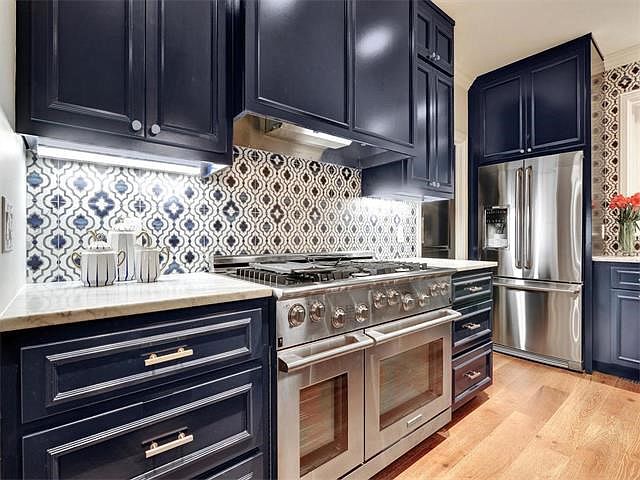
2. Blue kitchens and blue bathrooms

Beyond America’s obsession with curb appeal, what’s inside your house counts a lot too — especially the colors you paint the rooms (particularly the kitchen).

According to Zillow’s 2017 Paint Color Analysis, which examined more than 32,000 photos from sold homes around the country, homes with blue kitchens sold for a $1,809 premium, compared to similar homes with white kitchens.

Photo from Zillow listing.

Blue is also a popular bathroom shade. The same analysis found that homes with pale blue to soft periwinkle-blue bathrooms sold for $5,440 more.

Walls painted in cool neutrals, like blue or gray, can signal that the home is well cared for or has other desirable features.

3. Trendy features

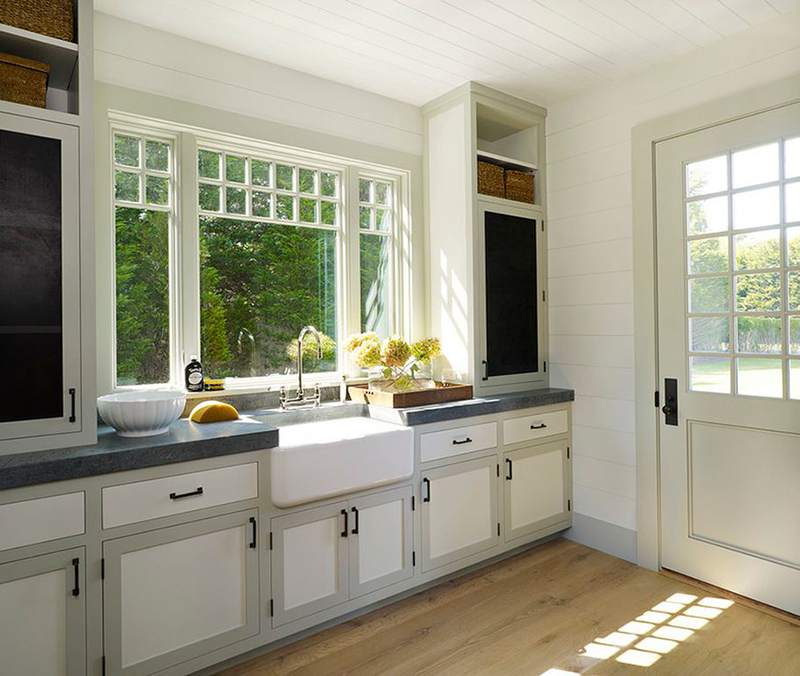
Joanna Gaines’ aesthetic is permeating more than just your YouTube search history. Zillow listings mentioning the shiplap queen’s favorite features — like barn doors and farmhouse sinks — sell faster and for a premium, according to a 2016 Zillow analysis of descriptions of more than 2 million homes sold nationwide.

Photo from Zillow listing.

Listings with “barn door” in the description sold for 13.4 percent more than expected — and 57 days faster than comparable homes without the keyword. Meanwhile, listings touting “farmhouse sink” led to a nearly 8 percent sales premium.

Sellers can use the listing descriptions to highlight trendy details and features that might not be noticeable in the photos.

4. How close you are to a city

If you own a home in a major American metropolitan area, you’re most likely sitting on a significant (and rapidly appreciating) financial asset. Case in point: Home values in the New York, NY, metro area are worth $2.6 trillion, per a recent Zillow analysis.

Photo from Shutterstock.

The average urban home is now worth 35 percent more than the average suburban home. Since 2012, the median home value in urban areas has increased by 54 percent, while the median home value in suburban areas is up just 38 percent.

Facebooktwitterpinterestlinkedin

3 Questions Clients Should Ask Before Buying a Vacation Rental | #VacationRentalInvestment #TalkToYourAgent #SiliconValleyAgent #YajneshRai #YourAgentMatters #01924991

Facebooktwitterpinterestlinkedin

3 Questions Clients Should Ask Before Buying a Vacation Rental | Realtor Magazine

If you have buyers interested in purchasing a vacation property as an investment and for extra cash flow, now is a great time, according to finance expert Rob Stephens, co-founder and general manager of Avalara MyLodgeTax, a tax solutions provider. Sites like Airbnb and HomeAway have contributed to the explosive growth in the number of travelers seeking to rent private homes for comfort, privacy, and sometimes lower costs.

“There’s no question that the vacation rental business is booming,” Stephens says. The short-term rental market in the United States alone is approaching $18 billion in revenue, with a projected annual growth rate of 6.6 percent, he says.

However, before your buyers decide to take on a short-term rental, Stephens advises that you pass on these three questions to help ensure their success:

1. Is a vacation rental a smart investment for you? Buying a vacation property can certainly be exciting, especially if it’s in a destination where the buyers love to spend time themselves. However, your clients need to be confident that they can cover all the costs involved. In addition to the transaction costs, make sure they understand what it will take to operate the rental. Do your clients plan to manage the property themselves or hire a professional (possibly you)? A vacation rental only generates income when it’s occupied, so your client needs to figure out how many renters they need each month and how much to charge to cover the cost of the property, and then decide whether it’s realistic or not.

Beyond the Mortgage: Explore Ownership Expenses With Investors

2. What are the laws governing short-term rentals in the community? Before you put in that offer on behalf of your investor clients, make sure the community or homeowners association allow short-term rentals. “Many communities prohibit owners from renting out their homes for fewer than 30 days,” Stephens says. Even some cities and states are starting to impose regulations on vacation rentals, he adds. Help your clients investigate short-term rental laws and regulations, including fines and other penalties if the property doesn’t comply. Call the HOA property management company, visit the city hall website, and have conversations with local agents who also handle vacation rentals.

3. Which taxes and fees are you required to collect from guests? “Many real estate investors overlook the fact that lodging or occupancy taxes need to be paid in order to rent the home in compliance with city and state tax agencies,” Stephens says. State and local lodging taxes vary widely, and can change with little notice, Stephens says. Your buyers need a lodging tax compliance tool or software if they’re planning to handle the rental themselves. “The right tool will offer a full range of solutions, including determining the vacation rental taxes and reporting requirements as well as calculating and filing returns on a monthly or quarterly basis,” Stephens says.

Facebooktwitterpinterestlinkedin

Mortgage Rates Updates | #MortgageRateUpdates #TalkToYourAgent #SiliconValleyAgent #YajneshRai #YourAgentMatters #01924991

Facebooktwitterpinterestlinkedin

Mortgage Rates Haven’t Been This High in 7 Years | Realtor Magazine


Mortgage rates were on the rise again this week, reaching their highest level since 2011. The 30-year fixed-rate mortgage rose six basis points last week to an average of 4.66 percent. 

“Mortgage rates so far in 2018 have had the most sustained increase to start the year in over 40 years,” says Sam Khater, Freddie Mac’s chief economist. “Through May, rates have risen in 15 out of the first 21 weeks (71 percent), which is the highest share since Freddie Mac began tracking this data for a full year in 1972.” 

Khater adds that the higher rates likely are having an impact on the housing market. “At a time when housing inventory remains extremely low, it’s worth watching whether these high borrowing costs lead some would-be sellers to stay put in their current home,” he says. “Inventory shortages would likely worsen if more homeowners decided not to sell out of reluctance of having a new mortgage with a higher rate.” 

Freddie Mac reports the following national averages with mortgage rates for the week ending May 24: 

  • 30-year fixed-rate mortgages: averaged 4.66 percent, with an average 0.4 point, rising from last week’s 4.61 percent average. A year ago, 30-year rates averaged 3.95 percent. 
  • 15-year fixed-rate mortgages: averaged 4.15 percent, with an average 0.4 point, rising from last week’s 4.08 percent average. A year ago, 15-year rates averaged 3.19 percent. 
  • 5-year hybrid adjustable-rate mortgages: averaged 3.87 percent, with an average 0.3 point, climbing from last week’s 3.82 percent average. A year ago, 5-year ARMs averaged 3.07 percent. 
Facebooktwitterpinterestlinkedin

What People Would Sacrifice to Buy a Home | #GiveUpToGet #TalkToYourAgent #SiliconValleyAgent #YajneshRai #YourAgentMatters #01924991

Facebooktwitterpinterestlinkedin

What People Would Sacrifice to Buy a Home | Realtor Magazine

Home buyers are willing to make extreme sacrifices and even give up some basic rights to get a chance at homeownership or help with their down payment, a new survey shows. In exchange for a 10 percent down payment, would-be buyers said they’d forgo their dream car, vacations, and even their right to vote.  Twenty-two percent of 1,000 buyers recently surveyed said they’d be willing to give up the right to vote in exchange for a 10 percent down payment they would not need to pay back, according to Unison Home Ownership Investors and Atomik Research’s The Value of Owning a Home survey. Millennials (26 percent) are more likely than Gen X (20 percent) and baby boomers (7 percent) to be willing to give up their right to vote. Men are more likely than women to give up their driver’s license—14 percent versus 9 percent, respectively. Forty-four percent said they’d be willing to give up their dream car, and 38 percent would give up vacationing for the next five years.  Homeownership status may even affect relationships, the survey found. Fifty-eight percent of respondents said they’d be more likely to date or marry someone who already owned a home at the time their relationship began, according to the survey. Homeowners may be more attractive to aspiring buyers. Millennials (58 percent), Gen X (59 percent), and baby boomers (56 percent) admit preference toward engaging in a relationship with a current homeowner.  To overcome the down payment barrier, more consumers are showing openness toward crowdfunding. Twenty-six percent of respondents surveyed said they’d consider crowdfunding a down payment, and 29 percent would use an equity investment or homeownership investment. Read more about buyers using crowdfunding to secure a home.

Facebooktwitterpinterestlinkedin

Kids Have Big Say in Real Estate Decisions | #IsThisYourFamily #TalkToYourAgent #SiliconValleyAgent #YajneshRai #YourAgentMatters #01924991

Facebooktwitterpinterestlinkedin

Kids Have Big Say in Real Estate Decisions | Realtor Magazine

The opinion of homebuyers’ children has a big sway in real estate decisions, a new survey finds. Fifty-five percent of homeowners surveyed say that their children under the age of 18 have an opinion on which home to buy, according to a new Harris Poll Survey commissioned by SunTrust Mortgage of more than 2,000 adults. 

Seventy-four percent of millennial parents between the ages of 18 and 36 report their children have even more of an influence. And 83 percent of renters said the opinion of their children will be a factor in which home to buy, the survey finds. 

The top requests of children include their own bedrooms (57 percent); a large backyard (34 percent); proximity to parks and activities (25 percent), close to schools (24 percent), close to friends (24 percent), and a swimming pool (21 percent). 

“As a parent of two kids, I know from experience that including children in the homebuying process is not only fun for the whole family but also educational for our home buyers of tomorrow,” says Todd Chamberlain, head of Mortgage Banking at SunTrust.

Facebooktwitterpinterestlinkedin

3 Pros, 3 Cons of Buying New Construction | #NewConstruction #TalkToYourAgent #SiliconValleyAgent #YajneshRai #YourAgentMatters #01924991

Facebooktwitterpinterestlinkedin

3 Pros, 3 Cons of Buying New Construction | Realtor Magazine

Many house hunters are under the mistaken impression that new construction is flawless, a perception that may be challenging to wrestle with if your seller’s home is surrounded by brand-new development. In reality, there can be just as many inspection issues with new builds as there are with resale properties. If you’re working with clients who are interested in purchasing new, it’s important to manage their expectations and let them know that no home—no matter what age—is perfect. On the other hand, new homes do have some advantages because they’re not worn. Here are three pros and three cons of new construction.

Pros

  1. Less wear and tear. Buyers of new construction can expect fewer imperfections in the product, says Terrylynn Fisher, CRS, GRI, a professional stager and associate broker with Dudum Real Estate Group in Walnut Creek, Calif. Scratched floors and cracks in walls, for example, are more commonplace in resale homes than new ones. Finishes and design flourishes in new homes may also be brighter and more colorful because they are untouched.
  2. Built-in technology. While many homeowners have been slow to adopt smart-home technology, developers are jumping on the bandwagon more quickly and incorporating smart features into their projects, says Sce Pike, founder and CEO of Portland, Ore.-based software company IOTAS. Smart door locks and thermostats are among the most popular products developers request, but some are eyeing more comprehensive packages that include smart humidity sensors and the ability to control access to a home remotely, Pike adds.
  3. It’s a blank canvas. Buyers may feel more like they are designing a home specifically for them when starting from scratch with a brand-new home, which can be a big psychological motivator in a purchase decision, Fisher says. Though resale buyers, too, have the opportunity to make a home their own, they may not feel complete ownership of its style because they’re either adding to, morphing, or covering up the previous owner’s sense of style, says Christine Rae, founder of the Certified Staging Professionals International Business Training Academy.

Cons

  1. Flaws due to building shortcuts. Builders may take shortcuts in the construction process to cut costs, and that can result in blemishes in the home. Fisher says one of her buyers recently bought a new home and discovered about six aesthetic problems that were caused during construction, including an unsightly gap at the top of a shower that made the framing behind the wall visible. “It was like a bad flip that appeared beautiful on the outside,” she says. “You’re going to have a more substantial house in an older home because it’s had owners that have cared for it.”
  2. Style over functionality. Builders are hyperfocused on open floor plans, as it’s a top priority for today’s buyers. But that often requires sacrificing storage space, Rae says. To achieve a truly open space, builders often have to decrease the size of closets and other areas of the home designed for storage. That can be problematic for meeting the needs of buyers who envision purchasing a long-term residence.
  3. Incomplete curb appeal. Many builders put all of their effort—and investment—into the front of the house so it looks good to potential buyers driving by. But they’ll sometimes leave the backyard unattended to, Fisher says. Many new-home buyers may have to assume all the costs of backyard landscaping, including planting grass or laying sod, as well as planting trees and other shrubbery. This can be a huge expense, too.
Facebooktwitterpinterestlinkedin