7 Qualities of a Good Neighbor | #GoodNeighbors #TalkToYourAgent #SiliconValleyAgent #YajneshRai #YourAgentMatters #01924991

Facebooktwitterpinterestlinkedin

7 Qualities of a Good Neighbor

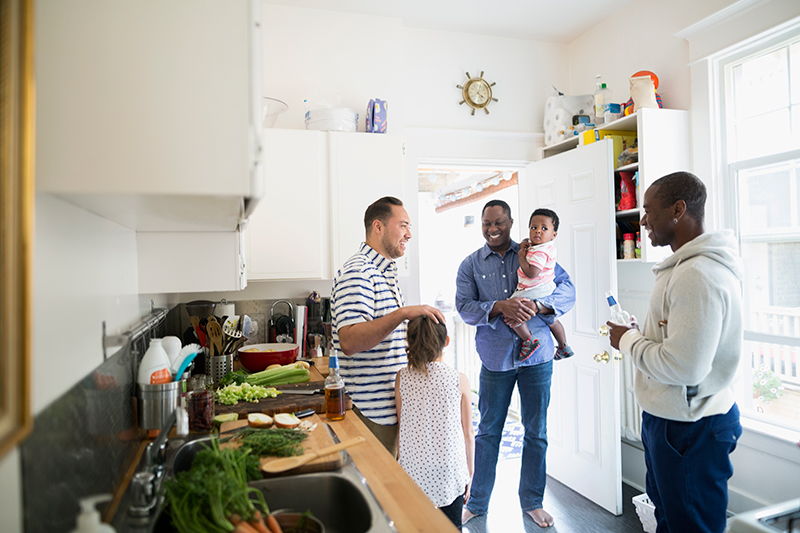
If you want good neighbors, you’ll first have to become one yourself. Master these seven techniques, and even you (yes, you!) can win the approval of your entire neighborhood.

1. Good neighbors bring cookies

Whether you’re new in town or haven’t kept in touch, a delivery of freshly baked goods is a perfect way to break the ice and let neighbors know that you’re thinking of them.

If cookies can keep Santa returning year after year with a bag full of loot, then surely they can train your neighbors to do your bidding. Consider the following scenario.

“Honey, somebody’s robbing the neighbor’s house again.”
“Wait, Janet. The ones who brought cookies yesterday?”
“Exactly. This time I’ll call the cops.”

2. Good neighbors rarely gossip

If your neighbor seems to know the dirt on everyone within a two-block radius, you can count on them to keep tabs on your personal life as well.

The next time Nosy Nellie gleefully describes the contents of the Rickenbacker’s trash again, move the conversation along by refocusing the conversation on her. “So, what are you growing in your garden this year?”

You aren’t in high school anymore, so preserve relationships with your neighbors and avoid the gratuitous gab fests.

3. Good neighbors share phone numbers

For such a connected age, you should really question why you don’t have your neighbors’ phone numbers. After all, what if they receive your package by mistake? What if the house floods while you’re on vacation? Worse yet, what if you need a babysitter?

If you feel uncomfortable bringing it up, ask during one of your cookie deliveries (you are following rule number one, right?) or right before a trip. Jot down your name, number and email address on a piece of paper and ask if your neighbor is comfortable sharing theirs.

4. Good neighbors help before they’re asked

The neighbor who says, “Let me know if you need anything,” probably isn’t going to help whenever you actually need something. You, on the other hand, are a good neighbor and genuinely want to help out.

To get ahead of the meaningless small talk, anticipate their needs. If they have kids and you’re comfortable babysitting, tell them up front. If they’re clearly struggling to mow the lawn during a heat wave, ask for the best time to stop by with your lawnmower.

5. Good neighbors are tidy

Even if you lack self-respect, respect the sensitive tastes of others and clean up your act.

Keep the ironic lawn ornaments to a minimum. Keep trash receptacles hidden in the side yard, or better yet, the garage.

Whenever you’ve finished gardening or landscaping for the day, put away your tools and bags of unused mulch. Rake the leaves and clean up grass clippings and all the other stuff your dad used to bug you about.

And if it’s not too much trouble, pressure wash and paint your house periodically.

6. Good neighbors mow the lawn

An unkempt and weedy lawn is embarrassing for your neighbors, so it should be embarrassing for you as well. Keeping it mowed every week or two is a good start, but it will take more than that to win the approval of the locals.

Trim the edge of your lawn regularly, fertilize on schedule and keep weeds to a minimum. Keep your foundation plantings simple, neatly trimmed and topped off with mulch.

If your neighborhood allows it, go the no-lawn method by planting swaths of low-maintenance, drought-tolerant ground covers. Crucially, don’t overdo it on the sprinklers — especially when it’s raining.

7. Good neighbors communicate

That old “good fences make good neighbors” quote had to come up at some point, right? A good neighbor must respect boundaries. That said, they should also be crossed when the fences themselves start losing pickets and falling over in a storm.

Even if it’s technically their fence, you might not be happy with the shoddy workmanship and resentment that you’ll have to live with when they get around to fixing it themselves.

Address shared interests like fences, drainage ditches and troublesome trees ahead of time so that you can work out a plan that both parties can agree to.

Oh, and don’t forget to bring cookies.
Facebooktwitterpinterestlinkedin

‘Nonbanks’ Emerge as Top Lenders for Home Buyers | #NotBankLenderOptions #TalkToYourAgent #SiliconValleyAgent #YajneshRai #YourAgentMatters #01924991

Facebooktwitterpinterestlinkedin

‘Nonbanks’ Emerge as Top Lenders for Home Buyers | Realtor Magazine

More buyers are bypassing big, established banks and turning to a growing subset of specialized lenders to obtain a mortgage.


Bank vault

© Donald Iain Smith – Blend Images/Getty Images


Last year, a “nonbank” called Freedom Mortgage originated $51.1 billion in home loans, more than Citigroup Inc. and Bank of America Corp., according to research from business news publication Inside Mortgage Finance. Freedom has risen from being the 78th largest mortgage lender in the U.S. in 2012 to the 11th largest today.

Nonbanks have re-emerged since the last housing crisis and are taking more business from traditional banks, now accounting for 52 percent of U.S. mortgage originations—up from 9 percent in 2009—according to Inside Mortgage Finance. Six of the 10 largest U.S. mortgage lenders today are nonbanks.

Larger banks have been pulling away from the general mortgage market and have placed a greater focus on consumers with more financial stability since the Great Recession. Nonbanks tend to focus on serving first-time buyers and moderate-income families. Nonbanks also tend to take short-term loans from other banks to fund their lending, and some industry analysts are concerned that these entities could overextend themselves—as many did a few years ago. “As long as the good times roll on, it’s fine,” Ed Pinto, co-director of the Center on Housing Markets and Finance at the American Enterprise Institute, told The Wall Street Journal. “But all I can say is, we’re in a boom, and you cannot keep going up like this forever.”

Quicken Loans has emerged as the largest nonbank. The top mortgage lenders, by originations, for the first half of 2018 are:

  • Wells Fargo
  • JPMorgan Chase
  • Quicken Loans
  • PennyMac
  • Bank of America
  • U.S. Bank
  • Caliber
  • United Wholesale
  • Amerihome
  • loanDepot
  • Freedom Mortgage
Facebooktwitterpinterestlinkedin

Bill Would Ease Mortgage Restrictions on Self-Employed | #MortgageForSelfEmployed #TalkToYourAgent #SiliconValleyAgent #YajneshRai #YourAgentMatters #01924991

Facebooktwitterpinterestlinkedin

Bill Would Ease Mortgage Restrictions on Self-Employed | Realtor Magazine

A bipartisan bill on Capitol Hill aims to make it easier for self-employed individuals and small-business owners to obtain a mortgage. Federal lending rules in recent years have made it difficult for the self-employed to qualify for a mortgage, favoring more documentable incomes that can be verified by pay stubs, W-2s, and two years of steady income. That has made it more troublesome for those who work for themselves, earn money at multiple jobs, or have large seasonal swings in their incomes. Currently, self-employed people who qualify for a mortgage may have to accept a higher interest rate or make a larger down payment.


Young Barista Smiling Leaning On Coffee Shop Counter

© Tom Werner – DigitalVision/Getty Images


But the Self-Employed Mortgage Access Act, which has been introduced in the U.S. Senate, attempts to expand lenders’ permissible sources to verify incomes beyond current federal qualified-mortgage regulations. Sen. Mark R. Warner, D-Va., who is co-sponsoring the bill with Sen. Mike Rounds, R-S.D., says up to 42 million Americans—or about 30 percent of the workforce—are self-employed or fall within the gig economy. “Too many of these otherwise creditworthy individuals are being shut out of the mortgage market because they don’t have the same documentation of their income—pay stubs or W-2s—as someone who works 9 to 5,” says Warner.

Meanwhile, mortgage financing giants Fannie Mae and Freddie Mac have been exploring ways to underwrite self-employed and gig-economy applicants, such as with automated solutions that could document the incomes typical for such workers.

Facebooktwitterpinterestlinkedin

Mortgage Rates Inch Up | #RatesGoingUpAgain #TalkToYourAgent #SiliconValleyAgent #YajneshRai #YourAgentMatters #01924991

Facebooktwitterpinterestlinkedin

Mortgage Rates Inch Up | Realtor Magazine


Rates

Freddie Mac


Mortgage rates rose slightly for the second consecutive week, and economists warn that more rises are likely to come.

“Borrowing costs may be slowly on the rise again in coming weeks, as investors remain optimistic about the underlying strength of the economy,” says Sam Khater, Freddie Mac’s chief economist.

Mortgage rates are now up three-quarters of a percentage point from last year. Home prices have been rising too—although at a slower pace recently—but are still “outrunning rising inflation and incomes,” Khater notes. “The weakening in affordability is hindering many interested buyers this fall, even as the robust economy brings them into the market.”

Freddie Mac reports the following averages with mortgage rates for the week ending Sept. 6:

  • 30-year fixed-rate mortgages: averaged 4.54 percent, with an average 0.5 point for the week, increasing from last week’s 4.52 percent average. Last year at this time, 30-year rates averaged 3.78 percent.
  • 15-year fixed-rate mortgages: averaged 3.99 percent, with an average 0.4 point, increasing from last week’s 3.97 percent average. A year ago, 15-year rates averaged 3.08 percent.
  • 5-year hybrid adjustable-rate mortgages: averaged 3.93 percent, with an average 0.3 point, increasing from last week’s 3.85 percent average. A year ago, 5-year ARMs averaged 3.15 percent.
Facebooktwitterpinterestlinkedin

Lots Are Costing Buyers More | #LotsNotReallyDeals #TalkToYourAgent #SiliconValleyAgent #YajneshRai #YourAgentMatters #01924991

Facebooktwitterpinterestlinkedin

Lots Are Costing Buyers More | Realtor Magazine


Lots may be getting smaller, but they’re also getting more expensive, according to analyzed data taken from the U.S. Census Bureau’s Survey of Construction. Single-family lot prices reached a new record high in 2017—half of the lots were priced at or above $47,400.


Lots costing more

© Michael H – DigitalVision/Getty Images


While this is a new nominal record, when adjusted for inflation, lot values have still not reached their peaks from the housing boom days, the National Association of Home Builders reports. During the housing boom, half of lots were priced at more than $43,000—this is more than $50,000 when converted to 2017 values.

However, some regions within the U.S. have seen their lot prices surpass their former peaks, even when adjusted for inflation. Rising lot values are the most pronounced in the West South Central and West North Central divisions, where lot values have climbed to new historical records.

The West South Central division—which includes Texas, Oklahoma, Arkansas, and Louisiana—tended to have values below the national median historically but started to catch up in 2015 to national numbers. Half of the lots in the region are selling for more than $56,000, which is a significant increase from the housing boom years when half of lots were priced under $30,000.

The West North Central division—which includes Iowa, Minnesota, and North and South Dakota—also saw lot prices reach a record high. Half of the lots in the region were priced above $64,000 in 2017, which also exceeded values from the housing boom days.


NAHB lot chart


“Given that the nation’s lots are getting smaller and home production is still significantly below the historically normal levels, it might seem surprising that lot values keep going up,” the NAHB notes on its blog, Eye On Housing. “However, the rising values are consistent with persistent record lot shortages. They are also consistent with significant and rising regulatory costs that ultimately increase development costs and boost lot values.”

Facebooktwitterpinterestlinkedin

Study Reveals ‘Starbucks Effect’ on Home Prices | #StarbucksEffect #TalkToYourAgent #SiliconValleyAgent #YajneshRai #YourAgentMatters #01924991

Facebooktwitterpinterestlinkedin

Study Reveals ‘Starbucks Effect’ on Home Prices | Realtor Magazine

Having a Starbucks open near a neighborhood could increase nearby home values, potentially by a few thousand dollars, a new study from Harvard Business School finds. The study’s authors focused on gentrification of neighborhoods using Yelp data, but discovered the “Starbucks effect” during their research.


A cappucino with the foam showing a smiling creature

lauramusikanski – Morguefile


Using Yelp data to find the entry of each Starbucks in a ZIP code, researchers found a 0.5 percent increase in housing prices within a year after a Starbucks opens. 

Harvard economics professor Edward Glaeser says he believes the home price rises are not due to the actual Starbucks opening but may be more of an indicator of affluent customers in the area.

“The presence of a Starbucks is far less important than whether the community has people who consume Starbucks,” Glaeser notes in the paper. “Consequently, we think that this variable is likely to be a proxy for gentrification itself. … The most natural hypothesis to us is that restaurants respond to exogenous changes in neighborhood composition, not that restaurant availability is driving neighborhood change.”

Overall, gentrification, according to the paper says, is “strongly associated” with increases in the numbers of grocery stores, cafes, restaurants, and bars.

Facebooktwitterpinterestlinkedin

3 Plants That Can Kill Your Listing’s Curb Appeal | #CurbAppealPlants #TalkToYourAgent #SiliconValleyAgent #YajneshRai #YourAgentMatters #01924991

Facebooktwitterpinterestlinkedin

3 Plants That Can Kill Your Listing’s Curb Appeal | Realtor Magazine

Though lush shrubs and flowering plants can boost a home’s curb appeal, some have a reputation for being destructive to lawns, growing quickly and requiring a lot of maintenance. “The wrong plantings end up competing with local varieties for light, water, and nutrients—and some invasive shrubs even bully native bushes, preventing them from growing altogether,” Craig Jenkins-Sutton, president and co-founder of landscape design firm Topiarius, told realtor.com®. The site recently flagged some of the common plant offenders to landscapes, including:


Tall green boundary hedge with house behind

© JPM – Image Source/Getty Images


Wisteria: Some of the Chinese and Japanese varieties of the flowering vine can be invasive, growing up to 60 feet tall. Jenkins-Sutton recommends cutting it back in the late summer after the flowering ends and clipping all the side shoots and long tendrils to three to four inches, or six buds. He says this will help prevent it from blocking light near a house or getting under roofs and gutters.

Bamboo: This plant is often used as a privacy screen, but it’s also known to attract invasive bugs and plant disease. Bamboo can grow several feet in one year and spread into neighboring yards. It also can damage underground utilities, Jenkins-Sutton told realtor.com®.

English ivy: This plant spreads quickly and is often blamed for causing tree or mortar damage. “It establishes a monoculture, which means it dominates an area at the expense of all others, and, left unchecked, will blanket forest floors, suffocate plant seedlings, and smother trees,” says Jenkins-Sutton.

Facebooktwitterpinterestlinkedin

Mortgage Borrowers Get Loan Approval With Lower Credit | #BorrowerRelief #TalkToYourAgent #SiliconValleyAgent #YajneshRai #YourAgentMatters #01924991

Facebooktwitterpinterestlinkedin

Mortgage Borrowers Get Loan Approval With Lower Credit | Realtor Magazine

New mortgages are being approved with lower credit scores, and FHA loans appear to be leading the shift, according to studies by credit developer FICO and other entities. “As we get further away from the Great Recession, underwriting criteria seems to have eased, and a broader section of consumers are obtaining mortgages as a result,” according to FICO’s report.


Credit score on smartphone

© tolgart – iStock/Getty Images Plus


New loans for borrowers with FICO scores reaching as low as the 400s jumped from 21.9 percent in 2009 to 29.7 percent last year, according to the study. FICO scores range from 300 to 850.

From January to March of this year, borrowers who were approved for FHA loans—which offer low down payment options for first-time home buyers—had an average credit score of 672, according to FHA data. During that same period in 2011, the average credit score for an FHA borrower was 701. FHA borrowers also have had higher debt-to-income ratios in recent years. Debt-to-income ratios measure monthly household income against other debt, such as credit cards, auto loans, and personal loans.

Between January and March, about a quarter of FHA borrowers had a DTI of more than 50 percent, FHA data shows. In 2013, only 12.7 percent of FHA borrowers had such a debt load.

Facebooktwitterpinterestlinkedin

Yards for New Homes Are Smaller Than Ever | #YardsGettingSmaller #TalkToYourAgent #SiliconValleyAgent #YajneshRai #YourAgentMatters #01924991

Facebooktwitterpinterestlinkedin

Yards for New Homes Are Smaller Than Ever | Realtor Magazine


Young woman with garden in small room

© Image Source/Getty Images


Home buyers will have a harder time finding a big yard, as lot sizes remain near record lows, according to the U.S. Census Bureau. Among sold properties in 2017, the median lot size for a new, detached single-family home was one-fifth of an acre, or 8,560 square feet. Median lot sizes fell below 8,600 square feet in 2015 for the first time since the bureau started recording such data.

Lot sizes vary regionally, and the nation’s largest tend to be in New England. More than half of single-family spec homes in the area are built on lots exceeding 0.4 acres. New England is known for having stricter zoning regulations than other parts of the nation, which requires builders to keep lower densities for construction.

On the other hand, the Pacific region, including California, Washington, Oregon, Hawaii, and Alaska, has some of the tiniest lots in the nation—half of which are smaller than 0.15 acres.


Lot sizes by region

© National Association of Home Builders


Facebooktwitterpinterestlinkedin

Tips to Stop Washing Machine Vibration | #WashingMachineTips #TalkToYourAgent #SiliconValleyAgent #YajneshRai #YourAgentMatters #01924991

Facebooktwitterpinterestlinkedin

Tips to Stop Washing Machine Vibration

Washing machines are not supposed to violently vibrate around. If your washer wont stop vibrating, try these six tips to help resolve your issue.

Man looking into the washing machine

Is your washing machine shaking and vibrating? Does it seem to be ready to launch into space? Any time a machine is expected to spin something the size of a load of laundry, there is bound to be a little vibration. But beyond the typical tremors? That’s a sign there’s a problem. Fortunately, the solution might be as simple as making a minor adjustment. Here are the most common culprits of washing machine vibration — as well as ways you can tame that trembling yourself.

1. Check that your loads are balanced

Just like ceiling fan blades, the items you place in your washer need to be relatively balanced. Anyone can learn how to balance a washing machine load. Simply try to make sure that any heavy, bulky items, like bedspreads, are spread out over the entire tub of a top-loader washer. If the items are not large enough to spread around, balance them with equally bulky items or multiple items on the opposite side. Note: The loading is not as critical on a front loader. However, those washers spin at a higher rate of speed. That can amplify any problem that might be causing vibration.

2. Check the the floor and machine are level

Your washer may appear to be level, but your eyes could be deceiving you. With the help of a construction level tool, this is an easy task to mark off your list. First, determine if the floor is level. If it is not, hopefully there is enough adjustment in the washing machine feet to compensate for it. Place the level on top of the washer, and check the level from side to side and front to back. The feet under the washer, at each corner, are made to be adjusted. Just keep adjusting and checking the level until you have it right.

3. Ensure You Have a Sturdy Floor

If your whole floor is shaking, there may be a problem with the stability of it. Does it shake when someone walks across it? Then that may be your culprit — not the washer itself. If you have access to the underside of the floor, in a basement or crawl space, it may be possible to add floor support. If not, spreading the load of the washing machine out over a larger area might help. You can do this by cutting a piece of 3/4″ plywood to the depth of the front of the washer to the back wall and the width of the washer and the dryer combined (if they are side by side) and placing it under the appliance(s). If this does not help, it would be wise to consult a licensed construction professional to resolve your shaky floor once and for all.

4. Check Your Stacking Kit

Do you have a stacked washer and dryer? Most of them come with a metal frame that mounts the upper unit to the lower one. If you have that type, make sure the connections are secure. A sturdy floor and a level installation are also especially important with stacked units (see above).

5. Purchase Washing Machine Vibration Pads

Anti-vibration pads are an easy, economical way to absorb and quiet a vibrating washing machine. Most are simply mats made of molded rubber that the washer and dryer sit upon. There is also a smaller, cheaper alternative available: individual small pads for each of the washer feet. The bottom of the pads grip the floor, and the feet fit into a pocket on the top. Vamoose vibration!

6. Call in Some Reinforcement

Here’s something you may not have thought about: If you live in a multi-family building, your neighbors are more than likely aware of your vibrating washing machine, too. Keep your neighbors happy. Keep your washing machine happy. Try these recommendations. If they don’t work (or if you would rather let someone else handle the task to begin with), though, go ahead and get some professional help. A shaky washing machine could lead to a broken one. If you’re not already covered, it may be a good idea to look into American Home Shield® to help protect some of your most relaible appliances and systems. You’ll be glad you did.

Facebooktwitterpinterestlinkedin