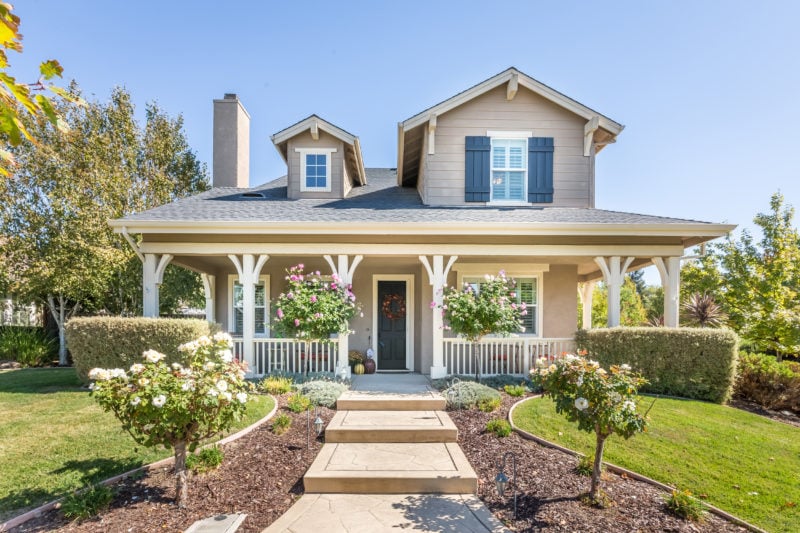
More Homeowners Consider Adding a ‘Granny Flat’ | #ADUs #TalkToYourAgent #SiliconValleyAgent #YajneshRai #01924991 #YourAgentMatters #TeamYaj #SangeetaRai #02026129

Facebooktwitterpinterestlinkedin

More Homeowners Consider Adding a ‘Granny Flat’ | Realtor Magazine

Home improvement professionals say they’re fielding more inquiries from homeowners about adding accessory dwelling units—often nicknamed “granny flats.” A fifth of remodeling contractors say they undertook projects over the last year to create an ADU by converting an existing space, and a similar number say they created an ADU by building a new addition to a property, according to a new survey released by the National Association of Home Builders.

ADUs are smaller units added to a property, and they can be pricey to build. Only 6 percent of remodeling contractors report completing an ADU project for less than $25,000. Three-fourths say ADU projects cost at least $50,000, and 28 percent report projects costing at least $150,000.


Price of ADU Projects. Visit source link at the end of this article for more information.


ADUs usually require a building permit, but local and state ordinances vary significantly across the country. Some areas will not allow them at all. There are no federal standards or programs that track ADUs.

ADUs have been cited by industry experts as one possible solution to low inventory, and that has prompted some cities to explore ordinances or programs to add more ADUs to existing properties. For example, Fannie Mae last year picked an ADU program in Denver as one of its three “innovative ideas” for tackling housing shortages. Through this program, city officials and community development nonprofits work together to educate low-income homeowners about how to build ADUs that they can then rent out to earn extra money.

Facebooktwitterpinterestlinkedin

Survey: Tax Changes Haven’t Held Buyers Back | #BuyersMovingForward #TalkToYourAgent #SiliconValleyAgent #YajneshRai #01924991 #YourAgentMatters #TeamYaj #SangeetaRai #02026129

Facebooktwitterpinterestlinkedin

Survey: Tax Changes Haven’t Held Buyers Back | Realtor Magazine

Home buyers appear to be less skittish about the potential financial impact of the 2017 Tax Cuts and Jobs Act on their real estate purchases, according to a new Redfin survey of more than 2,000 consumers. The tax reform law, which placed a cap on deductions for mortgage interest payments and state and local taxes, is having a less significant effect on home-search activity than industry experts expected a year ago, the survey shows.

Fourty-seven percent of home buyers say the tax law is influencing their property search, down from 56 percent a year ago. “Last year, more home buyers were worried that tax reform would hurt their homebuying budgets, but it turns out tax reform wasn’t all bad or all good for home buyers,” says Redfin Chief Economist Daryl Fairweather. “Some home buyers, especially in low-tax states, are now paying less in taxes overall, which has left them with more cash for a more expensive home. For others, not being able to deduct as much of their property taxes or mortgage interest from their taxable income was the other shoe that needed to drop to make them pick up and move to a more affordable area.

“In the long run, we will see demand for luxury homes in high-tax states suffer the most because those homes have been hit the hardest by this tax reform, and there’s actually early evidence of that already happening,” Fairweather adds.


How Tax Reform is Affecting Home Searches. Visit source link at the end of this article for more information.

© Redfin


The states with the largest share of home buyers who say tax reform has affected their home search are New York (61 percent) and California (55 percent). On the other hand, Kansas and Indiana (both at 24 percent) have the smallest share of home buyers who say their search has been affected by tax reform.

Facebooktwitterpinterestlinkedin

3 Design Tricks to Enlarge Small Outdoor Spaces | #CozyPlaces #TalkToYourAgent #SiliconValleyAgent #YajneshRai #01924991 #YourAgentMatters #TeamYaj #SangeetaRai #02026129

Facebooktwitterpinterestlinkedin

3 Design Tricks to Enlarge Small Outdoor Spaces | Realtor Magazine

Home shoppers are focusing their attention on outdoor spaces, but with yard sizes decreasing nationwide, how can you make a small backyard appealing to your buyers? A recent article at Apartment Therapy featured designers who showed off their best design tricks to make a small backyard feel less cramped.


Contemporary landscape

© Kate Gould Gardens


Add Seating

“No matter how small your outdoor area, you’re going to want to create a sitting area or else you won’t take full advantage of the space,” says Kristen Ekeland, principal at Studio Gil. “Choose a petite table and loveseat or chairs that will instantly turn the little space you have into an outdoor retreat.” Also, consider tucking a sectional into a corner to maximize floor space, suggests designer David Dillon.


Traditional patio

© Visionscapes NW Landscape Design


Bring in Some Green

Cover the outdoor area in as much green as possible, suggests interior designer Courtney Hill. Jasmine or ivy on a wall, plus a mix of potted plants, can help green up a space. “One of our favorite tricks when it comes to decorating an outdoor space is to rely on plants to add color and life to the overall design,” says Caroline Grant and Dolores Suarez, co-founders of Dekar Design. “Make a selection of your favorite flowers, potted plants, and ferns to diversify the space and create that outdoor oasis you’ve always dreamed of.”


Transitional patio

© Meridith Baer Home


Paint it White

“Make a small outdoor space seem so much bigger by painting it all white,” says Jade Joyner, co-founder and principal designer of Metal+Petal. “You can even go for a monochromatic color scheme with all-white cushions, a white outdoor rug, and white metal pieces. I often add in mirrors and large-scale plants to create the illusion of a larger space.”

Facebooktwitterpinterestlinkedin

Baby Boomers: Who Needs to Downsize? | #BabyBoomerNotDownsizing #TalkToYourAgent #SiliconValleyAgent #YajneshRai #01924991 #YourAgentMatters #TeamYaj #SangeetaRai #02026129

Facebooktwitterpinterestlinkedin

Baby Boomers: Who Needs to Downsize? | Realtor Magazine

A growing number of baby boomers are choosing not to downsize in retirement. Instead, they’re opting to remain in the homes where they raised their children, USA Today reports. But their reluctance to move is contributing to low inventory across the country, says realtor.com® Chief Economist Danielle Hale.

Baby boomers “have refused to follow what the traditional expectations were,” Barbara Risman, a sociology professor at the University of Illinois at Chicago, told USA Today. Baby boomers, mostly between the ages of 54 to 73, are working longer and, therefore, putting retirement off longer than previous generations. Their millennial children are also increasingly living at home with them and staying well into adulthood.

Baby boomers also may be struggling to find a smaller home to move into. Housing analysts have pointed to a dire housing shortage of less expensive entry-level homes—the type downsizing baby boomers could be seeking. The shortage has caused home prices to increase, and that may be erasing some of the incentive to downsize, housing analysts say.

Fifty-two percent of baby boomers say they’ll never move from their current home, according to a Chase Bank survey of 753 boomer homeowners conducted this year. Separately, 43% of 45- to 65-year-olds say they plan to remain in their current home through retirement, according to a 2017 Ipsos/USA Today poll.

About 20% of Americans 65 and older are working or looking for jobs, up from 12.1% in 1996, according to Labor Department data. “Baby boomers don’t want to become old in a way that has negative connotations,” Risman says. “Remaining in one’s old house is part of remaining in the prime of one’s life longer.”

And downsizing may be losing its appeal. For baby boomers who do plan to move, 43% say they want their next home to be the same size as their current one. Twenty-two percent say they want their next home to be even larger, according to a January survey of 50- and 60-year-olds by Del Webb.

Facebooktwitterpinterestlinkedin

Mortgage Rates Drop for Fourth Straight Week | #4thWeekDrop #TalkToYourAgent #SiliconValleyAgent #YajneshRai #01924991 #YourAgentMatters #TeamYaj #SangeetaRai #02026129

Facebooktwitterpinterestlinkedin

Mortgage Rates Drop for Fourth Straight Week | Realtor Magazine

Mortgage rates continue to decline while lowering borrowing costs for home buyers this spring.

“Mortgage rates fell for the fourth consecutive week and continued the medium-term trend of lower rates since late 2018,” says Sam Khater, Freddie Mac’s chief economist. “The drop in mortgage rates is causing purchase demand to rise, and the mix of demand is skewing to the higher end as more affluent consumers are typically more responsive to declines in rates.”

Freddie Mac reports the following national averages with mortgage rates for the week ending May 23:

  • 30-year fixed-rate mortgages: averaged 4.06%, with an average 0.5 point, falling from last week’s 4.07% average. Last year at this time, 30-year rates averaged 4.66%.
  • 15-year fixed-rate mortgages: averaged 3.51%, with an average 0.4 point, falling from a 3.53% average last week. A year ago, 15-year rates averaged 4.15%.
  • 5-year hybrid adjustable-rate mortgages: averaged 3.68%, with an average 0.4 point, rising from last week’s 3.66% average. A year ago, 5-year ARMs averaged 3.87%.
Facebooktwitterpinterestlinkedin

Top Reasons Americans are Moving | #MoveReason #TalkToYourAgent #SiliconValleyAgent #YajneshRai #01924991 #YourAgentMatters #TeamYaj #SangeetaRai #02026129

Facebooktwitterpinterestlinkedin

Top Reasons Americans are Moving | Realtor Magazine

Many Americans are moving because they want more space, according to a new survey of 1,000 consumers from Porch.com, a home remodeling website. More than one in four—and millennials, in particular—say their chief motivator for moving is the desire a larger home. Porch.com found the top moving motivators among consumers:

  • Desire for a larger home: 26%
  • Desire to own, not rent: 19%
  • Downsizing: 12%
  • New job or job transfer: 11%
  • Desire for a better neighborhood: 9%
  • Separating from a significant other: 6%
  • Establishing own household (e.g. moved out of parents’ house): 6%
  • Desire to be closer to family: 5%
  • Desire for a shorter commute: 5%

Their reasons for moving also tended to impact their home search. For example, consumers who were looking to transition from renting to owning tended to take the longest time looking for a home—an average of 5.7 months. On the other hand, those who were moving for a job or because they split up with a significant other tended to move the fastest: less than 3 months.


Average months spent looking for home chart. Visit source link at the end of this article for more information.

© Porch.com


Home buyers also acknowledge having to make some compromises on the items they most desired in a home, according to the survey. Potential home buyers say they compromised the most on purchase price, housing features, and size. However, 62% of respondents say they didn’t have to make any compromises at all.


List of compromises. Visit source link at the end of this article for more information.

© Porch.com

Facebooktwitterpinterestlinkedin

Freddie: Mortgage Rates Won’t Go as High as We Thought | #InterestRates #TalkToYourAgent #SiliconValleyAgent #YajneshRai #01924991 #YourAgentMatters #TeamYaj #SangeetaRai #02026129

Facebooktwitterpinterestlinkedin

Freddie: Mortgage Rates Won’t Go as High as We Thought | Realtor Magazine

Borrowing costs this year likely will be lower than originally predicted. Freddie Mac recently downgraded its forecast for the 30-year fixed-rate mortgage, projecting it will average 4.3% this year—below last year’s average of 4.5%. Further, Freddie economists predict only a small increase in rates in 2020, with the 30-year fixed-rate mortgage averaging 4.5% next year.

The lower mortgage rates likely will be a boon for housing, Freddie Mac notes in its May 2019 Forecast. “The combined positive impact of low mortgage rates, a strong labor market, low unemployment, and modest wage growth supports our forecast for a steadily growing housing market in 2019,” Freddie Mac says in its report.

Freddie Mac mortgage chart. Visit source link at the end of this article for more information.

© Freddie Mac

The declining interest rates are expected to help reverse a decrease in mortgage originations that occurred in 2018. Freddie Mac researchers note this will “continue to provide an impetus to first-time home buyers as well as homeowners looking to refinance.”

Freddie Mac projects that home sales will surpass 2018 levels and reach 5.98 million units in 2019. Most of the increase will come from existing-home sales. Freddie Mac’s forecast remains flat for housing starts this year, however, at 1.26 million units.

Facebooktwitterpinterestlinkedin

Schooled in Debt | #SchoolLoanRollUp #TalkToYourAgent #SiliconValleyAgent #YajneshRai #01924991 #YourAgentMatters #TeamYaj #SangeetaRai #02026129

Facebooktwitterpinterestlinkedin

Schooled in Debt | Realtor Magazine

Consumers saddled with student loan debt often have to delay financial goals, like buying a home. But for those who want the benefits of ownership before their student debt is paid off, Fannie Mae has options that can make it easier to qualify and handle the monthly payments.

While you can’t give specific financial advice to clients, you can help them understand the benefits and risks. “We can be advocates for our clients and potentially direct them to the right place,” says Mary Shanley Aloisio, a sales associate with Dream Town Realty in Chicago.

Relief from the secondary market giant can come in one of three ways. First, buyers whose student loans have income-driven repayment terms (meaning they pay less when they’re making below a certain income) can qualify based on what they’re actually paying at the time of application, as shown on their credit report. So if they’re paying $0 each month based on their income, the debt won’t be counted in calculating their debt-to-income ratio. Second, lenders will exclude debt that’s being paid by someone else (like a parent) as long as the borrower can provide 12 months of documentation and there’s no history of delinquency. Finally, those who’ve already purchased a home may be able to improve their monthly cash flow through a cash-out refinance that’s used to pay off the student debt (no partial paydowns are allowed). The refinancing option is even available to parents who’ve co-signed student loans for their children. Freddie Mac also has special options for student loan borrowers. Buyers should talk to their lender to determine availability of, and their eligibility for, these products.

Aly, a 29-year-old Chicago public high school teacher (who asked that her last name not be published), graduated from the University of Illinois at Chicago in 2012 with $50,000 in student loan debt. She and her wife saved money, compared with renting, when they bought a home in 2016 for $147,000. But a combination of rising property taxes and rising home values prompted the couple to look into refinancing. With a cash-out refi, they were able to pay off Aly’s remaining $18,000 in student debt.

Tapping home equity to retire other kinds of debt can make financial sense by giving people more money to spend on other expenses or invest in tax-advantaged retirement plans, says John Kambs, a senior loan officer with the Kambs Jennings Group of Chicago, part of Compass Mortgage. Looking at home buying through this lens underscores the value of owning instead of renting and is a powerful motivator for people trying to decide whether to buy, says Kambs, who arranged the couple’s new loan.

But this tactic has significant risks, warns Robin Howarth, a senior researcher at the Center for Responsible Lending in Durham, N.C. For one thing, moving student loan debt into a different type of loan, such as a mortgage, means giving up the protections that generally come with borrowing money to attend school, such as being able to defer repayment during a financial emergency or to attend graduate school, she says. “It’s hard to look into the future and know if you might need to avail yourself of those protections.”

There’s also the risk that home values may decline and that the borrowers won’t be able to meet their obligations, Howarth adds. “Everyone underestimates the possibility of something going wrong,” particularly if they haven’t gone through the kinds of setbacks that befell many home owners during the Great Recession, says Howarth.

Aly was aware of the protections that come with student loans and even investigated debt-forgiveness programs designed for teachers, but she was put off by the bureaucracy required to take advantage of those options. “It would have been hours of paperwork and hunting people down,” she says. “Refinancing seemed much simpler.”

Bonus: The couple knocked about $400 per month off what they were spending on their mortgage and student loan payments.

Facebooktwitterpinterestlinkedin

Calif. Couple Fined $600K for Uprooting, Killing Ancient Tree | #BeAwareAboutTrees #TalkToYourAgent #SiliconValleyAgent #YajneshRai #01924991 #YourAgentMatters #TeamYaj #SangeetaRai #02026129

Facebooktwitterpinterestlinkedin

Calif. Couple Fined $600K for Uprooting, Killing Ancient Tree | Realtor Magazine

A judge has ordered a Sonoma, Calif., couple to pay nearly $600,000 for uprooting a nearly two-century-old oak tree from the property they bought. The 180-year-old oak tree was protected under a conservation easement.

The Sonoma Land Trust, a nonprofit group, sued the couple for damaging the ancient tree as well as other surrounding vegetation that was protected under a conservation easement. The couple purchased the 34-acre property that included the tree. They attempted to move the tree and other vegetation to a place closer to their newly built ranch home within the property.

But the heritage tree did not survive the move.

Bob Neale, director of the Sonoma Land Trust Stewardship, said the couple was made aware of the conservation easement and the terms of it when they purchased the property.

The damage was discovered in 2014 and has been in legal proceedings. A concerned neighbor first reported to the Sonoma Land Trust Stewardship that they saw heavy equipment and digging on the property. Neale said he found more than 3,000 cubic yards of dirt and rock had been removed, and that the 180-year-old oak tree had been uprooted without permits for the work.

Sonoma County Superior Court Judge Patrick Broderick sided with the Sonoma Land Trust and wrote in his ruling that the land owners, Peter and Toni Thompson, “knowingly and intentionally” violated the conservation rules. They “demonstrated an arrogance and complete disregard for the mandatory terms of the easement,” he wrote.

Broderick ordered the couple to pay more than $586,000 in damages toward environmental restoration and other costs.

The couple reportedly plan to file a new lawsuit. They say the damage was not intentional.

“They went into this area because they appreciated the pastoral nature of it, the scenic beauty of it,” Richard Freeman, the couple’s attorney, told The Washington Post. “They wouldn’t have wanted to do anything that was going to cause harm, damage, or scar it.”

The couple has since listed the property, including the neighboring ranch, on the market for $8.45 million.

Facebooktwitterpinterestlinkedin

How to Write a Winning Real Estate Offer Letter | #PersonalLetter #TalkToYourAgent #SiliconValleyAgent #YajneshRai #01924991 #YourAgentMatters #TeamYaj #SangeetaRai #02026129

Facebooktwitterpinterestlinkedin

How to Write a Winning Real Estate Offer Letter – Redfin Real-Time

You’ve found the house of your dreams and you’re ready to make an offer; but how do you compete with a handful of other prospective buyers who’ve also deemed the home “the one”? This is a dilemma buyers are facing all over the country in today’s fast-paced, low-inventory housing market. And the reality is, you aren’t always going to be able to submit the highest real estate offer for your dream home.

Fortunately, there are ways to make your real estate offer letter more competitive when more cash isn’t an option. Most real estate agents say letters is one of the best ways to support your bid. The letter gives you the opportunity to connect with the sellers on a personal level, to explain to them why you want their home and why they should choose your offer. And that human connection, agents say, can sometimes even trump a higher price for sellers.

Hand holding a pen and writing a real estate offer letter

“I recently worked with some first-time homebuyers who fell in love with a highly desirable townhouse and were determined to get it,” said Redfin real estate agent Lesley Lannan. “Theirs was the first offer on the property, and the owner was so touched by their letter that he accepted their offer and canceled a subsequent Open House. I can’t underscore the importance of offer letters more.”

Here are some tips to help you write a strong offer letter:

1. Format Your Offer Letter and Make It Stand Out

As real estate offer letters become more and more common, you have to find a way to make yours stand out. Think of it as a resume. A beautiful letter with attention-grabbing fonts is going to jump out next to other letters. Need some inspiration? Check out this beautifully formatted offer letter that won this couple their home.

2. Explain in the Offer What You Love About the House

Don’t just tell the sellers you want their house, tell them why you want it. Whether it was a big backyard, a chef’s kitchen or a walk-in closet that grabbed your attention, the owners will be flattered to hear what you liked most about their home.

Front of new house that buyers just placed an offer on


Stay ahead of other buyers. Join us for a free Home Buying class.


3. Make Personal Connections in the Letter 

Though it may sound silly, bonds can easily be built over a mutual love for cats, or the Patriots or whatever it may be. If you share a common value or hobby with the sellers, mention it in your cover letter. It’s an easy way to make yourself more relatable, and will also show that you’re not sending the same generic letter with every offer you submit.

“A couple of clients of mine had a cat that had been recently diagnosed with diabetes,” said agent Cheryl Demarco. “They fell in love with a house and discovered that its owners also had cats. In their offer letter, they told the sellers how perfect the home was for them and their disabled kitty—down to the small pantry in front of the bathroom is a perfect place for all of his new supplies and medications. My clients won the home in a multiple offer situation.”

4. Print a Hard Copy of the Offer for the Sellers

Think about how many emails you receive daily versus how many hard-copy letters you get. If you send your real estate offer letter through email, you run the risk of it going to spam or being quickly buried beneath other emails. Instead, agents recommend leaving a hard copy of the letter on the seller’s’ kitchen counter during a showing. However, they advise you only do this if you know the owners still live there and will see it (as opposed to it being a vacant home), and if there are no other showings after you (as a subsequent agent could see it and possibly remove it.) This will show a little extra initiative on your part, and give you peace of mind knowing that it ended up in their hands and not in their spam folder.

Facebooktwitterpinterestlinkedin