The Front Porch Is in Demand | Come Back | #FrontPorchComeBack #TalkToYourAgent #SiliconValleyAgent #YajneshRai

Facebooktwitterpinterestlinkedin

The Front Porch Is in Demand | Realtor Magazine

The front porch—a classic feature of American homes—is making a comeback but with a twist.

Younger crowds are literally turning porches into stages. “Porchfest” is growing in popularity across the country, in which neighborhood music festivals pop up that are enjoyed from homeowners’ front porches.

The Atlantic Monthly’s CityLab reports: “In the Instagram age, the front steps have become places to see and be seen, throw a rocking concert or party, and to foster metropolitan community in a walk-by, stop-in-for-wine sense.”

Read more: Welcome Back the Front Porch

Shelley Glica in Niagara Falls, Ontario, told CityLab how she organized a Porchfest in her community and how in warmer months she’ll also host a “Stories From the Porch” series of speakers on art, history, and culture. Glica and others represent a generational rethinking of the front porch, CityLab reports.

Porches are growing in demand across the country. Twenty-three percent more new homes are being constructed with a front porch than two decades ago. The number of new homes built with porches was at 65 percent last year, according to the National Association of Home Builders. In the Southeast, that figure jumps to 86 percent. An NAHB survey from 2016 also shows that millennials—more than any other age group—say they want a porch.

The front porch was once a celebrated signature of Federal architecture. In the 1800s, past presidents had launched successful front-porch political campaigns. For homeowners, front porches were a place to do chores, such as shuck beans, or to get fresh air on hot days before air conditioners. But once air conditioning was invented, Americans showed less need for cooling porches in the middle of the 20th century. The invention of televisions also pushed homeowners inside more.

Nowadays, younger generations are finding the porch can be an enjoyable hangout spot. Scott Doyon, who organized a Porchfest in the Atlanta area, says the front porch is now being used as a place to host friends over for hors d’oeuvres or even sharing a concert on Instagram or other social media.

“I try to find ways to plug those old ways of living into the modern world,” Doyon says. “I still believe in the value of porches as a conduit to community-building—it just unfolds in a different way now.”

Facebooktwitterpinterestlinkedin

Mortgage Rates Sink Lower This Week | #EaseOnInterestRates #TalkToYourAgent #SiliconValleyAgent #YajneshRai

Facebooktwitterpinterestlinkedin

Mortgage Rates Sink Lower This Week | Realtor Magazine


The 30-year fixed-rate mortgage is averaging lower than it did a year ago, and remains well below the 4 percent threshold this week.

“The 30-year fixed mortgage rate fell two basis points to 3.9 percent in this week’s survey, but we closed our survey prior to a surge in long-term interest rates following an upward revision to third quarter U.S. Real GDP growth and comments by Federal Reserve Chair Yellen touting a broad-based economic expansion,” says Len Kiefer, Freddie Mac’s deputy chief economist. “The market implied probability of a Fed rate hike in December neared 100 percent, helping to drive short term interest rates higher. The 5/1 Hybrid ARM, which is more sensitive to short-term rates than the 30-year fixed mortgage, increased 10 basis points to 3.32 percent in this week’s survey. The spread between the 30-year fixed mortgage and 5/1 Hybrid ARM is just 58 basis points this week, the lowest spread since November of 2012.”

Freddie Mac reports the following national averages with mortgage rates for the week ending Nov. 30:

  • 30-year fixed-rate mortgages: averaged 3.90 percent, with an average 0.5 point, decreasing from last week’s 3.92 percent average. Last year at this time, the 30-year fixed-rate mortgage averaged 4.08 percent.
  • 15-year fixed-rate mortgages: averaged 3.30 percent, with an average 0.5, down from last week’s 3.32 percent. A year ago, 15-year rates averaged 3.34 percent.
  • 5-year hybrid adjustable-rate mortgages: averaged 3.32 percent, with an average 0.3 point, an increase from last week’s 3.22 percent average. A year ago, 5-year ARMs averaged 3.15 percent.
Facebooktwitterpinterestlinkedin

This Is How Fast a Home Sells Today | #HomesSellFast #TalkToYourAgent #SiliconValleyAgent #YajneshRai

Facebooktwitterpinterestlinkedin

This Is How Fast a Home Sells Today | Realtor Magazine

Homes today spend a median time of three weeks on the market—far shorter than the median of 11 weeks five years ago, according to new data from the National Association of REALTORS®. “The inventory shortage and the growing economy and job creation has increased the interest in home buying,” says NAR Chief Economist Lawrence Yun. “There is just not enough inventory; people need to fight over the few homes available on the market.”

Historically, about 1.2 million new homes are built every year, but this year, only about 800,000 have been constructed. “It’s been below that in prior years, and in the past decade, greatly lower than that,” Yun says. “Today’s shortage is largely explained by a decade of underproduction.”

Some markets are so hot that even three weeks is too long for a home to sit. “If we make it three weeks in our market, there is something wrong,” Boston-area real estate agent Darlene Umina told CNNMoney. “These days, you know within the first weekend whether the price was right.” Umina says she hosted an open house earlier this year that resulted in 18 offers on the home. Three of those offers were cash.

In San Francisco, real estate pro Erin Thomas says she’s had buyers arrive at open houses and submit an offer on the spot. She also says offers above the list price and without contingencies are becoming more commonplace.

Facebooktwitterpinterestlinkedin

New Homes Are Getting Smaller | #NewHomesGettingSmaller #TalkToYourAgent #SiliconValleyAgent #YajneshRai

Facebooktwitterpinterestlinkedin

New Homes Are Getting Smaller | Realtor Magazine

Developers are continuing to shrink the size of new single-family homes, according third-quarter housing data compiled by the National Association of Home Builders. The median square footage of a single-family home was 2,378 square feet in the third quarter.

In the years following the Great Recession, builders were focused on the higher end of the market, catering to larger-sized homes. But more recently, builders have renewed their focus on the entry-level market, and NAHB predicts square footage of new homes to continue to decrease.

“Typical new-home size falls prior to and during a recession, as home buyers tighten budgets, and then sizes rise as high-end home buyers, who face fewer credit constraints, return to the housing market in relatively greater proportions,” NAHB explains at its Eye on Housing blog. “This pattern was exacerbated during the current business cycle due to the market weakness among first-time home buyers. But the recent declines in size indicate that this part of the cycle has ended, and the size will trend lower as builders add more entry-level homes into inventory.” 

Facebooktwitterpinterestlinkedin

4 Renovations That Grab Buyers’ Attention | #RenovationsToSell #TalkToYourAgent #SiliconValleyAgent #YajneshRai

Facebooktwitterpinterestlinkedin

4 Renovations That Grab Buyers’ Attention | Realtor Magazine

Among the home improvement projects buyers are most likely to value are those that increase storage space and preserve vintage features. Southern Living magazine recently rounded up some of the renovations that get sellers the most attention for their properties, including:

Temperature-controlled square footage: “From the appraiser’s point of view—and really from everyone’s—heated and cooled square footage is the biggest winner” in terms of payoff, says Dewey Golub, a real estate pro with Keller Williams Realty in Charleston, S.C. That’s important to keep in mind for buyers who are weighing a garage, attic, or screened-in porch conversion.

Cosmetic kitchen tweaks: Southern Living says more buyers are turning away from busy backsplashes and jarring palettes in the kitchen, opting for a simpler subway tile backsplash and subdued paint colors for cabinetry. Los Angeles agent Ben Lee also suggests using stainless steel appliances to help modernize a dated kitchen. “They don’t have to be that expensive,” he says.

Vintage preservation: If the property has historical value, stay true to its character with projects such as restoring original window casements and hardware. “You want to respect the authenticity and the integrity of the home,” says Steven Jones of Better Shelter, a Los Angeles-based residential real estate development and design firm.

Plenty of shortage: Organizational accents, such as built-in bookshelves and window seats with storage underneath, are not only practical but also offer “old-school charm,” Southern Living notes. When closet space is tight, consider adding storage solutions such as extra shelves, hooks, and rods. “If there is limited closet space, I always install an extra closet rod so people can increase their hanging capacity,” Jones says.

Facebooktwitterpinterestlinkedin

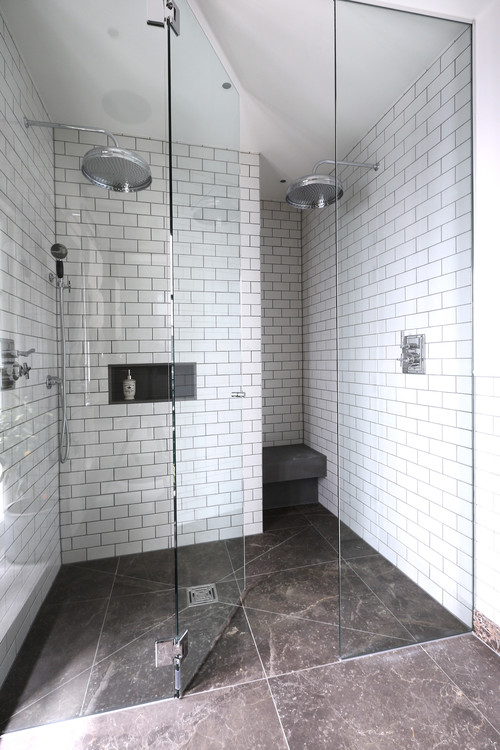
The Shower In The Master Bathroom Is Getting a Lot More Attention | #MasterBathShower #TalkToYourAgent #SiliconValleyAgent #YajneshRai

Facebooktwitterpinterestlinkedin

Hot Home Trend: The Statement Shower

The shower in the master bathroom is getting a lot more attention. In fact, it’s one of the main splurges among renovating homeowners, according to the 2017 U.S. Houzz Bathroom Trends Study. These “statement showers,” as Houzz dubs them in its report, include high-tech features, like rainfall showerheads, dual showers, curbless showers, and body sprays.


Upgrading the master shower was the most popular renovation project, according to the survey of more than 1,200 U.S. homeowners who were in the midst or just completed a bathroom reno project. For more than half of renovators, their main aim was to increase their shower’s size. Also, survey respondents showed a rise in demand for high-tech features, such as mood lighting or digital controls, in master bathrooms.

Over a quarter of homeowners – 27 percent – have opted to remove the bathtub in their master bathroom renovations, according to the survey. The removal of the bathtub has allowed more room for a larger shower.

“This year’s Bathroom Trends Study sheds light on two key trends in master bathrooms, showers as a focal point and the growing role of high-tech features in bathroom products,” says Nino Sitchinava, principal economist at Houzz. “Additionally, it is clear that today’s master bathroom renovations are marked by timeless and durable elements, from natural stone finishes to curbless shower entries, a benefit of having older generations in the driver’s seat. Still, the early wave of millennial homeowners reveals their preferences for homes of the future, from larger master bathrooms to clean lines and white and gray color pallets.”

The Houzz study found that the national average for a major remodel of a large master bathroom (considered over 100 square feet) is $21,000.

Facebooktwitterpinterestlinkedin

Differences Between a Furnace and a Boiler | #FurnaceVsBoiler #TalkToYourAgent #SiliconValleyAgent #YajneshRai

Facebooktwitterpinterestlinkedin

Differences Between a Furnace and a Boiler | Home Matters | AHS

Furnaces and boilers are the same … or are they? Both heat homes, but they do it differently. Learn how they differ and the pros and cons of furnaces and boilers.

Warm hands over the heater

A heater is a heater is a heater, right? So is a boiler a furnace — are the names interchangeable? Or are they two different types of heaters? If so, what is the difference between a furnace and a boiler? Read on to find out.

How do boilers and furnaces heat your home?

Among all the heating options available for a home, “boilers” and “furnaces” are likely the most recognizable terms. Most people tend to refer to their heating units with the term “furnace,” but a furnace is, however, totally different from a boiler. The main difference between the two? How they heat your home. While a furnace heats air and then circulates that air throughout the home, a boiler, conversely, heats water that is then circulated throughout the home. Often, after a furnace heats the air, a blower then forces it through ducts. The warm air is then released through vents or registers throughout the home. With a boiler, a circulator pumps the heated water through pipes throughout the house that heat baseboards or radiators The water eventually returns to the unit and the cycle begins again.

Is one heater generally preferred over the other?

Just like any other major home appliance, there are many pros and cons to consider when choosing a heating system. It all boils down (no pun intended) to what makes the most sense for you and your household. For instance, although a furnace may be louder and may not retain the warmth as long (causing it to turn on and off more frequently), initial installation is much less expensive than for a boiler, and the forced-air heating system is often compatible with central air conditioning. Likewise, although a boiler may be more expensive initially, it provides more energy efficiency, comfortable humidity levels, even temperatures and better indoor air quality (since it doesn’t blow air around and require a filter).

Which heater is more costly: a furnace or a boiler?

When comparing maintenance costs and energy efficiency of furnaces and boilers, it appears that boilers are the better choice. Although they’re usually more expensive to install, they typically use less fuel, saving you money on your monthly bills, and they don’t require the purchase of filters. However, two major drawbacks of boilers are the possibility of leaks and frozen pipes. Since the pipes are full of water, if a leak occurs, it could cause significant damage to your home, resulting in costly repairs. Likewise, if your power goes off and the temperatures are freezing outside, the water could freeze in the pipes, causing them to burst and cause extensive damage, as well.

What is hydro air?

Want the best of both heater worlds? Consider a hydro air system: a system that combines hot water and hot air. Here’s how it works: first, a hot water boiler generates heat. Then the water is pumped into an air handler unit. From there, a blower passes air over the then-heated coils and distributes that air through a duct system. The best part? You get pros from both types of heating units and that same ductwork can be used for an air conditioning unit.


Facebooktwitterpinterestlinkedin

Buyers Rush to Lock in Before the Holidays | #LockInBeforeHolidays #TalkToYourAgent #SiliconValleyAgent #YajneshRai

Facebooktwitterpinterestlinkedin

Buyers Rush to Lock in Before the Holidays | Realtor Magazine

Home buyers were taking out mortgages in higher numbers last week. Applications to purchase a home increased 5 percent and are now 4 percent higher than the same week one year ago, the Mortgage Bankers Association reported Wednesday.

But higher home prices appear to be pushing more buyers toward adjustable-rate mortgages, the MBA reports. ARMs tend to carry lower initial interest rates. The ARM share of total mortgage applications is now 8 percent higher than a year ago.

The interest rate on the 30-year fixed-rate mortgage increased from 4.18 percent to a 4.2 percent average, the MBA reports. The higher rates caused a pullback from current homeowners, with applications to refinance dropping 5 percent last week, which is down nearly 26 percent from a year ago. Despite the slight uptick, rates are slightly lower than a year ago. This is the first time rates have been below their year-ago average in 2017, the MBA reports.

The decrease in refinance applications prompted the overall MBA loan index—which reflects refinance and home purchase demand—to basically remain flat this week, inching up just 0.1 percent for the week, the MBA reports.

Facebooktwitterpinterestlinkedin

Townhouse Market Attracting More Buyers | #Townhouses #TalkToYourAgent #SiliconValleyAgent #YajneshRai

Facebooktwitterpinterestlinkedin

Townhouse Market Attracting More Buyers | Realtor Magazine

Townhouse construction continues to post gains as home shoppers are lured to the sector.  Single-family attached housing comprised 26,000 of total housing starts during the third quarter of 2017, according to Census data. That is 18 percent higher than a year prior, the National Association of Home Builders reports in its analysis.

The share of new townhomes now stands at 11.8 percent of all single-family starts, NAHB reports. Still, the peak market share for townhomes over the past two decades was in the first quarter of 2008. At that time, the share reached 14.6 percent of total single-family construction.

During the Great Recession, the townhome sector saw a sharp drop in demand. But that is now turning around and expected to continue, builders predict.

“The long-run prospects for townhouse construction are positive given large numbers of home buyers looking for medium-density residential neighborhoods, such as urban villages that offer walkable environments and other amenities,” says NAHB Chief Economist Robert Dietz.

Facebooktwitterpinterestlinkedin

Home Sales Are Rising Despite Supply Woes | #SalesRise #TalkToYourAgent #SiliconValleyAgent #YajneshRai

Facebooktwitterpinterestlinkedin

Home Sales Are Rising Despite Supply Woes | Realtor Magazine

Existing-home sales in October rose to the strongest pace since earlier this summer, the National Association of REALTORS® reported Tuesday.

Total existing-home sales—which comprise completed transactions of single-family homes, townhomes, condos, and co-ops—rose 2 percent month over month to a seasonally adjusted annual rate of 5.48 million. Sales are now at the strongest pace since June’s 5.51 million.

However, sales remain 0.9 percent below a year ago, NAR reports. Continual supply shortages have led to fewer closings on an annual basis for the second consecutive month.

“Job growth in most of the country continues to carry on at a robust level and is starting to slowly push up wages, which is in turn giving households added assurance that now is a good time to buy a home,” says Lawrence Yun, NAR’s chief economist. “While the housing market gained a little more momentum last month, sales are still below year-ago levels because low inventory is limiting choices for prospective buyers and keeping price growth elevated.”

Lower sales are still evident in parts of Texas and Florida from Hurricanes Harvey and Irma, Yun notes. He predicts that sales will rebound to their pre-storm levels by the end of the year “as demand for buying in these areas was very strong before the storms.”

October Snapshot

Here’s a closer look at existing-home sales in October, according to NAR’s report:

  • Home prices: The median existing-home price for all housing types in October was $247,000, up 5.5 percent from a year ago.
  • Inventory: Total housing inventory at the end of October dropped 3.2 percent to 1.80 million existing homes available for sale. Inventory is now 10.4 percent lower than a year ago. Unsold inventory is at a 3.9-month supply at the current sales pace, down from 4.4 months a year ago.
  • All-cash sales: All-cash transactions comprised 20 percent of sales in October, down from 22 percent a year ago. Individual investors make up the biggest bulk of cash sales. They accounted for 13 percent of sales in October, unchanged from a year ago.
  • Distressed sales: Foreclosures and short sales accounted for 4 percent of sales in October, down from 5 percent a year ago. Broken out, foreclosures comprised 3 percent of sales and short sales made up 1 percent.
  • Days on the market: Forty-seven percent of homes sold in October were on the market for less than a month. Properties, on average, stayed on the market for 34 days in October, down from 41 days a year ago.
Facebooktwitterpinterestlinkedin