Buyers Betting on Bigger Down Payments | #LargerDownpayments #TalkToYourAgent #SiliconValleyAgent #YajneshRai

Facebooktwitterpinterestlinkedin

Buyers Betting on Bigger Down Payments | Realtor Magazine

With steep competition, some buyers are scrambling to come up with larger down payments to gain a competitive edge.

“In many purchase situations, there are multiple offers, and the buyers who have the bigger down payment are more likely to win out,” Daren Blomquist, ATTOM Data Solutions’ senior vice president, told The Wall Street Journal

The median down payment for home purchases that were financed in the third quarter of 2017 soared to a high of $20,000, or 7.6 percent of the median sales price of $263,000, according to ATTOM, a real estate data firm. That is up from 6.1 percent in the third quarter of 2016.

On luxury homes, buyers are bringing even more money to closing. In the third quarter of 2017, the median down payment on a financed home purchase over $1 million was $385,500, or 28.2 percent of the median sales price.

“If you want to play in the high-end market, you have to be able to pony up a bigger down payment,” Blomquist told The Wall Street Journal

Not all jumbo-mortgage lenders require large down payments, however. For example, BBMC Mortgage in Chicago allows qualified borrowers to put down as little as 5 percent on a jumbo mortgage up to $650,000. For loans up to $1 million, the lender has programs available that allow 10 percent down.

Mortgage rates are expected to increase in 2018 and that will impact how much buyers can afford. Lawrence Yun, chief economist at the National Association of REALTORS®, predicts the 30-year fixed-rate mortgage rate will rise to 4.5 percent by the fourth quarter of 2018—and to 4.8 percent by the end of 2019.

Facebooktwitterpinterestlinkedin

San Jose will be the nation’s hottest housing market in 2018, Zillow says | #SanJoseIsHottest #TalkToYourAgent #SiliconValleyAgent #YajneshRai

Facebooktwitterpinterestlinkedin

San Jose will be the nation’s hottest housing market in 2018, Zillow says

Maybe you thought it couldn’t get any worse — that housing prices would finally cool off in 2018 after years of record-breaking appreciation.

Think again. A new report from Zillow projects that the San Jose metropolitan area will be the hottest housing market in the nation in 2018, with home values rising dramatically: another 8.9 percent on a year-over-year basis. The San Francisco metropolitan area, which includes the East Bay, will be the fifth hottest market with a 3.8 percent increase in home values, according to Zillow’s new report.

“Over the past five years, San Jose home values have appreciated 78 percent,” the report said, putting the area’s housing crisis into perspective. Its analysis “highlights just how strong the San Jose market really is. While San Francisco home values have recently started to cool, San Jose is off to the races.”

The San Jose area’s median home value right now is $1,128,300, making it the nation’s most expensive market, according to Zillow. The median home value in the San Francisco metropolitan area — San Francisco, Marin, San Mateo, Alameda and Contra Costa counties — is $893,100, the second highest in the U.S. The Seattle metro area is third most costly, with a median home value of $463,800.

Why do prices keep rising in these markets? It’s largely because “the tech industry continues to roar,” said Zillow senior economist Aaron Terrazas, “attracting thousands of new residents per year to tech-dominant markets” including San Jose, San Francisco, Seattle and Denver.

Aside from San Jose and San Francisco, the 10 hottest markets in the nation this year will include two metros in the Northwest (Seattle and Portland), two in Texas (Austin and Dallas), two in North Carolina (Raleigh and Charlotte), one in Colorado (Denver) and one in Tennessee (Nashville), according to the report.

Zillow, the online real estate database company, based its projections on six factors: its home value and rent forecasts for the 12 months of 2018; income growth; population growth; unemployment rates; and the number of job openings per person in each metro.

Facebooktwitterpinterestlinkedin

Storage Tops Kitchen Uses, Owners Say | #StorageTopsKitchenUses #TalkToYourAgent #SiliconValleyAgent #YajneshRai

Facebooktwitterpinterestlinkedin

Realtor Magazine

The majority of homeowners recently surveyed prioritized storage over all other functions of their kitchens, according to the 2018 U.S. Houzz Kitchen Trends Study of more than 1,700 homeowners. Storage, at 63 percent, trumped other priority uses for homeowners in the kitchen like easy to work, play, and live (38 percent), to entertain (32 percent), or to clean (32 percent). 

Homeowners are remodeling their kitchens to add more storage and organization, such as with recycling baskets, cookie sheet and tray organizers, revolving corner trays, deep drawer organizers, and pull-out or swing-out trays and shelves. 

Homeowners want to show off their countertops. It’s the most common major feature upgraded during a kitchen renovation and most commonly splurged-on item, the Houzz survey finds. Further, engineered quartz has become the most popular countertop material choice, overtaking granite, 43 percent versus 34 percent, respectively. 

To add more storage and counter space, nearly two in five homeowners surveyed said they are adding kitchen islands. 

“Our annual kitchen trends surveys reveal that consumer preferences for products, design, and technology vary not only across urban, suburban, and rural areas, but also evolve over time,” says Nino Sitchinava, principal economist at Houzz. “Countertops in particular are having a real moment today as homeowners focus on decluttering surfaces for a sleek and tidy kitchen post-renovation.”

The average amount spent on a major kitchen remodel—which includes replacing at least all of the cabinetry and appliances—for a 200-square-foot or greater kitchen is $42,000, according to Houzz. A major remodel of a smaller kitchen averages $25,800.

Facebooktwitterpinterestlinkedin

Rates Rose at End of 2017 But Buyers Undeterred | #BuyersMotivated #TalkToYourAgent #SiliconValleyAgent #YajneshRai

Facebooktwitterpinterestlinkedin

Rates Rose at End of 2017 But Buyers Undeterred | Realtor Magazine

Mortgage rates rose to the highest average in months at the end of 2017, but home buyer applications still posted an uptick.

Mortgage applications for home purchases rose 1 percent in the final two weeks of the year. Home purchase applications ended the year 3 percent higher than at the end of 2016, the Mortgage Bankers Association reported Wednesday.

However, the increase in applications for home purchases was not enough to lift the overall index. Total mortgage application volume—which reflects for home purchases and refinancings—on the MBA’s index dropped 2.8 percent in the last two weeks of 2017.

Applications to refinance plunged 7 percent during that time period. However, refinance applications did end the year 1.8 percent higher than the end of 2016, the MBA reports.

The average on a 30-year fixed-rate mortgage closed the year at 4.25 percent, the MBA reported. That marks the highest rate since April.

“With the passage of the tax reform bill, there were increased expectations of stronger economic growth, which pushed rates higher,” says Joel Kan, an MBA economist.

Facebooktwitterpinterestlinkedin

New Financing Helps Investors Grow Portfolios | #REInvestmentsGrowth #TalkToYourAgent #SiliconValleyAgent #YajneshRai

Facebooktwitterpinterestlinkedin

New Financing Helps Investors Grow Portfolios | Realtor Magazine

Mortgage financing giants Fannie Mae and Freddie Mac have announced programs to provide long-term financing at competitive interest rates that could encourage more investors to acquire single-family rental properties, the National Real Estate Investor reports. 

“Folks who dipped their toes in the market in 2015 or early 2016 and bought one or two single-family rentals are now buying more,” says Daren Blomquist, senior vice president of property data firm ATTOM Data Solutions.

Fannie and Freddie have launched lending programs to allow owners of smaller portfolios to find financing with competitive, fixed interest rates and loan terms as long as 10 years. Prior to this, SFR investors often had to rely on bank loans with shorter loan terms with higher interest rates. 

“It should help lower mortgage rates for single-family rental operators, helping them to increase their rate of return on current rentals without having to raise the rent, and also opening up more potential rental acquisition opportunities that may not have penciled out previously with higher mortgage rates,” says Blomquist. “Fannie and now Freddie’s backing of the single-family rental market is a game changer,” he adds.

Facebooktwitterpinterestlinkedin

How Much Buyers Put Down on Their Home | #DownPayments #TalkToYourAgent #SiliconValleyAgent #YajneshRai

Facebooktwitterpinterestlinkedin

How Much Buyers Put Down on Their Home | Realtor Magazine

The majority of buyers who obtained a mortgage last year made a down payment of less than 20 percent, according to the National Association of REALTORS®’ 2017 Profile of Home Buyers and Sellers. The median down payment in 2017 was 10 percent, according to the report.

The bulk of buyers’ down payments came from their personal savings, but a fraction also came from the sales proceeds of a previous residence or assistance from family or friends. Among first-time buyers, 61 percent made an average down payment of zero percent to 6 percent, according to the November 2017 REALTORS® Confidence Index Survey


Facebooktwitterpinterestlinkedin

The Forecast: 2018 Trends in Staging |#StagingTrends #TalkToYourAgent #SiliconValleyAgent #YajneshRai

Facebooktwitterpinterestlinkedin

The Forecast: 2018 Trends in Staging

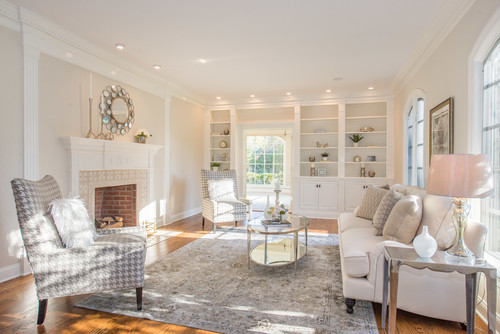
Home staging has gone mainstream and is now widely used to make a home more attractive to potential buyers. According to a 2017 survey by the National Association of REALTORS®, a majority of real estate professionals believe staging increases the sale price of the home anywhere from 1 to 15 percent.

But even if it doesn’t increase the value, most agents agree that staging reduces the amount of time the home sits on the market, which is music to any seller’s ears.

Not all homes need a dramatic makeover, but most homes will benefit from at least a thorough cleaning and culling.

“Staging and preparation can include as little as some fresh paint, but in most cases we also landscape, replace dated light fixtures and hardware, and in many cases refinish hardwood floors, replace countertops, bathroom fixtures, etc.,” says Nicole Kennedy, a home staging expert in Piedmont, Calif.


Read on to learn what industry and design trends we can expect in 2018.

More real estate agents get on board

Lori Matzke, founder of HomeStagingExpert.com, provides home staging workshops around the country in addition to running her own staging business in Minnesota. She’s noticed an increased interest and involvement of real estate agents in the staging process.

“Back when I started staging (in 1999), agents were not interested; they didn’t want to have one more thing on their plate,” Matzke says. “My classes are now 90 to 95 percent agents. I think you’re going to see a lot more agents learning about staging and how to advise their clients, because more and more homeowners are demanding that.”

That doesn’t mean agents will be doing the staging themselves, but they will have an eye for what is needed, and will facilitate the interaction between the seller and the stager. “It really helps the homeowner to have an educated real estate agent,” says Matzke. If the agent has prepped the seller about what needs to be removed and cleaned out, it makes the stager’s job faster and cheaper.

Complete vs. partial staging

Staging can range from small efforts like decluttering to a complete move out and refurnishing. Complete staging of vacant homes is a growing trend, according to Matzke. Whether it’s new or model homes, or the seller has moved out, many stagers today only work with vacant homes.

In the booming Bay Area housing market, Kennedy says buyers are accustomed to short sales cycles, so having the home primed and ready is expected.

“Fewer than 10 percent of homes I stage are partial–where we keep some of the furniture and belongings, edit out and add in where needed,” notes Kennedy. “This can be challenging because the staging has to fit in with existing styles and pieces, but it can make more sense to sellers who are staying in the house through the sale.”

Matzke says the complete staging trend isn’t limited to hot real estate markets.

“It’s been trickling down into smaller markets, not just in the larger metropolitan areas,” she notes. The ubiquity of staging on HGTV shows has probably made the idea more palatable to sellers and agents across the county.

Embracing a personal touch

One of the golden rules of staging has long been to keep things neutral to appeal to the widest range of potential buyers. But stagers are increasingly adding a little more design, style, and color to the home.

“Staging is becoming a bit more personal and less stale than it has been in the past,” Kennedy says. “It used to be standard to remove all family photos and personal items from the house, but today’s buyers prefer to see a house with a little personality. They want to see a ‘real’ house that they can imagine themselves in and small, personal details that create an aspirational image can help reach buyers on an emotional level.”

Matzke agrees. “It’s becoming trendy for stagers to do a little mixing with vintage pieces to give it a designer look. I think it gives the place more depth and I’m seeing more chatter about it on blogs.”

Following the design trends

While most of the staging do’s and don’ts will remain the same in 2018, our experts expect some new design trends to emerge in many staged homes next year:

  • Color: After a few years in which just about every design magazine is covered in gray, Matzke has a bold prediction: Gray is dead. “People are embracing beige and creamy white again,” she says. “I think that’s good because not everybody’s furniture fits with gray.”

Stagers are also increasingly adding a pop of color or an upscale design element to appeal to design-conscious buyers.

“Adding a pop of color in a room through accessories or artwork is common,” says Matzke. “The two big colors I think you’ll see a lot of in 2018 are dark teal and millennial pink … especially if you’re marketing to first-time homebuyers or a younger crowd, you might want to add those colors.”

  • Floors: It used to be that preparing a home for sale meant replacing old, stained carpet with new carpet, but Matzke says that, too, is changing. “A lot of people are replacing carpeting with wood and faux wood flooring–at least on the main floor,” she adds.
  • Countertops: While quartz is the latest countertop trend among high-end homes for 2018, Matzke thinks most of America will stick with granite next year because of cost.  “Design magazines are pushing quartz, saying it’s going to be the hot trend for 2018,” Matzke says. “And for the really high-end homes they’re probably right, but for a majority of America, I think it’s still going to be granite.”
  • Glam: Although it sounds counter to the rule of keeping things neutral, HGTV and design magazines have popularized a bit of glam. “For a long time you’ve seen people adding a little bit of rustic, heavy metal designs, but now you’re seeing a lot more shiny metallics,” Matzke says. “Even gold–it adds a bit of bling to the house.”
Facebooktwitterpinterestlinkedin

Experts: 2018 Mortgage Rates to Surpass 4.5% | #RatesGoingUp #TalkToYourAgent #SiliconValleyAgent #YajneshRai

Facebooktwitterpinterestlinkedin

Experts: 2018 Mortgage Rates to Surpass 4.5% | Realtor Magazine

The recent tax bill could cause the Federal Reserve’s rate increases to come faster—mortgage rates are expected to go up three or four times in 2018. This could push 30-year mortgage rates up past 4 percent in the new year.

Mortgage rates typically follow the Treasury yield. The federal funds rate sets the stage for the path mortgages will take. The Mortgage Bankers Association forecasts that mortgage rates will go up, but will stay below 5 percent.

“The Federal Reserve has begun reducing its holdings of Treasury securities and mortgage-backed securities, and this will put additional, modest upward pressure on mortgage rates,” said the MBA’s Chief Economist Mike Fratantoni. “We expect that the 10-year Treasury rate will stay below 3 percent through the end of 2018, and 30-year mortgage rates will stay below 5 percent.”

According to the MBA’s predictions, rates will increase to 4.6 percent in 2018, 5 percent in 2019, and 5.3 percent in 2020. The National Association of REALTORS® predicts rates to end the year at 4.5 percent, while realtor.com® expects mortgage rates to average 4.6 percent throughout the year and hit 5 percent by the year’s end.

Facebooktwitterpinterestlinkedin

Wealth Surge Boosts Second-Home Market | #SecondHomes #TalkToYourAgent #SiliconValleyAgent #YajneshRai

Facebooktwitterpinterestlinkedin

Wealth Surge Boosts Second-Home Market | Realtor Magazine

Over the past 12 months, many well-off Americans have been getting wealthier. The United States added more than a million new millionaires over the past year as stock prices rose, according to the Global Wealth Report published last month by Credit Suisse.

That has helped fuel increases in many second-home markets across the country. Hawaii and Colorado may be the two luxury markets that saw the largest upticks in 2017, according to data from realtor.com®.

Indeed, Maui, Hawaii, and Eagle County, Colo., were the two markets that posted the nation’s fastest luxury price growth. The two locales even trumped traditional luxury hubs like New York and San Francisco. (Luxury sales are defined as the top 5 percent of sales in a given metro area.)

Luxury home prices in Maui rose almost 33 percent, reaching an average of $2.49 million in 2017 compared to the year prior, according to realtor.com®. Other Hawaiian islands also ranked within the top 10. Kauai ranked number four in the nation, posting a 25 percent increase in average luxury prices in 2017. Hawaii’s Big Island also ranked number five with a 24.8 percent price increase last year.

Eagle County, Colo., which is home to ski resorts like Vail and Beaver Creek, ranked number two on the list. Average luxury prices jumped there by 31.5 percent in 2017 to $2.89 million. “More than anything, people look at property here as a blue chip asset in a real estate portfolio,” Matthew Blake, a Vail-based broker for LIV Sotheby’s International Realty, told Mansion Global.

Facebooktwitterpinterestlinkedin